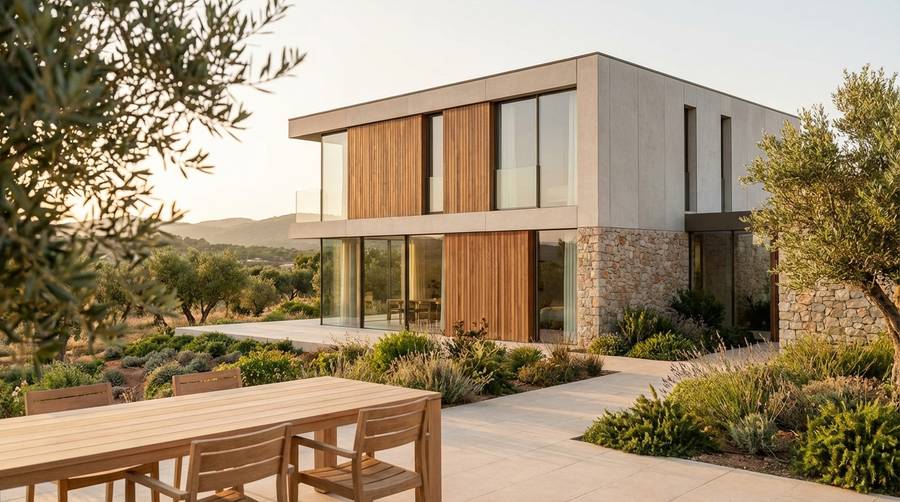
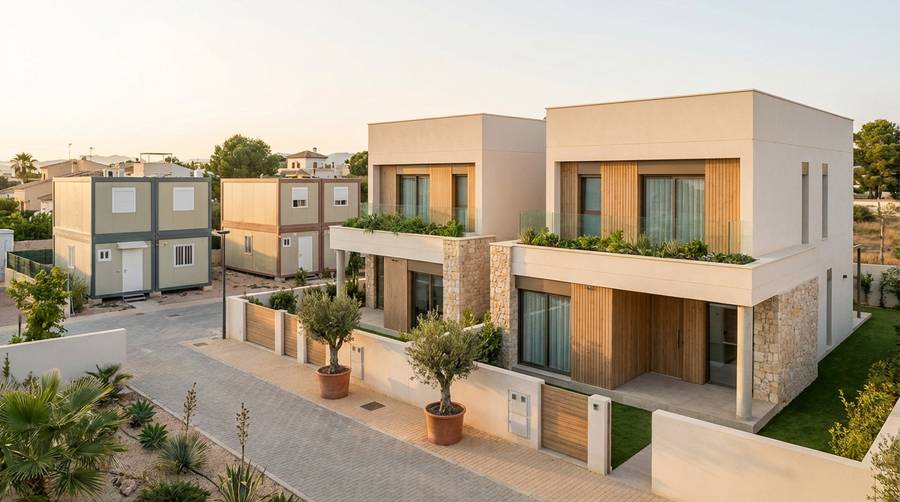
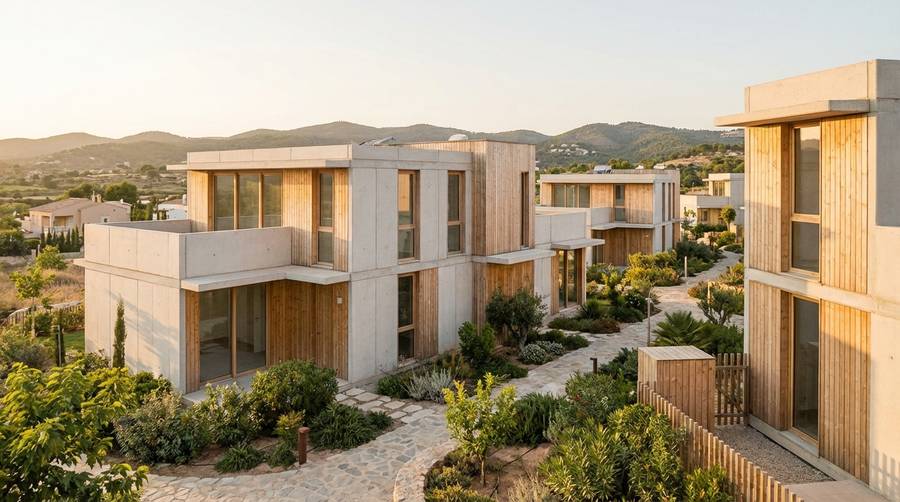
Prefabricated home success: Spanish family case study
How a Spanish family transformed their life with a prefabricated home
Hook: In 18 months from decision to move-in, a family of four in Valencia replaced uncertainty with a fixed-price, energy-efficient home — and reduced construction time by more than half compared with a typical site-built project.
This case study examines the facts: the starting situation, the reasons they chose industrialized construction, the real metrics achieved and the practical lessons other self-builders in Spain can use.
Initial situation: needs, plot and personal goals
The family owned a 600 m² plot on the outskirts of Valencia. Their priorities were clear and measurable:
- Comfort: high thermal performance and low running costs.
- Schedule: move-in within two years.
- Budget: a fixed cap to avoid surprises.
- Sustainability: reduced embodied carbon and operational energy.
They were first-time self-builders and had limited time to manage a lengthy site process. That made predictability and a turnkey delivery model decisive factors.
Decision for industrialization: motives and first impressions
The family chose a turnkey prefabricated solution based on three clear advantages: shorter, predictable schedules; fixed-price contracts; and factory-controlled quality. Their first site visit to the factory changed expectations: instead of noisy, messy construction, they saw dry, accurate assembly lines with quality checks at every step.
First impression takeaway: the perceived ‘cheapness’ of prefabrication dissolved when they compared finished finishes, integrated systems and warranties.
Immediate results: timelines, budget forecast vs actual and satisfaction
- Planned timeline: 20 months from contract to handover.
- Actual timeline: 18 months.
- Planned budget: €290,000 (turnkey, including siteworks).
- Actual final cost: €292,500 (0.9% over due to additional landscaping requested by the family).
The family rates their satisfaction 9/10. Key reasons: fast delivery, predictable cash flow and significantly lower heating bills in the first winter.
“We expected speed but not this level of finish and comfort. The house is warmer and our bills dropped by nearly 45% in the first year.” — homeowner summary
Why they chose industrialized construction: advantages over traditional building
Schedule efficiency: reduced site time and reliable deadlines
Factory production allowed concurrent activities: while the plot obtained permits and footing works were underway, the house modules were manufactured simultaneously. This overlap cut the critical path.
- Typical traditional build: 24–36 months from design to completion.
- Industrialized build (this case): 10 weeks of on-site assembly; total 18 months including permits.
Shorter on-site time reduces weather risk, local disturbances and unknowns associated with subcontractor scheduling.
Cost control: fixed price and avoidance of overruns
The turnkey contract included a defined scope, fixed price and a small contingency. The factory environment limits variations in labor hours and material waste — the two usual drivers of cost overruns in traditional projects.
- Factory part-assembly and standardized interfaces mean fewer change orders.
- Procurement at scale for materials produced cost benefits passed to the client.
Quality and comfort: finishes, insulation and real performance
The delivered home achieved thermal performance close to Passivhaus principles without the full certification cost. Benefits observed:
- Consistent airtightness verified with blower-door testing.
- High-performance insulation layers and thermal bridges minimized.
- Premium interior finishes installed in controlled conditions.
Result: fewer onsite defects, better acoustic separation and predictable long-term performance.
Materials and construction system chosen: balance of durability and sustainability
Material selection: industrialized concrete, light timber frame and steel frame
The project used a hybrid approach:
- Foundations and basement slabs: industrialized concrete for durability and thermal mass.
- Upper floors and walls: light timber frame for insulation performance and reduced embodied carbon.
- Critical load-bearing connections: steel frame inserts where spans required higher strength.
This combination maximizes the advantages of each material: concrete for longevity and fire resistance where needed; timber to reduce weight and carbon footprint; steel for structural confidence in open-plan areas.
Impact on energy efficiency and carbon footprint
Using a timber-dominant superstructure reduced embodied carbon compared with all-concrete solutions. Factory precision allowed airtight construction and consistent insulation thicknesses, which improved operational energy demand.
- Estimated reduction in embodied emissions vs conventional masonry: 18–25%.
- Measured reduction in heating energy first year: ~45% compared to similar-sized conventional house in the region.
Technical example: thermal performance and maintenance expectations
Key performance figures from the case:
- U-values: walls ~0.16 W/m²K; roof ~0.12 W/m²K; floors ~0.18 W/m²K.
- Airtightness (n50): 1.2 h-1 (very close to low-energy standards).
- Expected maintenance: external timber cladding oiling every 6–8 years; HVAC filter changes annually.
These figures provided the family with a reliable projection of running costs and long-term durability.
The turnkey process explained with numbers: from plot search to handover
Concrete phases and timelines: feasibility, permits, manufacture and assembly
Process timeline in this project:
- Feasibility study and concept design: 6 weeks.
- Permitting and approvals: 7 months (including local utility connections).
- Factory production: 14 weeks (panels and modules built to schedule).
- On-site assembly and commissioning: 10 weeks.
- Handover and client orientation: 2 weeks.
Total from contract signature to keys: 9 months. From initial planning to moving in: 18 months.
Coordination and traceability: client–provider communication and key milestones
Critical success factors in coordination:
- Weekly progress dashboards: photos, quality checklists and timeline updates.
- Single point of contact: a project manager who coordinated permits, factory production and on-site teams.
- Factory quality control reports: recorded and shared with the client at each production milestone.
Traceability reduced surprises and allowed the family to make informed decisions quickly.
Case metrics: total duration, days on-site and factory share
- Total duration: 18 months (planning to move-in).
- Days on-site with heavy construction: 70 days.
- Percentage of work completed in factory: 78% (by labour hours and value).
High factory share translated to fewer site disruptions and a cleaner neighborhood during assembly weeks.
Financing for self-build: how they secured a mortgage and support
Financing options for industrialized homes in Spain
Options commonly available to autopromoters include:
- Traditional construction mortgages adapted to phased disbursement.
- Specific self-build products that consider turnkey contracts as collateral.
- Green loans or energy-efficiency incentives for near-Passivhaus performance.
The family combined a standard self-build mortgage with a small energy-efficiency discount negotiated with their bank based on projected savings.
Typical conditions and required documentation for self-build mortgages
Banks required:
- Turnkey contract with payment schedule.
- Construction guarantee and performance bonds from the supplier.
- Detailed budget, plot deed and planning permission or positive pre-approval.
Having a factory-produced solution simplified the bank’s risk assessment because cost and schedule variability were lower.
Financial impact of the modular model: total cost, savings and ROI
Key financial outcomes for the family:
- Total project cost: €292,500 (turnkey).
- Estimated annual energy savings: €700–900 compared with similar conventional house.
- Payback horizon for extra energy-efficiency investment: 12–15 years (depending on energy prices).
When factoring maintenance savings and reduced risk of overruns, the true financial picture favored the industrialized route for this household.
Lessons learned and recommendations for future self-builders
Common mistakes and how to avoid them: plot choice, schedule and communication
Avoidable issues the family faced and how they addressed them:
- Plot constraints: an irregular slope required extra foundation work; resolve early by commissioning a topographic survey before contract.
- Permit timing: delays in municipal approvals added months; mitigate by engaging a local architect with permit experience.
- Expectation alignment: minor surprises in finishes; request mock-ups and material samples early.
Keys to maximize sustainability and energy performance
Practical recommendations:
- Design for compactness and solar gain orientation to reduce heating demand.
- Invest in airtightness and a mechanical ventilation heat recovery (MVHR) system.
- Choose durable external materials that require low maintenance and suit the Mediterranean climate.
For detailed guidance on materials and financing options see Vivienda prefabricada: ventajas, materiales y financiación.
Practical tips for hiring a turnkey provider successfully
- Verify factory production photos and quality control records.
- Request a clear payment schedule tied to milestones.
- Ask for third-party warranties on structural elements and airtightness guarantees.
- Secure a dedicated project manager in the contract.
Conclusion: measurable transformation and a subtle call to action
This family’s experience shows that industrialized, turnkey housing can deliver fast schedules, predictable budgets and high living comfort — without sacrificing architectural quality or Mediterranean character.
Final thought: if you are considering self-building in Spain, weigh factory precision and fixed-price models against the risks of a traditional build. The metrics matter: shorter timelines, high factory share and documented performance reduce uncertainty and often improve long-term value.
If you want a practical assessment of your plot and an estimated turnkey timeline and budget, consider contacting a specialized provider to compare scenarios — the right data will save you time and money on your self-build journey.