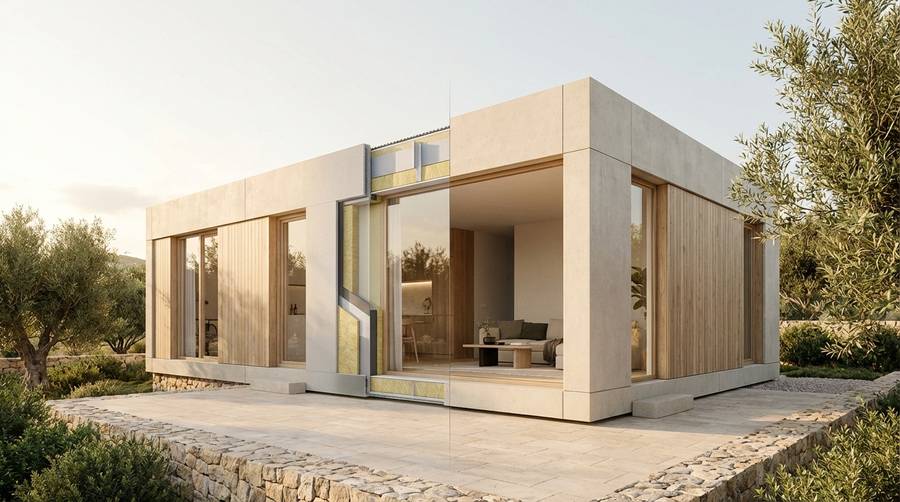
Industrialized Housing: Complete Guide to Designing Your Modular Home
Industrialized Housing: Complete Guide to Designing Your Modular Home
Hook: If you want a modern, energy-efficient home in Spain delivered on time and within a fixed budget, industrialized housing is your fastest route from idea to keys.
This guide breaks down the design and delivery of an industrialized house—step by step—with real metrics, clear decisions about materials, and practical advice for autopromotores (self-builders) who want a reliable, sustainable result.
Why industrialized housing is the smart choice today
Industrialized housing combines off-site manufacturing, precise quality control and rapid on-site assembly. For homeowners and autopromoters in Spain, this translates into predictable schedules, fewer surprises and better energy performance.
Advantages vs traditional construction: efficiency, fixed timelines and fixed cost
Key benefits:
- Shorter delivery time: fabrication and site work run in parallel; typical on-site assembly takes weeks not months.
- Fixed-price contracts: clearly scoped packages reduce change orders and budget overruns.
- Higher quality control: factory conditions reduce weather delays and variability.
Impact on sustainability and carbon footprint reduction
Industrialized processes reduce waste, allow optimized material use and facilitate integration of high-performance envelopes compatible with Passivhaus standards. When combined with low-carbon materials and efficient HVAC systems, a modular approach can lower lifecycle emissions versus in-situ builds.
Factories cut construction waste by up to 60% compared with traditional sites, and controlled assembly reduces rework—direct wins for cost and carbon.
Who should choose industrialized housing?
Ideal candidates are self-builders who prioritize schedule certainty, energy performance, and transparent budgets. If you value design freedom but dislike prolonged site disruption, this model fits well.
How to design an industrialized house step by step in Spain (practical guide)
Designing an industrialized home must balance program, budget and the constraints of modular manufacturing. Follow these practical steps.
Define program and budget: needs, area and priorities
Start with a concise program: number of bedrooms, primary activities, and target gross floor area (GFA). Then set a realistic budget that separates:
- Land acquisition and preparation
- Industrialized construction package (manufacture + assembly)
- On-site civil works and utilities
- Furnishings, permits and contingencies (5–10%)
Tip: Fix a target build cost per square meter early. For a Mediterranean 120 m² home in 2026, use scenario-based estimates rather than a single number: conservative, realistic and optimistic.
Choose a structural system and materials suited to the Mediterranean climate
Pick a system that balances speed, thermal comfort and finish quality. We summarize three common choices in the next section, with guidance on when each fits best.
Plan design for energy efficiency: orientation, envelope and windows
Make these non-negotiable design decisions early:
- Orientation: orient living spaces to the south to maximize winter solar gain; use overhangs for summer shading.
- Envelope continuity: factory-made panels must meet airtightness targets; insist on testable junction details.
- High-performance glazing: choose low-e, thermally-broken frames sized for cross-ventilation and daylighting.
Modern materials and structural systems: technical comparison and uses
Select the material that aligns with your priorities: thermal inertia, speed, sustainability, or finish variety.
Industrialized concrete: performance, timelines and typical uses
Precast concrete delivers high thermal mass and robustness. It’s ideal for multi-storey or semi-basement conditions where solidity and acoustic performance matter.
- Pros: durability, fire resistance, high acoustic attenuation.
- Cons: heavier logistics, potential higher embodied carbon unless low-carbon mixes are used.
- Use: basements, load-bearing walls, or hybrid systems combining concrete plinths with lighter upper floors.
Light timber frame: thermal benefits, sustainability and longevity
Timber frame (entramado ligero) is lightweight, fast to assemble and excellent for meeting Passivhaus targets due to favorable thermal properties.
- Pros: low embodied energy, good thermal performance, rapid assembly.
- Cons: requires high-quality detailing to ensure moisture control and long-term durability.
- Use: detached single-family homes seeking a low-carbon footprint and excellent insulation performance.
Steel frame: speed, precision and Mediterranean finishes
Steel frame systems offer unmatched precision and compatibility with varied finishes like stone, wood cladding or rendered façades—suitable for contemporary Mediterranean aesthetics.
- Pros: fast erection, tight tolerances, long spans for open plans.
- Cons: requires careful thermal bridging control and local detailing for humid conditions.
- Use: projects prioritizing speed and open interior layouts; blends well with stone or stucco façades.
Turnkey process: from plot search to move-in
A turnkey (llave en mano) process wraps land, design, manufacture and delivery into one coordinated contract. Below are the phases and what to verify in each.
Parcel search and validation: planning, geotechnical and utilities
Before committing to land:
- Check local planning rules and maximum footprint ratios.
- Order a geotechnical report—foundation strategy affects system choice.
- Confirm utility connections (water, electricity, sewer) and road access costs.
Manufacture and assembly phase: schedule, QA and fixed deadlines
Factories provide production schedules and QA protocols. Insist on:
- Clear milestone dates (panels delivered, assembly start, roof on).
- On-site quality checks and independent airtightness tests.
- Contingency plans for transport or weather disruptions.
Finishes, certification and handover: warranty and aftercare
At delivery, verify:
- Completion checklist and as-built documentation.
- Energy and airtightness certificates; if targeting Passivhaus, demand the certification report.
- Warranty coverage and a post-occupancy support plan.
Financing and permits for self-build modular housing
Financing an industrialized home differs from a standard mortgage. Prepare documentation and choose appropriate products.
Financing options: self-build mortgages and dedicated loans
In Spain, consider:
- Self-build (autopromoción) mortgages: staged payments aligned with milestones.
- Construction loans: short-term credit converted into a mortgage at completion.
- Manufacturer financing: some industrial providers partner with lenders for bundled offers.
Permits and paperwork: project, license and insurance
Key documents you will need:
- Architectural project and structural calculations.
- Building license (licencia municipal).
- Insurance: decenal liability if applicable and site-specific coverages.
Budgeting hidden costs: taxes, connections and urbanization
Account for VAT, local taxes, connection fees and potential urbanization costs. Add a contingency (5–10%) for unexpected site-specific requirements.
Case studies and technical comparisons: real data to inform decisions
Below are two representative cases with objective metrics gathered from completed projects in Spain.
Case 1 — Mediterranean 120 m² home: timelines, final cost and client satisfaction
Overview:
- System: steel frame with rendered façade.
- Timeline: 2 months factory, 3 weeks on-site, 1 month finishes = 4 months total from production start.
- Final cost: 1,650–1,900 €/m² depending on finishes (including VAT and connections).
- Client feedback: high satisfaction with schedule certainty and interior quality.
Case 2 — Passivhaus with light timber frame: energy metrics
Overview:
- System: timber frame, triple-glazed windows, mechanical ventilation with heat recovery (MVHR).
- Construction timeline: 3 months factory, 4 weeks on-site. Certification achieved within 6 months from contract.
- Energy performance: heating demand below 15 kWh/m²·year; primary energy target < 60 kWh/m²·year.
- Operational savings: 60–75% lower heating consumption compared to a conventional build.
Technical and economic comparison vs traditional builds
Summary:
- Time: industrialized builds typically cut on-site time by 50–80%.
- Cost variability: lower with fixed-price packages; absolute cost per m² can be comparable or slightly higher depending on finishes.
- Performance: easier to achieve airtightness and consistent insulation levels in factory-made components.
Linking in-depth guidance: see our detailed primer Vivienda industrializada: guía para autopromotores for expanded budgeting templates and procurement checklists.
Next steps for your project and practical conclusions
If you are considering an industrialized home, adopt a structured decision process and ask suppliers for measurable evidence.
Starter checklist: essential questions before signing
- Can the provider deliver references with measured airtightness and energy certificates?
- Is the schedule and milestone payment plan aligned with a financing product?
- Which exact materials and warranties are included? Get them in writing.
- Who manages site interfaces (utility connections, foundations, urbanization)?
How to choose a reliable industrial partner and contractual tips
Choose partners that provide:
- Transparent, milestone-linked contracts with fixed deadlines.
- Third-party QA and airtightness testing options.
- Clear post-handover support and written warranties.
Also review clauses on change orders and transport liabilities.
Final recommendations for self-builders
Practical advice: Prioritize a robust site validation, demand production schedules, and aim for simple, well-detailed junctions between factory elements and on-site works. Consider timber frame for Passivhaus ambitions, and steel frame if you need fast erection and open-plan layouts.
For further reading on advantages and practical comparisons, consult Casa prefabricada: ventajas para tu vivienda modular and for scaling strategies see Escalado industrializado de vivienda: guía práctica.
Conclusion
Industrialized housing is a mature, high-value path to delivering a Mediterranean, energy-efficient home in Spain with fewer surprises and measurable performance. Choose the system that matches your energy, aesthetic and timeline priorities, insist on measurable guarantees and set a contingency for site-specific works.
If you're ready to evaluate your plot or need a tailored cost estimate, contact a qualified industrialized housing provider to request references and a milestone-based offer. For practical next steps, start with the checklist above and secure a geotechnical survey as your first paid action.
Thinking about a specific parcel or design concept? Reach out to our team to review feasibility and produce a realistic, fixed-cost proposal.
Artículos relacionados
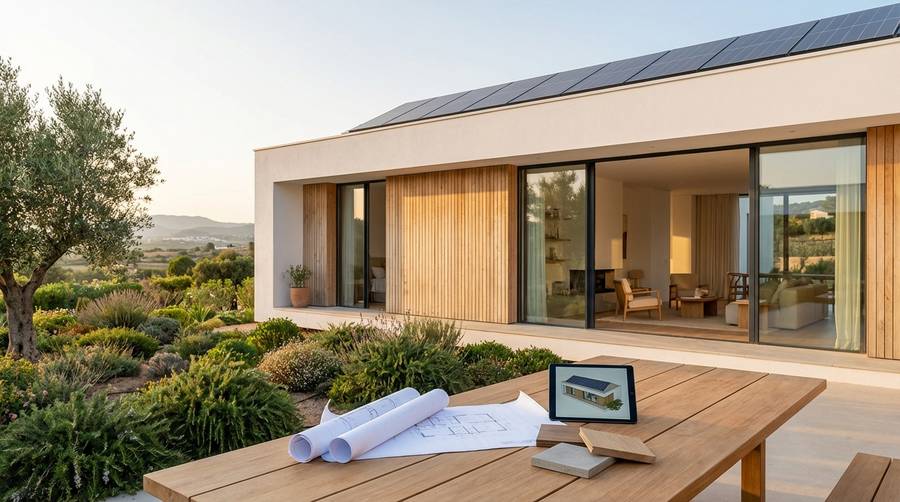
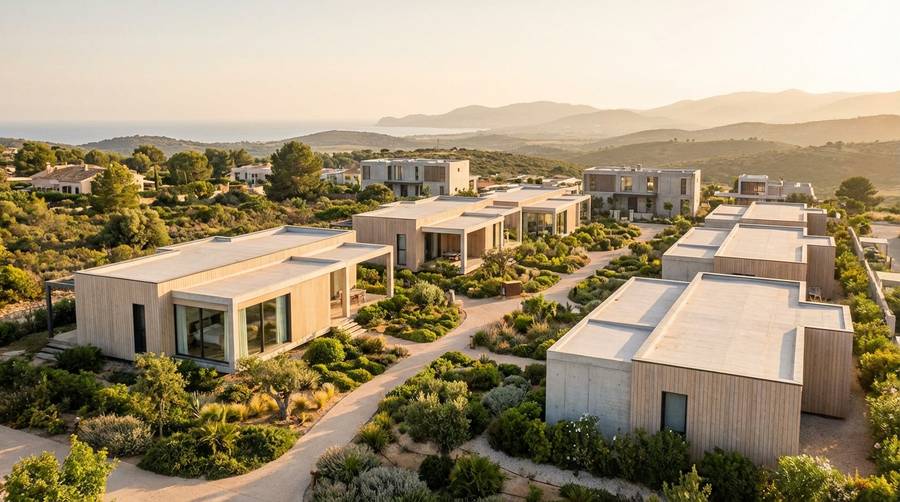
Industrialized Housing: Spain's Residential Future
A forward-looking, data-driven guide to industrialized housing in Spain. Covers market projections, construction systems, Passivhaus strategies, turnkey workflows, financing and two real-case metrics to help autopromoters make informed decisions in 2026.