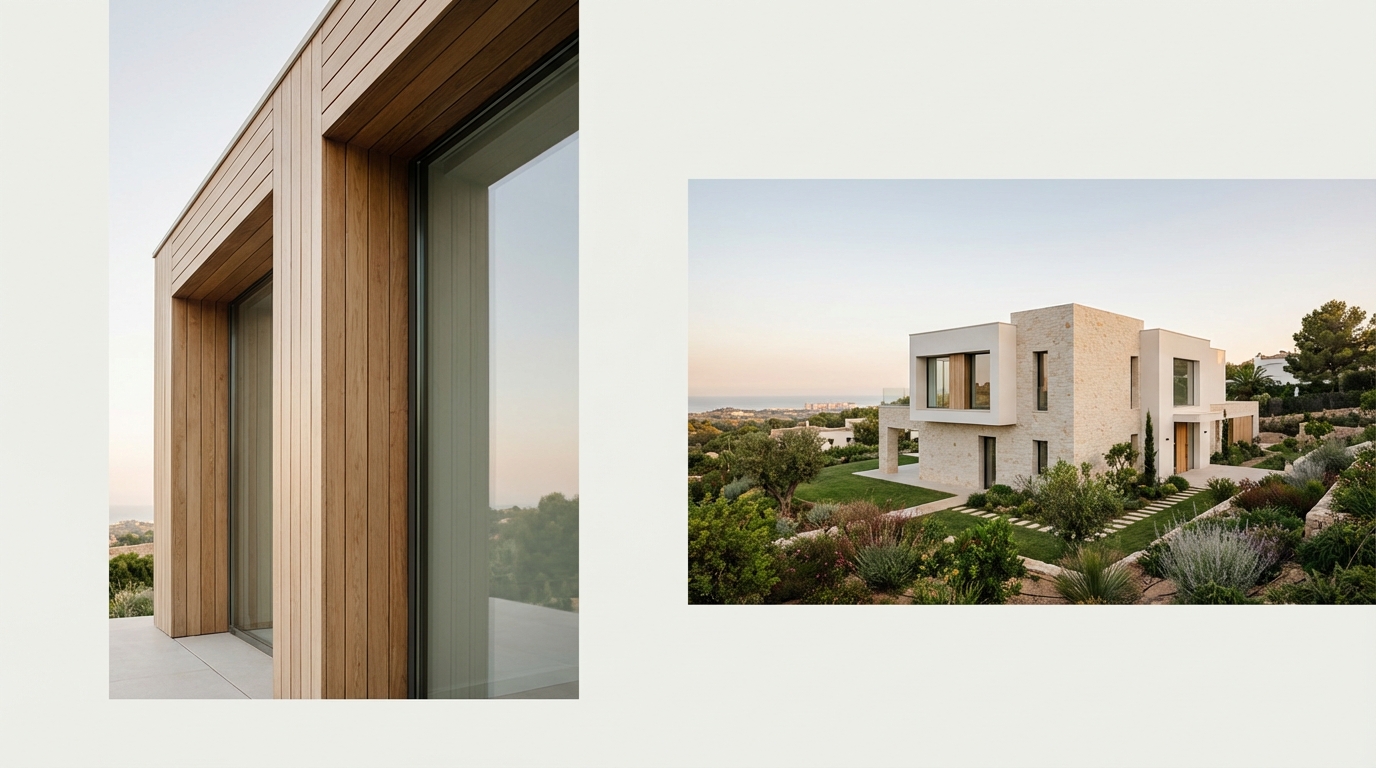
Prefabricated House Guide: Industrialized Homes in Spain
Summary and context: what we mean by industrialized housing
Industrialized housing, often called a prefabricated house or modular housing, refers to homes built using factory processes and on-site assembly. In Spain this approach combines traditional design values with efficient production methods. Industrialized housing uses repeatable components and quality control in the factory to reduce uncertainty and shorten on-site construction time. The result is a reliable, fixed-price delivery model that suits families who want clarity and predictable schedules.
Definition and common models in Spain (industrialized concrete, light timber frame, steel frame)
There are three common structural approaches in Spanish industrialized housing. Industrialized concrete panels offer high thermal mass and robustness. Light timber frame systems provide fast assembly, good insulation performance and a warm interior feel. Steel frame systems combine strength and long spans with flexible layout options. Each model fits particular sites, budgets and design priorities while meeting Spanish building codes and seismic requirements.
Why choose an industrialized solution: efficiency, shorter timelines and fixed price
Homeowners often choose industrialized housing because it reduces risk. Factory production improves quality control and weather delays are minimal. On-site erection is faster, typically reducing the time to weathertight shell and final delivery. Many industrialized developers offer a turnkey modular package with a fixed-price contract. This gives clients budget certainty and clearer milestones than typical traditional builds.
Trends for 2026 and the regulatory framework
In 2026 the Spanish market continues to evolve toward higher energy standards and greener materials. The focus is on energy efficiency (including Passivhaus-compatible assemblies), lower embodied carbon and circular use of resources. Regulations emphasize thermal performance, ventilation and airtightness. Industrialized systems are well-positioned to comply because factory conditions enable precise assembly and testing.
Step-by-step guide: planning an industrialized house in Spain
This section walks self-builders through the full process. We cover from land selection to turnkey delivery. The tone is practical and focused on choices that keep schedules and budgets under control.
From plot to keys: the turnkey process explained
Turnkey modular delivery means the provider coordinates the entire project. Typical phases include: site assessment and viability, schematic design, technical project and permits, factory production, on-site assembly, finishing and final handover. A clear contract should list deliverables and responsibilities. Expect the factory production to overlap with permitting, which shortens overall time.
Permits, technical project and coordination with the promoter
Obtaining permits in Spain requires a technical project signed by a certified architect and, if needed, an engineer. An industrialized provider usually collaborates with the architect to produce a buildable package compatible with factory methods. Close coordination with the local town hall and utilities avoids surprises. A promoter or development manager can handle permit submissions, saving time for the self-builder.
Design options and customization without extending timelines
Industrialized housing can offer significant customization. Modular layouts vary in façade finishes, room distribution and interior fittings. The trick is to decide early on the level of customization. Minor changes to cladding, finishes and fixtures usually do not affect the schedule. Major structural modifications may require new engineering and longer lead times. Choose options that are validated by the manufacturer to keep the process on track.
Real case studies: testimonials and metrics
Below are three anonymized case studies from industrialized projects completed in Spain. Numbers are representative and focused on measurable outcomes: time, cost and occupant satisfaction.
Project A — industrialized concrete: schedule, final cost and client satisfaction
Project A used precast and industrialized concrete panels for a two-storey family home near Valencia. Key metrics:
- Factory production: 10 weeks
- On-site assembly and finishes: 8 weeks
- Total elapsed time from contract to keys: 28 weeks (including permits)
- Agreed turnkey price: €310,000; final cost variance: +2.5% due to client upgrades
- Post-occupancy satisfaction (survey after 12 months): 9/10
The concrete solution delivered strong acoustic performance and low maintenance. The client highlighted the rapid delivery and budget predictability.
Project B — light timber frame: energy efficiency and consumption figures
Project B used a light timber frame and was designed for low energy consumption. Highlights:
- Factory prefabrication: 8 weeks
- Assembly and commissioning: 6 weeks
- Final delivery: 22 weeks including documentation and commissioning
- Measured annual heating consumption: 30 kWh/m²·year (well below national averages)
- Client feedback on indoor comfort: 9.2/10
The timber frame enabled precise insulation continuity and excellent airtightness. The home performed strongly on comfort and low bills.
Comparative results: execution times, budget variance and NPS
Across several projects the average metrics were:
- Average total time (turnkey): 24–30 weeks
- Average budget variance: ±3% for fixed-price contracts
- Average NPS-style satisfaction measure: +65 (high satisfaction)
These figures show how industrialized housing reduces uncertainty. Traditional self-build projects often face higher time variance and larger budget overruns.
Technical and economic comparison vs traditional building
Decision-makers should evaluate total cost, energy performance and long-term value. Below we compare common metrics in an objective way.
Analysis of total cost and budget control (numeric examples)
Example comparison for a 140 m² house in Spain:
- Traditional build estimated construction cost: €1,150/m² → €161,000 (excluding unforeseen expenses)
- Prefabricated house (turnkey modular) agreed price: €1,900/m² → €266,000 (includes design, factory, assembly and finishes)
At first glance the per-square-meter figure can be higher for a turnkey prefabricated house. But consider added inclusions: shorter financing periods, lower contingency reserves, faster occupation and predictable escalation. When banks or owners include financing costs and opportunity costs of prolonged build time, the prefabricated model often narrows the effective cost gap.
Thermal performance and energy savings (including Passivhaus and certifications)
Industrialized systems enable better insulation, continuous airtightness and controlled ventilation. When designed to Passivhaus principles, a modular home can reach heating demand under 15 kWh/m²·year. Typical certified low-energy prefabricated projects in Spain report heating consumptions between 20–35 kWh/m²·year. These savings lower running costs and improve comfort. Certification routes include Passivhaus, EEC (Energy Efficiency Certificates) and others recognized locally.
Durability, maintenance and medium-term revaluation
Materials like industrialized concrete, engineered timber and galvanized steel frames offer long service lives when detailed correctly. Maintenance needs depend on exterior finishes: natural stone and good-quality cladding can minimize interventions. On the resale market, well-documented, energy-efficient modular homes show good revaluation. Buyers value predictable maintenance and certified performance.
Financing and procedures for self-builders
Financing is a core concern for autopromotores. The industrialized model influences bank offerings and cash-flow needs. Below are practical financing pathways and tips to manage liquidity.
Mortgages for self-build: available products and key requirements
Banks in Spain offer specific mortgages for self-builds and autopromotion. Products include staged disbursement loans that release funds at construction milestones, and developer-backed financing for turnkey modular homes. Key bank requirements include a complete technical project, cost breakdown, contractor credentials and insurance. Presenting a fixed-price turnkey contract strengthens your application.
Strategies to present your project and costs to the bank
When approaching lenders, prepare a clear dossier: certified technical project, turnkey contract with milestones, cash-flow plan and quotes for the full scope. Highlight factory production and fixed-price clauses; these reduce perceived risk. Include projected energy savings and, if available, previous case studies from your provider with metrics on times and budget compliance.
Practical tips to secure liquidity during the turnkey process
Practical advice for managing liquidity:
- Negotiate staged payments aligned to factory milestones and assembly.
- Keep a contingency reserve of at least 5% for client changes.
- Ask the provider for clear delivery guarantees and penalties for delay.
- Consider short-term bridge financing for land acquisition and convert to a mortgage later.
Designing your industrialized house step by step (practical checklist)
Use this checklist to keep the project on track and ensure key decisions are made early.
Early decisions (plot, budget, programme)
- Validate plot constraints and solar orientation.
- Set a realistic turnkey budget including fees and taxes.
- Define the programme: rooms, accessibility and future needs.
Mid-stage (technical project, finishes, suppliers)
- Lock structural system (concrete, timber frame or steel frame).
- Select finishes from validated provider options to avoid delays.
- Coordinate connections for utilities and access works early.
Final stage (assembly, commissioning, handover)
- Confirm assembly dates and on-site logistics.
- Plan commissioning tests: airtightness, HVAC balancing and electrical inspection.
- Agree final snagging list and formal handover procedure.
Conclusions: is a prefabricated house right for your self-promotion project?
A prefabricated house offers predictability, reduced on-site time and strong energy performance. For self-builders in Spain who value schedule certainty and clear budgets, industrialized housing is a compelling option. Choose a reputable provider that offers a transparent turnkey contract and verifies energy and quality metrics. With careful planning, industrialized homes can deliver modern, comfortable and sustainable living tailored to family needs.
If you are considering a prefabricated house in Spain, focus on: early technical validation, a fixed-price turnkey offer, proven energy performance and a financing plan aligned to milestone payments. These elements will increase the chance of finishing on time, within budget and with high occupant satisfaction.