Prefabricated House: Smart Choice for Modern Spanish Homes
Why choose industrialized housing over traditional construction
Industrialized housing—often called the prefabricated house—has become a compelling option for families and self-builders across Spain. It offers clear benefits in time, budget control and construction quality. For autopromoters who value transparency, modern finishes and predictable schedules, a prefabricated house can deliver better outcomes than many conventional builds.
Construction efficiency: shorter schedules and controlled timelines
One of the strongest advantages of a prefabricated house is its speed. Factory production runs in parallel with site preparation. While foundations and permits are completed, modules or structural panels are manufactured in controlled conditions. This overlap shortens the overall program and reduces exposure to weather delays. Faster delivery means families can move in sooner and reduce interim housing costs.
Cost and budget certainty: fixed price and fewer surprises
Industrialized housing often uses a fixed-price model. Contracts can detail materials, finishes and timelines, limiting unexpected extras. This budget certainty benefits self-builders who must plan mortgages or construction loans. Predictability helps when applying for financing and when assessing long-term value.
Factory quality control: modern materials and premium finishes
Factories apply rigorous quality control at each stage. Components are manufactured in stable conditions and inspected before leaving the plant. That control reduces variability and improves finish levels. Modern materials such as industrialized concrete panels, light timber framing and steel frame systems enable premium aesthetics and durable performance.
Modern materials and structural systems
Choosing the right construction system influences cost, speed, thermal comfort and long-term maintenance. Below we summarize three common systems used in contemporary prefabricated houses.
Industrialized concrete: durability and thermal performance
Precast concrete elements combine robustness with thermal mass. They provide excellent longevity and passive temperature regulation. In Mediterranean climates, concrete helps stabilize indoor temperatures when paired with appropriate insulation. Modern precast systems are designed to integrate with energy-efficient envelopes and high-performance windows.
Light timber frame: efficiency and natural warmth
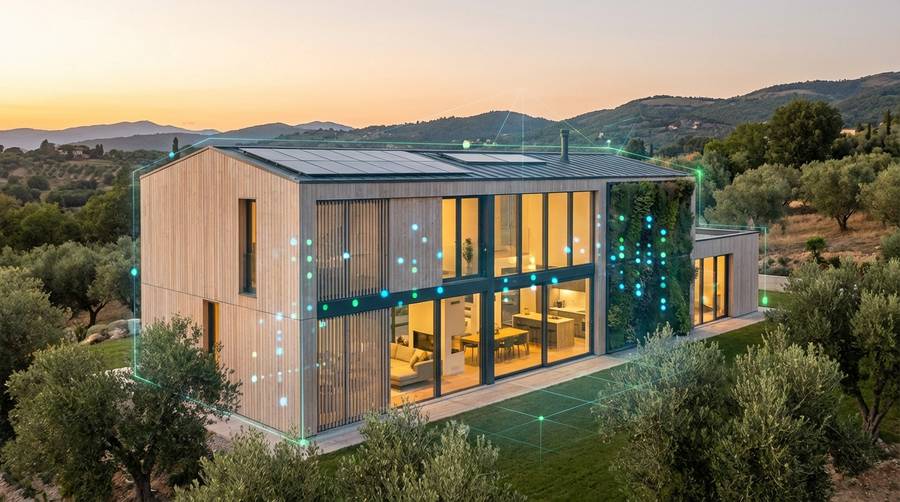
Light timber frame systems are lightweight, fast to assemble and sustainable when sourced responsibly. Timber offers a warm, natural interior ambience valued in family homes. These systems achieve good thermal results when combined with continuous insulation, airtight details and quality glazing.
Steel frame: speed, precision and design flexibility
Steel frame (steel frame) construction provides high accuracy and spans that create open-plan interiors. Steel allows for flexible layouts and faster on-site assembly. When protected against corrosion and thermally broken at junctions, steel delivers durable, low-maintenance structures ideal for contemporary Mediterranean designs.
Sustainability and energy efficiency in prefabricated homes
Prefabricated houses can lead the way in energy performance and lower carbon footprints. The factory environment improves waste control and material optimization, while high-performance assemblies reduce operational energy use.
Passivhaus design and lower energy demand
Adopting Passivhaus principles in a prefabricated house yields measurable energy savings. High insulation, airtight construction and heat recovery ventilation cut heating and cooling needs. Many modular systems are compatible with Passivhaus certification when designed and executed correctly.
Lower carbon footprint and low-impact materials
Material selection influences embodied carbon. Using responsibly sourced timber, efficient concrete mixes and recyclable metals reduces the initial environmental impact. Factory optimization also minimizes waste and transport inefficiencies compared to dispersed on-site cutting.
Passive and active strategies: insulation, ventilation and renewables
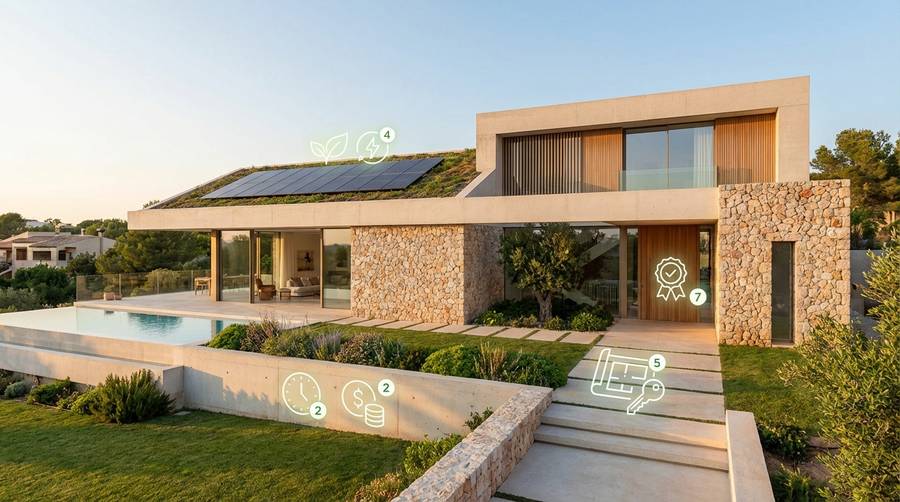
Effective sustainability combines passive measures and active systems. Continuous insulation, solar shading and natural cross-ventilation complement solar panels, heat pumps and energy storage. Together they create resilient homes with low running costs and reduced CO2 emissions.
The turnkey process explained, step by step
A true turnkey delivery means the builder or platform manages the project from plot search to keys in hand. For autopromoters, a clear, phased process reduces complexity and risk.
Plot search and site feasibility: constraints and viability
The first step is finding a plot suited to the chosen house type. A thorough study evaluates access, topography, orientation, planning rules and utilities. Early site analysis avoids surprises and allows the design to respond to local conditions. If needed, consult local planners to confirm zoning and buildability before committing.
Design, permits and factory manufacturing
Once the plot is secured, the design phase tailors the house to the client’s needs and to the site. The team prepares permit drawings and submits for approvals. Simultaneously, factory production planning begins. Manufacturing in controlled conditions starts once approvals and detailed designs are finalized.
Transport, assembly and delivery: guarantee and aftercare
Transporting components to site requires logistic planning. On-site assembly is typically fast, with enclosure completed in days or weeks rather than months. A reputable turnkey provider includes guarantees and post-delivery service for defects and performance. This post-sale support is important for long-term satisfaction.
For more detail on the overall benefits of turnkey modular homes, see our guide Casa prefabricada: ventajas y guía llave en mano.
Financing and mortgage options for self-builders
Financing a prefabricated house can differ from a standard mortgage. Autopromotion mortgages and specialized loan products exist to support self-build projects, including modular housing.
Self-build mortgages: how they work and requirements
Self-build or autopromotion mortgages typically release funds in stages tied to construction milestones. Lenders assess the developer, budget, permits and projected value. A clear turnkey contract with fixed price and schedule improves the lender’s confidence. Good documentation and a professional partner are essential.
Alternative funding for modular housing
Beyond traditional mortgages, options include construction loans, bridge loans and vendor financing. Some manufacturers offer tailored financing tied to their turnkey packages. Exploring multiple routes helps identify the most cost-effective structure for your project.
Practical tips to present a finance-ready project
To increase approval chances, prepare a complete dossier: project plans, permits, fixed-price contract, schedule and builders’ credentials. A realistic cash flow plan and evidence of the plot purchase or reservation also help. Clear documentation reduces lender risk and can secure better terms.
For autopromoters wanting a deeper practical orientation, consult our practical guide Casa prefabricada: ventajas y guía para autopromotores.
Choosing the right partner and making confident decisions
Selecting a trusted partner is vital. Look for companies experienced in industrialized housing and turnkey delivery, with proven references, warranties and transparent costs. Visit completed homes when possible and request references from previous clients.
Consider also energy certification and long-term running costs. A slightly higher upfront investment in insulation or renewable systems often pays back through lower bills and better comfort.
Conclusions: why a prefabricated house makes sense today
Prefabricated houses combine speed, quality and sustainability in a way that suits modern self-builders in Spain. Factory precision, modern materials and turnkey delivery reduce uncertainty. When designed with energy-efficient standards and financed appropriately, these homes deliver lasting value and comfort.
If you want to explore concrete examples and learn more about guarantees and energy certification, read Casa prefabricada: ventajas y guía práctica and Casa prefabricada: ventajas frente a la construcción tradicional.
Industrialized housing is not an abstract trend. It is a practical, accessible route for families seeking a high-quality, sustainable home with predictable timing and costs. For autopromoters in Spain, it represents a modern, transparent and inspiring way to build.
Artículos relacionados