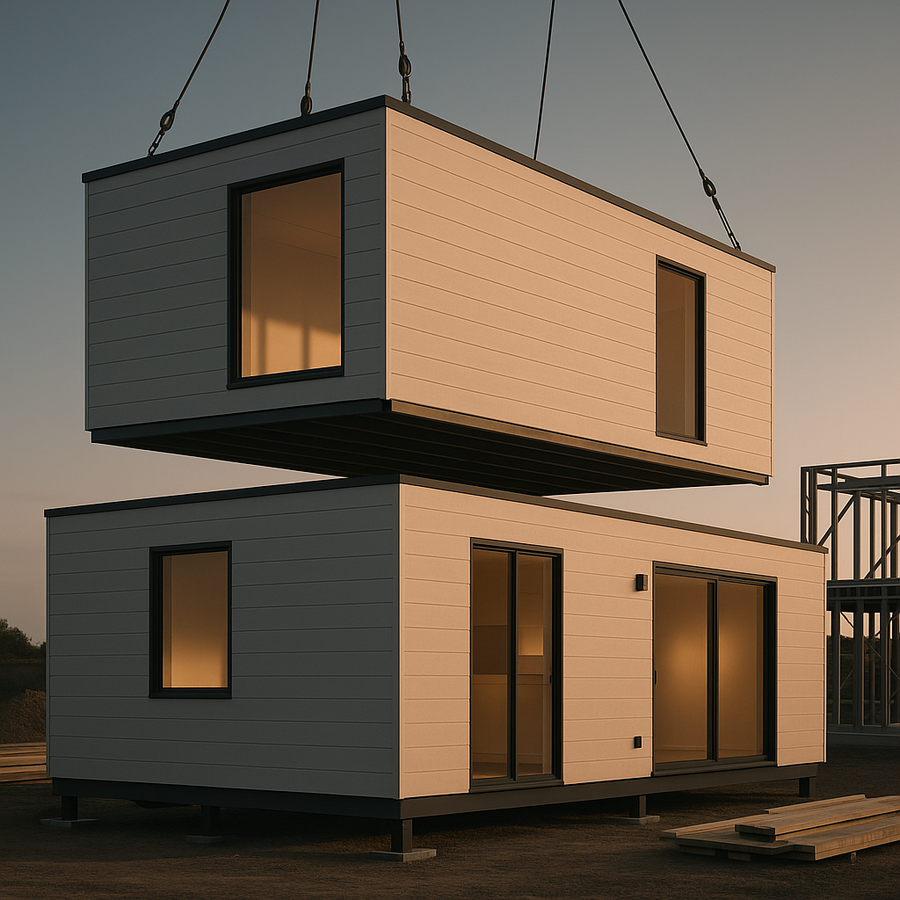
Industrialized Enclosure Mistakes — Practical Fixes
Quick hook: Why the enclosure decides success or failure
Hook: In modular and prefabricated housing, a poor enclosure is the single fastest way to turn a fixed-price, fast-build promise into months of trouble and unexpected costs.
This article focuses on the most common errors in industrialized enclosure systems and gives targeted, practical solutions for autopromoters in Spain building turnkey modular homes. No theory-heavy filler — just clear signs to watch for, technical criteria to demand, and checklists you can use on site or in the factory.
Most post-delivery performance claims (comfort, energy bills, durability) trace back to one thing: how the walls, roofs and joints were designed and executed. Fix the enclosure first.
Panorama quick view: why a robust industrialized enclosure matters
The enclosure — walls, roofs, windows and their connections — controls thermal performance, moisture, acoustic comfort and fire safety. In industrialized housing the stakes are higher because factory precision must reliably translate to on-site assembly.
Advantages and risks: speed, cost certainty — and the cost of enclosure failures
Advantages: modular construction offers predictable schedules, fixed-price contracts and consistent component quality. But those advantages vanish if the enclosure leaks heat, air or water.
- Fast builds can hide poor detailing.
- Factory-made panels may have excellent components but fail at joints.
- Enclosure failures typically surface as condensation, mould, drafty rooms and higher energy bills.
How the enclosure affects energy performance and habitability (Passivhaus reference)
A poorly detailed enclosure prevents projects from meeting stringent energy targets like those of Passivhaus. Air tightness, thermal bridges and insulation continuity are decisive. Even modest improvements in junction detailing can cut heating demand substantially.
Scope of this article: errors and practical fixes for autopromoters
We cover four high-impact error groups: material selection, joint and airtightness detailing, design that ignores energy criteria, and factory–site coordination. For each, you’ll find clear signs, pragmatic solutions and checklists you can use in contracts and inspections.
Error 1 — Choosing the wrong material for climate and use
Picking concrete panels, steel frames or light timber without a clear match to site climate, use patterns and technical detailing is a repeated source of performance shortfall.
How to spot a bad material choice
- Frequent condensation or mould despite nominal insulation values.
- Unexpected acoustic issues in noisy areas (roads, neighbours).
- High embodied carbon that undermines sustainability goals.
Practical solutions: selection criteria for the Spanish climate
Use these simple but decisive criteria when comparing concrete industrialized panels, steel frame and light timber frame:
- Thermal mass vs inertia: Mediterranean climates benefit from thermal mass in zones with high temperature swing — choose concrete where night cooling is needed.
- U-values and continuous insulation: Insist on continuous insulation layers and avoid systems relying on cavity insulation only.
- Moisture behavior: Timber systems must include vapor control layers and capillary breaks to prevent rot in humid niches.
- Carbon footprint: For sustainability targets, compare whole-life CO2 — timber often wins but requires durability detailing.
Buying tips: key questions and acceptance checks for turnkey offers
- Ask for documented U-values, lambda values and hygrothermal studies for the specific system and insulation thickness.
- Request factory QA records and a sample test panel showing layers and junctions.
- Require a site acceptance protocol that includes checks for dimensional tolerances and protective treatments after transport.
Error 2 — Poorly resolved joints and airtightness
Joints are where factory precision meets on-site variability. Even the best panels leak if junctions, seals and fastenings are not specified and inspected.
Detecting thermal and moisture leaks
- Cold spots on walls or near windows in winter.
- Unexpectedly high energy consumption compared with simulation.
- Visible stains, salt efflorescence or mould along junction lines.
Proven fixes: details that work
Adopt these constructive details and insist they are part of the contract documents:
- Continuous air barrier: Specify a single primary air barrier plane and define how it ties into windows, roofs and foundations.
- Redundant seal strategy: Use primary structural connection seals plus secondary tape or gaskets to allow for differential movements.
- Low-conductivity fixings: Metal fixings across insulation should be minimized or thermally broken.
- Window flashing and sills: Define stepped, drained flashings rather than relying on membranes tucked behind cladding.
Best installation practices and verification
- Specify that membrane laps are heat-welded or taped with certified products and recorded photo evidence.
- Require intermediate blower door and thermography tests: factory panels and assembled volumes.
- Include acceptance tolerances for gaps and fastener placement in the contract.
Error 3 — A design that ignores energy efficiency integration
Designers sometimes treat insulation, windows and ventilation as afterthoughts. That leads to comfort problems and long-term operational costs.
Consequences: higher bills and poor comfort
- Overheating in summer combined with cold winters.
- Households resorting to oversizing heating or cooling systems.
- Failure to meet Passivhaus-level targets in measured performance.
Solutions: integrate Passivhaus principles without inflating budgets
Key adjustments that improve results with modest cost impact:
- Orientation and shading: Optimize glazing ratio and use fixed shading devices or brise-soleil for Mediterranean sun.
- High-performance windows: Specify low-e coatings and warm-edge spacers; ensure installation meets airtightness continuity.
- Controlled ventilation: Demand mechanical ventilation with heat recovery sized for real occupant patterns.
- Thermal bridge mitigation: Use thermal break details at balconies, foundations and cantilevers; calculate Psi-values for key junctions.
Practical examples: small design tweaks with measurable impact
- Adding 20 cm of continuous external insulation reduced annual heating demand by >15% in a 2023 case study of a 120 m² modular home.
- Switching to MVHR with 80% recovery cut annual heating needs by 25% in a coastal Spanish pilot.
For more on airtight closure systems, see our technical guidance on Cerramientos industrializados para diseño sostenible.
Error 4 — Poor coordination between factory and on-site assembly
Gaps in roles, documentation and verification between manufacturer and site crew create tolerance mismatches and delays.
Typical problems: tolerances, unclear responsibilities and delays
- Panels arrive with protective layers removed prematurely and exposed to weather.
- On-site fastenings differ from factory-specified ones — creating leakage risks.
- Last-minute design changes without update to QA or test plans.
Solutions: protocols for control, acceptance and communication
Implement these governance and communication tools for turnkey projects:
- Integration meetings: Weekly joint calls between factory QA, site foreman and design engineer from mobilization through assembly.
- Factory-to-site passport: A digital file per panel with photos, marked-up drawings, QA test results and installation sequence.
- Clear responsibility matrix: RACI chart that defines who signs off on junctions, membrane continuity and final airtightness.
Checklist for autopromoters: milestones and documents to control
- Design freeze date and controlled change order process.
- Factory QA records and transport damage report on delivery.
- On-site acceptance protocol for each panel, including leak-test window after installation of each level.
- Defined final commissioning tests and acceptance thresholds.
How to verify closure success and avoid repeat issues
Finishing the build is not the end. Final verification and maintenance planning prevent problems from reappearing.
Recommended final tests: airtightness, thermography and workmanship control
- Blower door test: Target air changes per hour (n50) consistent with your energy goal (for near-Passivhaus aim for n50 ≤ 0.6/h).
- Thermographic survey: Conduct at least twice — first during cool conditions and then after commissioning.
- Smoke tests: Quick visual for local leaks around penetrations and windows.
Maintenance and warranties: what to demand
- Minimum 10-year warranty on structural cladding elements; 2–5 years on seals and membranes depending on product.
- Maintenance plan: annual visual inspection of flashings and sealants; replacement windows seals every 10–15 years.
- Define conditional acceptance: final payment released after passing contracted air-tightness and commissioning tests.
Next resources and actions
Use these practical next steps:
- Include the panel passport and factory QA clause in your turnkey contract.
- Schedule blower door and thermography before final finishes where possible.
- Review case studies and technical guides to compare system performance: see Sistemas de cerramiento industrializado: guía completa and Sistemas de cerramiento industrializado: guía clave.
Conclusion — A short checklist to lock success
To summarize, focus on these non-negotiables:
- Choose material systems with climate-appropriate hygrothermal performance.
- Make airtightness and joint detailing contractual items with verification tests.
- Integrate energy criteria (orientation, MVHR, low-e glazing) early in the design.
- Set up factory-to-site documentation, QA and acceptance protocols.
Final thought: Investing a little more effort into planning, testing and contractual clarity prevents the most common and costly enclosure failures. If you want a tailored checklist for your plot, or help reviewing a turnkey offer, contact a trusted technical partner — early intervention pays off.
Call to action: If you are an autopromoter in Spain preparing a turnkey modular build, download our site-and-factory checklist or get in touch for a project review to prevent enclosure issues before construction starts.
Artículos relacionados