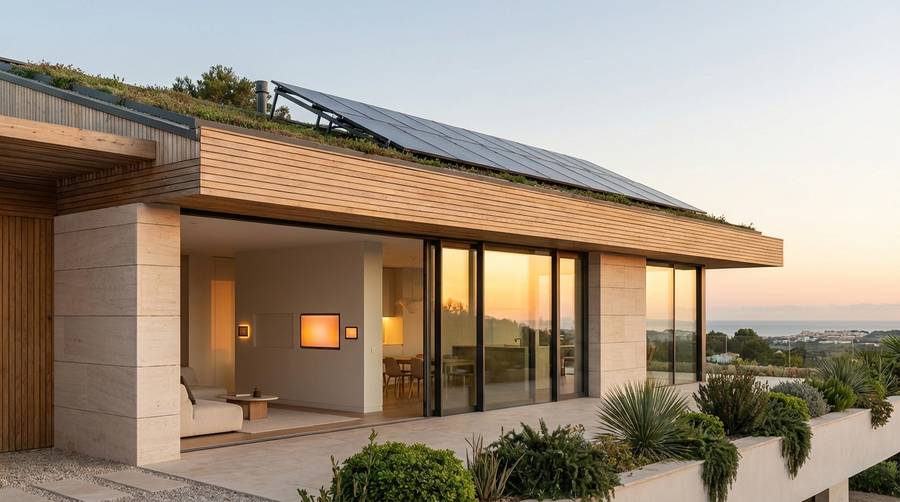
Industrialized Housing in Spain: Top 6 Practical Advantages
1. Why choose industrialized housing now: six decisive advantages
Hook: If you're planning to self‑build in Spain, choosing industrialized housing can halve your risk of budget overruns and cut construction time dramatically. Here are six precise advantages that matter for autopromotores.
1.1 Efficiency in timelines: fixed schedules and predictable delivery
Short, predictable timelines are the hallmark of industrialized housing. Components are produced in a controlled factory environment, which reduces weather-related delays and on‑site coordination problems.
- Typical reduction: Factory production often shortens on‑site assembly to 4–12 weeks for single-family homes, compared with 6–12 months for traditional builds.
- Why it works: Parallel workflows—design finalization, panel fabrication and foundation work can happen simultaneously.
- Actionable tip: Require a detailed Gantt chart from suppliers showing factory lead times, transport windows and on‑site assembly milestones.
1.2 Cost control: fixed budgets and fewer surprises
Industrialized processes convert many variable costs into fixed ones. You can define scope, finishes and interfaces before production begins.
- Less variability: Bulk procurement of materials and repeatable assembly reduce price volatility.
- Contract clarity: Ask for a turnkey quote that includes materials, transport, installation and warranties—this reduces change orders.
- Actionable tip: Include a clear scope matrix in contracts specifying who's responsible for foundations, utility hookups and finishes.
1.3 Quality and repeatability: factory controls and Spanish standards
Quality assurance in a factory setting delivers repeatable results. Spanish building codes (CTE) and ISO‑style manufacturing controls can be applied to modules and panels.
- Factory QA: Documented inspections at every production stage—materials receipt, cutting, assembly, insulation and finishing.
- Traceability: Serial numbering or tagging for structural elements simplifies maintenance and warranty claims.
- Actionable tip: Request factory inspection records and a third‑party QA report before final payment.
Industrialized housing reduces on‑site uncertainty: with factory QA and fixed schedules, the biggest sources of delay and cost creep are eliminated.
2. Energy efficiency and Passivhaus: real benefits for your home
Industrialized building systems are well suited to meet high energy standards like Passivhaus. The controlled construction environment helps achieve airtightness and thermal continuity.
2.1 How industrialized envelopes simplify Passivhaus compliance
Pre‑fabricated insulated panels and precision joinery reduce thermal bridges and allow consistent installation of ventilation ducts and continuous insulation layers.
- Precision joints: Factory cut components minimize on‑site errors that commonly breach air barriers.
- Integrated details: Windows, service channels and insulation are planned and installed in sequence to preserve the envelope integrity.
2.2 Energy savings and carbon reduction: comparative data
Real metrics from recent projects in Spain show industrialized Passivhaus homes can reduce heating/cooling energy by 70–90% compared to conventional builds.
- Example metric: A 140 m² industrialized house with a high‑performance envelope can reach heating demand < 15 kWh/m²·year.
- Carbon impact: Lower operational emissions over 30 years often offset the slightly higher embodied emissions from prefabricated components.
2.3 Comfort and health: ventilation and indoor air quality
Mechanical ventilation with heat recovery (MVHR) is easier to coordinate in modular systems. That improves comfort and reduces allergens.
- Balanced ventilation: Factory‑planned duct runs mean fewer on‑site compromises.
- Actionable tip: Specify indexed HEPA/filters and measured airflow commissioning during handover.
3. Modern materials and construction solutions
Three material systems dominate contemporary industrialized housing in Spain: industrialized concrete, light timber frame and steel frame. Each has clear strengths depending on site, climate and design.
3.1 Industrialized concrete: durability and thermal mass
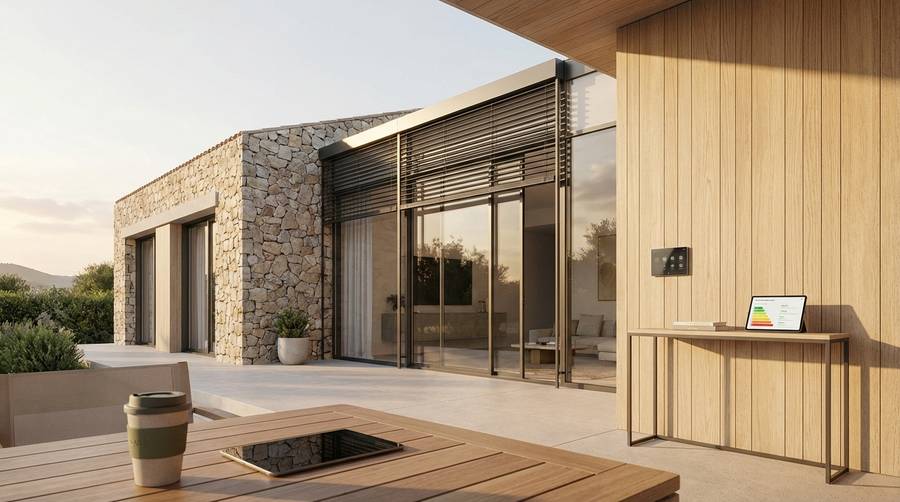
Precast concrete panels and elements offer robustness and excellent thermal inertia—particularly useful in inland and southern climates with large diurnal swings.
- Best use: Ground floors, façades with natural stone finishes and areas requiring fire resistance.
- Actionable tip: Combine concrete lower shells with lighter upper floors to balance mass and transport weight.
3.2 Light timber frame: speed and sustainability
Timber framing is lightweight, fast to assemble and has a low embodied carbon footprint when sourced responsibly.
- Benefits: Rapid assembly, excellent thermal performance, and easy integration of services.
- Design detail: Use cross‑laminated or glued laminated elements for rigidity where long spans are required.
- Actionable tip: Verify FSC or PEFC certification and specify durable cladding for wet climates.
3.3 Steel frame: structural strength and hybrid combinations
Steel framing enables larger spans and flexible interior plans. It pairs well with timber or concrete for hybrid systems.
- When to choose: Sites requiring open plan layouts, or where seismic resistance is prioritized.
- Actionable tip: Insist on thermal breaks and corrosion protection details where steel meets external environments.
4. Turnkey process for autopromoters: a clear step‑by‑step
The 'llave en mano' model simplifies the self‑build experience by covering end‑to‑end responsibilities: from site assessment to keys in hand.
4.1 Site search and assessment: regulatory fit and terrain
Not every plot suits modular systems. Early technical appraisal saves time.
- Check: Local urban plan (PGOU), allowable density, setbacks and access for transport vehicles.
- Soil study: Geotechnical data defines foundation type; lightweight systems reduce foundation costs in difficult soils.
- Actionable tip: Commission a preliminary feasibility report combining urban, geotechnical and transport logistics before purchase.
4.2 Design, permits and coordination: integrated project management
Design for manufacture requires early integration of architects, engineers and the factory.
- Permit strategy: Prepare a complete set of as‑built‑compatible drawings for the Ayuntamiento to avoid rework.
- Coordination: Use BIM or a shared model to keep design, production and site aligned.
- Actionable tip: Negotiate a phased planning approval that allows factory work to begin on non‑controversial elements.
4.3 Execution and delivery: factory assembly, transport and guarantees
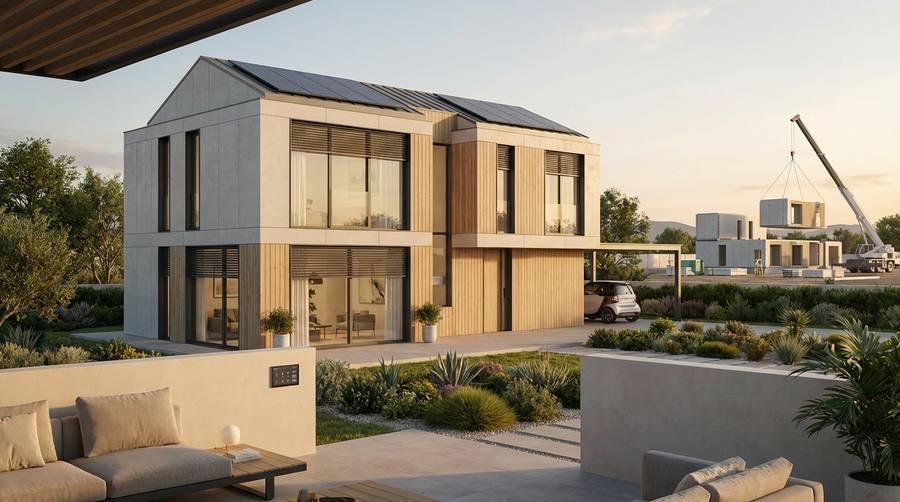
Assembly involves foundation works, delivery logistics and on‑site assembly—followed by commissioning and warranty handover.
- Transport windows: Plan deliveries for off‑peak hours and check local road permits early.
- Warranty: Obtain written guarantees for structure, envelope and installations; ask for a snagging list and commissioning report.
- Actionable tip: Insist on a final thermal and airtightness test (blower door) as a contract milestone.
5. Financing and mortgages for modular self‑build projects
Financing autopromotion with industrialized housing is increasingly mainstream. Banks are updating products to handle staged payments and factory production.
5.1 Mortgage options and specific guarantees
Options include project mortgages with staged disbursements, construction loans, and mortgages for self‑builders (hipotecas autopromoción).
- Staged disbursements: Payments tied to milestones—foundation, factory completion, on‑site assembly, handover.
- Guarantees: Some lenders request additional collateral or a completion guarantee from the manufacturer.
- Actionable tip: Compare offers from banks that have experience with modular providers and ask about release conditions for factory costs.
5.2 Financial planning: payment calendars and risk control
A tight payment schedule aligned with production phases reduces cash exposure.
- Budget buffer: Keep a contingency (5–10%) for design changes and site works.
- Cashflow: Match lender disbursements with supplier invoices to avoid bridging loans.
5.3 Grants and incentives (Spain 2024–2026): where to look
Several regional and national schemes support energy efficiency upgrades and low‑carbon housing. These can reduce net costs for Passivhaus or near‑zero homes.
- Useful sources: Agencia Estatal de Vivienda, regional energy efficiency grants and EU NextGeneration funds (check eligibility and application timelines).
- Actionable tip: Apply early—grant decisions can affect project viability and cashflow.
6. Practical cases and measurable comparison vs traditional builds
Data speaks louder than promises. Below are condensed case metrics and comparative observations to guide decisions.
6.1 Case study: 140 m² single-family modular home (Spain, 2023)
- System: Timber frame with high‑performance insulation and MVHR.
- Timeline: 10 months total from contract signature to keys available; 6 weeks on‑site assembly.
- Cost: Final cost ~1,650 €/m² all‑in (including foundation and landscaping).
- Client satisfaction: 9/10 on delivery predictability and thermal comfort; main disappointment related to landscaping timing.
6.2 Comparative metrics vs traditional construction
- Time: Industrialized: 6–10 months; Traditional: 10–18 months (variable by weather).
- Cost variance: Industrialized: ±5–8% from contract; Traditional: ±15–30% due to change orders and delays.
- Energy: Industrialized Passivhaus: heating < 15 kWh/m²·yr; Traditional: commonly > 60 kWh/m²·yr unless retrofitted.
6.3 Lessons learned and selection criteria
Choose providers based on documented factory QA, transparent pricing, logistics experience and demonstrated technical compliance with Spanish regulation.
- Checklist: factory visit, client references, sample panels, QA reports, insurance and warranty terms.
- Common pitfalls: inadequate site access planning, unclear responsibility for utilities and loose integration between design and factory documentation.
Conclusion
Industrialized housing offers autopromotores in Spain a credible path to faster, more predictable, energy‑efficient homes. By choosing the right materials—concrete, timber or steel—and insisting on factory QA, airtightness testing and transparent financing, you reduce risk and improve long‑term comfort and value.
Final actionable step: Start with a feasibility checklist: site suitability, manufacturer QA, financing terms and a formal snagging and commissioning plan. If you want, contact a trusted modular provider early to align design and factory schedules.
Ready to explore options for your plot? Consider scheduling a feasibility call to map costs, timeline and energy targets for a tailored industrialized solution.
Artículos relacionados
Industrialized Housing vs Traditional Homes: Pros & Cons
A balanced, data-driven guide for self-builders in Spain comparing industrialized housing and traditional construction. Practical checklists, materials analysis, Passivhaus feasibility, turnkey process and financing tips to decide which route fits your goals.