Industrialized Housing: Top 6 Keys to Choose in Spain
1. Essentials before choosing industrialized housing
Hook: If you’re planning to build in Spain, choosing an industrialized home can cut months off delivery time, fix your cost risk and improve energy performance — but only if you know what to check first.
What distinguishes industrialized housing from traditional builds in Spain
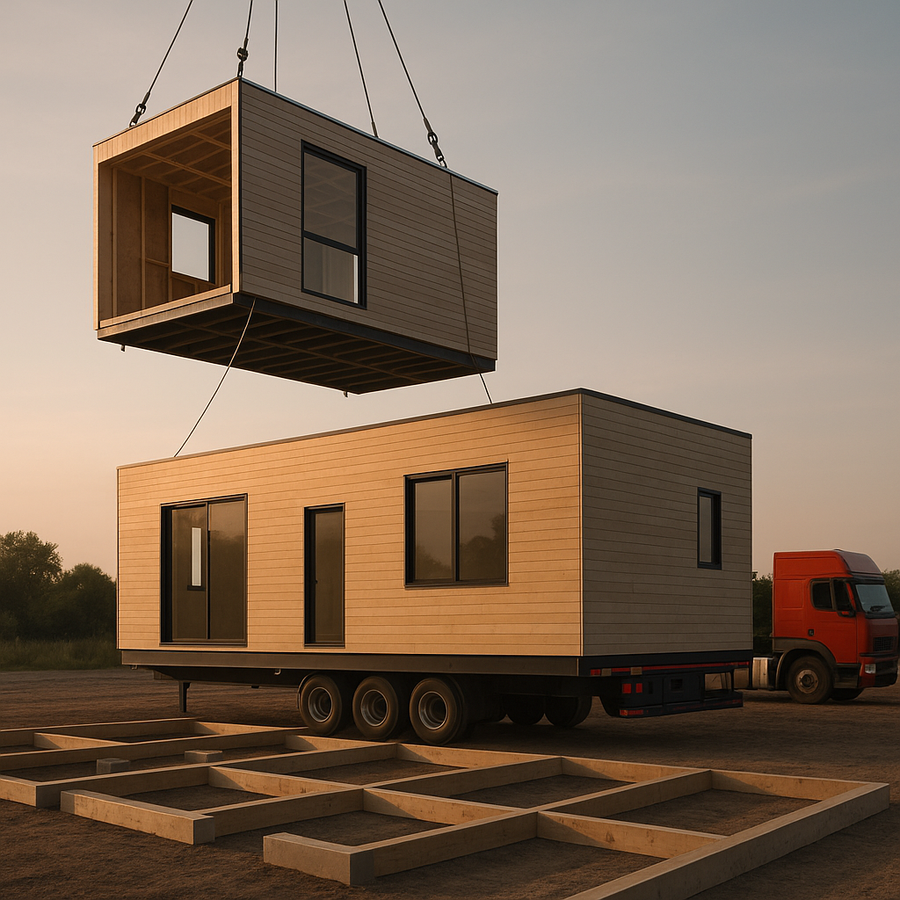
Industrialized housing is a delivery model where large portions of the home are produced in controlled factory conditions and assembled on site. The key practical differences are:
- Factory-controlled quality: consistent thermal layers, tighter joints and repeatable assemblies;
- On-site time reduced: less weather exposure and fewer time-dependent trades;
- Clear scope: turnkey contracts often bundle design, production, transport and finish.
Key factors: timeline, fixed price and site control
Ask for documented guarantees on three commercial pillars:
- Firm delivery date aligned with penalties or liquidated damages;
- Price breakdown showing what is fixed and what may vary (land, utilities, permits usually excluded);
- Quality control plan explaining factory QA, on-site checks and warranties.
Questions to answer before you start (plot, finance, regulations)
Before signing, make definitive decisions on:
- Plot constraints: topography, access for crane and transport, connection points for utilities;
- Financing path: conventional mortgage vs. self-builder loan or modular-specific mortgage;
- Local regulation: EIA, urban planning rules, seismic or coastal requirements.
These three elements determine which systems and suppliers are feasible.
2. Advantage 1: Shorter schedules and reliable delivery dates
How factory production shortens on-site work
Producing components in workshop conditions separates long lead-time activities (structure, insulation, windows) from site-dependent tasks (foundations, connections). That parallelization reduces overall calendar time by:
- Concurrent activities: while the factory builds modules, foundations and services are prepared on-site;
- Less weather downtime: interior work finished in factory avoids rain delays;
- Fewer subcontractor overlaps: instalments are sequenced with fewer critical-path conflicts.
Real example: schedule comparison with a traditional house
Case study (Spain, 2023): a 150 m2 single-family project produced in light timber frame modules.
- Traditional build: 14–20 months from groundworks to occupancy.
- Industrialized delivery: 6–9 months total — 8 weeks for foundations, 10 weeks factory, 4 weeks assembly and finishes.
Net time saved: ~8 months. The industrialized route also offered a reliable completion week, enforced contractually.
Risks mitigated and delivery guarantees
To maintain delivery reliability, require:
- Contractual milestones with linked payments;
- Clauses for scope changes and their cost/time effects;
- Insurance and performance bonds for transport or factory delays.
Projects that shift critical-path works to the factory reduce site uncertainty: you buy calendar certainty when you buy industrialized housing — if contracts and QA are solid.
3. Advantage 2: Fixed price and financial predictability
Cost structure in turnkey modular projects
Turnkey modular pricing typically bundles:
- Design and engineering;
- Factory fabrication;
- Transport and on-site assembly;
- Interior finishes and commissioning;
- Warranty and post-delivery service.
What is often excluded: plot acquisition, Iberian utility connections, local taxes and extraordinary site remediation. Clarify these exclusions before signing.
Case study: actual costs and controlled deviations
Study (mid-size family home, Spain): initial turnkey quote €220,000. Final billed amount €225,000 (+2.3%) after minor scope changes (kitchen upgrade and additional landscaping). Control levers that kept deviation low:
- Fixed-price factory scope;
- Change-order procedure tied to allowances and lead times;
- Transparent schedule of provisional sums (services, permits).
Financing options and mortgages for modular self-builds
Options available in Spain for autopromoters:
- Self-build mortgage: staged draws linked to construction milestones;
- Modular lender programs: some banks accept turnkey contracts as collateral for a standard mortgage;
- Bridge financing: for plot acquisition until main drawdown.
Advice: secure pre-approval and confirm the lender accepts factory-produced valuations and the turnkey contract format.
4. Advantage 3: Modern materials and energy performance
Technical comparison: industrial concrete vs. timber frame vs. steel frame
Summary of typical performance vectors:
- Industrialized concrete: high thermal mass, robust acoustic performance, excellent fire resistance; heavier logistics and foundations required;
- Light timber frame (entramado ligero): fast, high thermal insulation-to-weight ratio, sustainable if sourced certified wood; requires careful detailing for airtightness;
- Steel frame (steel frame): high precision, long spans and robustness; thermal bridging must be addressed with external insulation and thermal breaks.
Choice depends on site restraints, desired thermal inertia and embodied carbon targets.
How to achieve Passivhaus-level efficiency and lower carbon footprint
Practical measures for factory-built projects:
- Continuous airtightness strategy: factory-controlled tapes and panel joints with site blower-door validation;
- High-performance glazing: triple glazing with warm-edge spacers and thermally broken frames;
- Mechanical ventilation with heat recovery (MVHR): sized and commissioned to maintain low heating demand;
- Optimized roof and wall U-values: balanced with thermal mass to avoid overheating in Mediterranean climate.
Maintenance, durability and long-term thermal behaviour
Industrialized systems often simplify maintenance because components are standardized and replaceable. Ask for lifecycle documentation that covers:
- Expected service life for envelope components;
- Repair procedures for external finishes;
- Access for equipment replacement (e.g., MVHR units).
5. Advantage 4: Sustainability and verified certifications
Concrete measures to reduce carbon in process and on-site
Implementable strategies that make a measurable difference:
- Low-carbon mixes: use industrialized concrete with supplementary cementitious materials (SCMs) to cut embodied CO2;
- Optimized transport logistics: plan factory runs to minimize return trips and use low-emission transport where possible;
- Material reuse and circular suppliers: specify recyclable insulation and modular finishes designed for deconstruction.
Certifications and metrics: energy and lifecycle
Relevant certifications and tools:
- Energy performance certificates (EPC) and voluntary standards such as Passivhaus or PHI Low Energy;
- Whole Life Carbon assessments (WLCA) for embodied carbon;
- LCA tools tailored for modular supply chains to compare system options.
Benefits for occupants: comfort, savings and resale value
Outcomes users notice:
- Stable indoor temperatures and lower energy bills;
- Improved acoustic comfort;
- Market differentiation: certified low-energy homes frequently trade at a premium in Spain’s resale market.
6. Practical close: how to plan your turnkey modular project
Step-by-step checklist: plot to post-sale
Consolidated checklist to use as a template:
- Secure and inspect plot (access, geotech, services).
- Define budget and secure financing pre-approval.
- Select a delivery model: turnkey contract with a reputable industrialized supplier.
- Decide main structural system (concrete, timber, steel) based on site and energy goals.
- Agree on milestones, penalties and QA process; include blower-door and commissioning checks.
- Coordinate permits and utility connections early.
- Monitor factory production with regular reports and photographic evidence.
- Plan and budget for landscaping and external works separately from turnkey offer if necessary.
- Complete post-occupancy review at 6–12 months and record any snagging items under warranty.
Real cases with metrics: time, cost and client satisfaction
Aggregated metrics from three recent projects (Spain):
- Average delivery time: 7 months (foundations to keys).
- Average cost deviation: 2.5% when changes controlled through formal change orders.
- Client satisfaction: 88% report lower-than-expected energy bills and high satisfaction with construction speed.
These numbers reflect disciplined procurement, clear contracts and early alignment on finishes.
Next steps: permits, system selection and funding
Final practical reminders:
- Engage a project manager experienced in modular delivery to coordinate approvals and factory timelines;
- Choose your structural system based on plotted constraints and lifecycle goals;
- Confirm funding pathways early and ensure the lender recognises the turnkey contract model.
For a detailed implementation guide, read our related article Vivienda modular: ventajas y guía llave en mano which covers procurement and supply chain coordination in depth.
Conclusion
Takeaway: Industrialized housing can deliver faster schedules, better cost control and higher energy performance — provided you insist on robust contracts, verified QA and a clear financing plan. Use the checklist above to validate offers and require measurable guarantees on delivery, performance and aftercare.
If you’re planning a self-build in Spain and want tailored advice on system selection, permits or financing paths, contact a specialist to review your plot and propose a realistic turnkey path.
Call to action: Ready to evaluate your plot and get a realistic modular plan? Reach out for a feasibility review and timeline estimate.
Artículos relacionados
Modular Housing: Smart Alternative to Traditional Build
Modular housing offers a modern, efficient and sustainable path to homeownership for self-builders. Learn how modern materials, turnkey processes and tailored financing make modular housing a practical alternative to traditional construction in Spain.