Prefabricated Passivhaus: Top Advantages & Practical Guide
Prefabricated Passivhaus: Top Advantages & Practical Guide
Hook: If you're planning a self-build in Spain, choosing a prefabricated Passivhaus shortens delivery time, fixes costs and dramatically cuts energy bills. This guide gives actionable steps, realistic metrics and a clear checklist to decide with confidence.
1. What is an industrialized Passivhaus and why it matters now?
Overview: concept, goals and benefits for families in Spain
A prefabricated Passivhaus combines industrialized construction methods with the rigorous energy-performance standard of Passivhaus. The goal: deliver homes with very low heating and cooling demand while taking advantage of factory-controlled quality and predictable delivery times. For Spanish families, the outcome is comfort, lower utility bills, and resilience to rising energy prices.
Key differences vs a traditional Passivhaus built on-site
- Factory control: components are produced under consistent conditions, reducing workmanship variability.
- On-site time: assembly is faster—wet trades are minimized—so weather-related delays drop sharply.
- Cost predictability: fixed-price contracts are easier to enforce with modular packages and clear scope.
How industrialization fits the sustainability and efficiency agenda
Industrialized Passivhaus leverages precise material use and controlled assembly to reduce waste and optimize airtightness and insulation. That aligns with national decarbonization goals and offers scalable ways to deliver more high-performance homes faster.
Choosing industrialized Passivhaus methods can cut on-site time by 50–80% while improving airtightness and long-term energy performance.
2. Main advantages of choosing a prefabricated Passivhaus
Energy efficiency and real carbon reduction
Passivhaus-level insulation, mechanical ventilation with heat recovery (MVHR) and meticulous airtightness combine to reduce operational energy by 70–90% compared to typical new builds. In practice this means:
- Annual heating demand often below 15 kWh/m²·yr in temperate Spanish climates.
- Lower lifetime CO2 when paired with low-carbon materials and renewable electricity.
Closed-site times and fixed-price contracts: what to expect
Prefabrication compresses the construction calendar. Typical milestones for a 150–200 m² single-family home:
- Design & permits: 3–6 months
- Factory production: 6–10 weeks
- Transport & on-site assembly: 1–3 weeks
- Finishes & commissioning: 4–8 weeks
Result: predictable handover within 6–9 months after permits, compared with 12–24 months for conventional builds. Fixed-price tendencies make budgeting simpler—but always include a contingency (5–10%).
Build quality and industrial control vs conventional variability
Factory QA protocols ensure consistent insulation thickness, precise junctions and tested airtightness at panel level. This reduces call-backs and long-term maintenance issues common in site-built envelopes.
3. Modern materials and systems for industrialized Passivhaus
Practical comparison: industrialized concrete vs light timber frame vs steel frame
- Industrialized concrete: excellent thermal mass and durability; best for sites with seismic or durability demands. Requires careful detailing to avoid thermal bridges.
- Light timber frame: high insulability, low embodied carbon, rapid production. Ideal for tight envelopes and interiors with warm finishes.
- Steel frame: high strength-to-weight ratio and long spans; good where structural thinness is needed. Thermal breaks and insulation must be prioritized to avoid bridges.
Choose based on site constraints, budget and desired aesthetic. For Mediterranean designs, timber or concrete with natural finishes often aligns best with lifestyle expectations.
Insulation, airtightness and thermal bridge solutions that work
- Use continuous exterior insulation: mineral wool, rigid PIR or wood-fibre panels sized to meet U-values for Passivhaus.
- Prefabricated sealed panels with factory-installed membranes reduce on-site sealing time.
- Detail junctions with prefabricated thermal break elements—window reveals and balconies are common trouble spots.
Finishes selection and construct details that favor comfort and durability
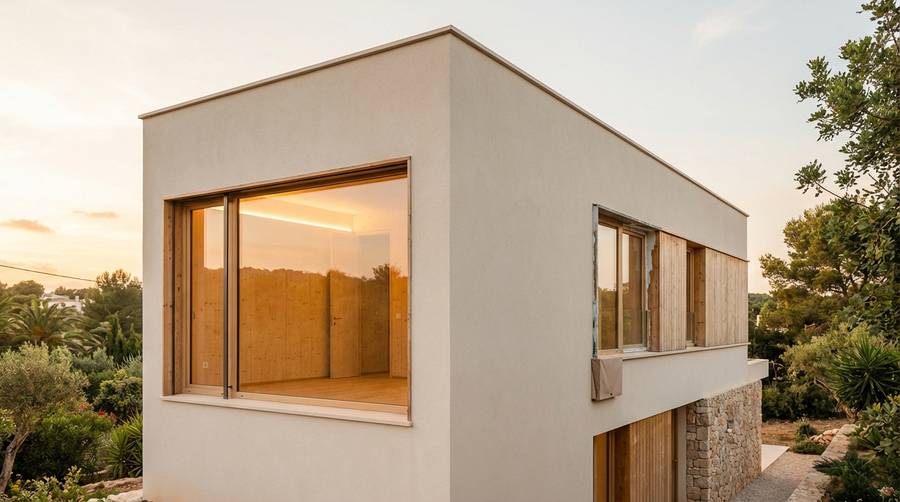
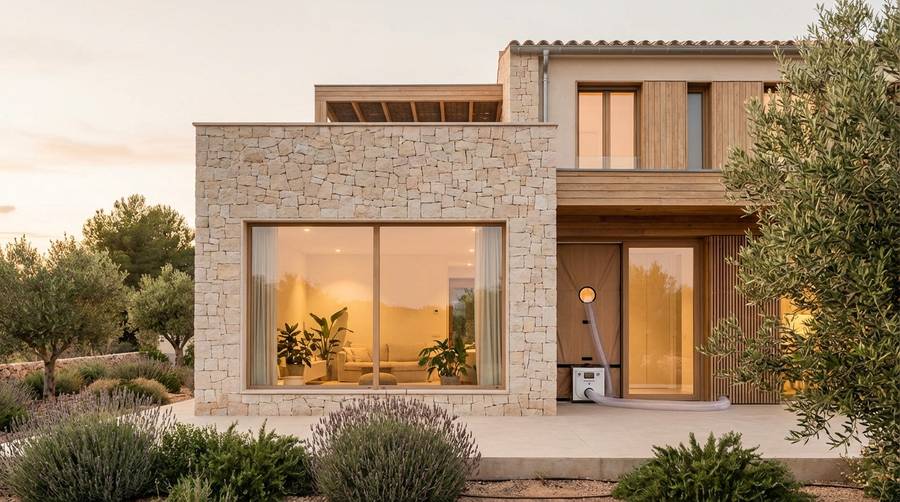
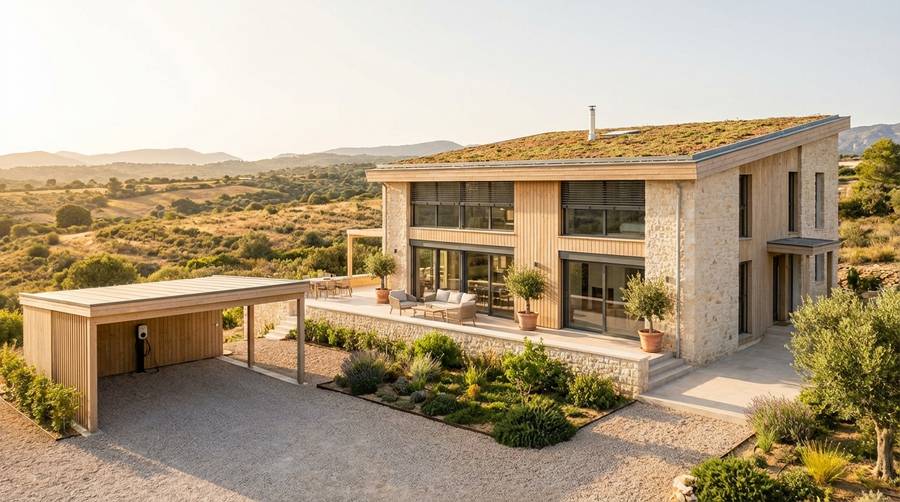
Opt for breathable interior finishes where wood or lime-based plasters are used. Exterior claddings—natural stone, timber rainscreen or light-coloured render—reduce overheating risk and fit the Mediterranean aesthetic.
4. Turnkey process explained step by step
From finding a plot to technical design: milestones and typical durations
- Site assessment (2–4 weeks): check orientation, access, utilities, and local rules.
- Concept design & budget (4–8 weeks): schematic plans, passive strategies and preliminary cost plan.
- Planning & building permits (3–6 months): local approvals vary—early engagement with local architects reduces surprises.
- Technical design & production files (6–10 weeks): full Passivhaus detailing, factory drawings and logistics plan.
Manufacture, transport and on-site assembly: coordination and QA
Key coordination points:
- Factory QA tests (materials, panel dimensions, pre-install MVHR runs).
- Transport windows and route checks—permits for oversized loads may be needed.
- On-site foundations and services must be ready at assembly. A 1–2 week crane schedule is common.
Quality control continues with on-site airtightness testing and incremental inspections tied to the turnkey contract.
Handover and commissioning: Passivhaus tests and user manual
At delivery, expect:
- Blower door test and MVHR commissioning.
- Thermal imaging checks and final defect list closure.
- A user manual explaining ventilation, maintenance and seasonal behaviour—critical for occupant satisfaction.
5. Financing for self-builders and mortgage options
Self-build mortgages: requirements, timelines and specifics in Spain
Banks in Spain offer specific mortgages for self-build projects. Typical conditions:
- Staged disbursement: funds released at milestones (permit, foundation, roof-on, handover).
- Higher documentation: detailed budget, contractor/supplier contracts and insurance.
- Loan-to-cost usually lower than standard mortgages—expect 60–80% depending on collateral.
Financing models for modular housing and common bank guarantees
For prefabricated Passivhaus, lenders look favorably on fixed-price turnkey contracts and proven suppliers. Common requirements include:
- Performance bonds or completion guarantees.
- Evidence of factory capacity and warranties on envelope performance.
- Energy-efficiency incentives or green mortgage discounts may apply—ask your bank for current programs.
Practical budgeting tips to avoid overruns
- Include a dedicated contingency (5–10%) for unforeseen site work.
- Lock material selections early—late changes cost more with prefabrication schedules.
- Negotiate staged payments tied to objective milestones to keep cashflow aligned with real progress.
6. Real cases and metrics: data that matters (practical wrap-up)
Case study 1: timelines, costs and client satisfaction (real metrics)
Example: 165 m² Passivhaus near Valencia, timber-frame panels factory-built.
- Total design-to-handover: 8 months after permits.
- Construction cost (turnkey): competitive with high-quality conventional new builds—specifics depend on finishes; in this project the final cost per m² aligned with market benchmarks for premium builds.
- Client satisfaction: post-occupancy survey at 12 months showed high comfort scores and zero call-backs related to envelope defects.
Case study 2: energy savings and payback
Same home recorded annual heating energy ~12 kWh/m². With local electricity prices, operational savings produced a payback on the energy premium in under 15 years when accounting for lower maintenance and higher resale value in energy-conscious markets.
How to choose a provider and final checklist to decide with confidence
Checklist to vet suppliers:
- Proven Passivhaus experience and certified projects.
- Factory tour or documented QA protocols.
- Clear turnkey contract with milestones, warranties and airtightness targets.
- References and post-occupancy data.
Also review warranty terms for structure, envelope and MEP systems. A strong supplier will provide a comprehensive handover package and user manual.
Conclusion: Is a prefabricated Passivhaus right for your self-build?
For many self-builders in Spain, a prefabricated Passivhaus offers a compelling blend of speed, quality and long-term savings. The industrialized approach mitigates many risks of conventional builds while enabling high performance. However, success depends on early planning, reliable suppliers and realistic budgets.
Next step: Start with a site feasibility review and a clear turnkey quote. If you want a tailored checklist for your plot or help comparing suppliers, read our Passivhaus guide or contact a specialist to review your options.
Ready to evaluate your plot? Compile your site information and financing parameters, and seek 2–3 turnkey proposals to compare terms and guarantees before committing.
Artículos relacionados