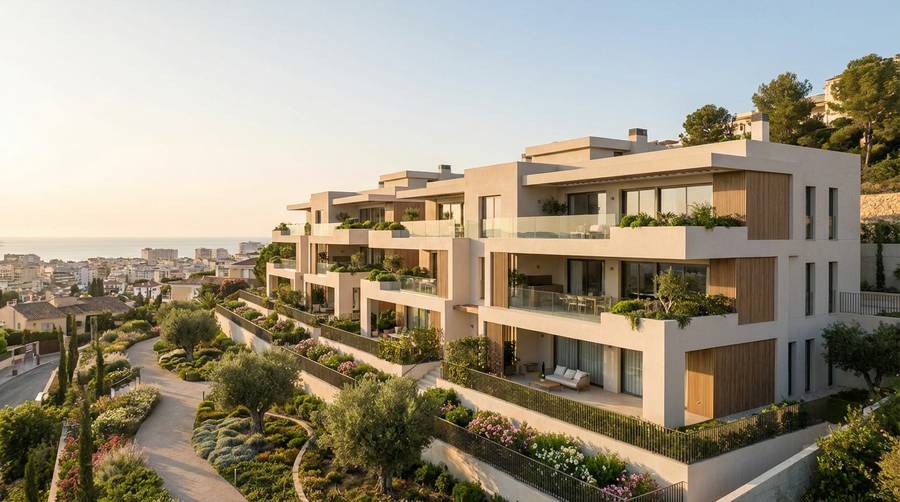
High-Rise Modular Apartments: Complete Guide 2026
Why choose high-rise modular apartments in Spain: key advantages
Imagine cutting construction time in half while locking in price and improving energy performance. That is the concrete outcome many promoters and self-builders are seeing with high-rise modular apartments in Spain.
Below we map the precise benefits, supported by metrics and practical recommendations so you can evaluate whether modular high-rise is right for your project.
Efficiency and reduced schedules: construction times vs traditional
Factory production + on-site assembly = predictable, shorter timelines. Typical timeline comparisons (median values observed in recent Spanish projects):
- Traditional in-situ concrete multi-storey: 18–30 months.
- High-rise modular (off-site manufacture + on-site assembly): 10–16 months.
Time reductions come from parallelization: while site works and foundations progress, modules are produced in controlled factory conditions. This minimizes weather delays and repetitive on-site trades.
Cost control and fixed budgets: how a fixed price is achieved
Modularity and repeatability reduce uncertainty. Key cost-control mechanisms:
- Fixed production rates in factory contracts calibrated per module type.
- Defined scope through modular families and finish schedules.
- Integrated supply chains with preferred material lists (reduces price volatility).
Example: projects that adopt standardized façades and repeated module layouts typically achieve a margin of error of ±4% on construction cost vs ±10–15% in bespoke traditional builds.
Sustainable advantages: carbon footprint, energy efficiency and Passivhaus compatibility
Industrialized processes reduce waste and improve thermal continuity. Benefits for sustainability:
- Lower site waste and higher material yield in factory settings.
- Better quality control for insulation, airtightness and thermal bridges—key to Passivhaus performance.
- Shorter on-site durations reduce transport and machinery emissions.
Buildings produced under industrialized methods can reduce embodied carbon by 10–30% and operational energy by 30–60% when combined with Passivhaus strategies.
Design and materials: choosing the right construction solution
Selecting the appropriate structural system is decisive for cost, buildability and long-term performance. Below is a focused technical comparison to guide decisions.
Technical comparison: industrialized concrete vs timber light-frame vs steel frame
Industrialized concrete
- Strengths: high mass for acoustic performance and fire resistance; familiar regulatory acceptance in Spain.
- Trade-offs: heavier foundations and transport constraints for large precast elements.
Timber light-frame (cross-laminated timber or light timber frame)
- Strengths: light weight, speed, excellent thermal performance, low embodied carbon.
- Trade-offs: acoustic solutions and fire strategies must be carefully engineered for multi-storey.
Steel frame (light-gauge or hybrid)
- Strengths: precise tolerances, long spans and slimmer sections for more usable floor area.
- Trade-offs: thermal bridging requires careful detailing; corrosion protection needed in coastal zones.
Decision guideline: choose concrete or hybrid where mass and acoustic performance are priorities; timber or steel where speed and carbon reduction are primary objectives.
Architectural detailing for height: façades, insulation and structural behavior
For high-rise modulars, façades need to balance modular repetition with contextual quality. Prioritize:
- Continuous insulation layers and factory-applied air barrier membranes.
- Façade modules or rainscreen panels that allow thermal continuity at joints.
- Detail fire-stopping and acoustic seals at module junctions.
Habitability and acoustic criteria in multi-storey modular apartments
Resident comfort depends on acoustic separation and indoor climate control. Target values to aim for:
- Partition airborne sound insulation (R'w) ≥ 53 dB between dwellings.
- Impact sound (L'nT) optimized with floating screeds or resilient layers where required.
- Controlled ventilation with heat recovery to meet Passivhaus indoor air quality without compromising airtightness.
Turnkey process: from plot to handover
Delivering a successful turnkey project requires a clear roadmap. Below is an actionable sequence with common durations and deliverables.
Project phases: feasibility, design, manufacture, assembly and finish
- Feasibility (4–8 weeks): site constraints, plot geometry, shadow and access studies.
- Design & approvals (8–20 weeks): schematic, technical, coordination with structural and MEP teams.
- Factory production (12–20 weeks): module fabrication in parallel to on-site foundations.
- On-site assembly (4–8 weeks): craning, alignment and intermediate services connections.
- Fit-out & commissioning (4–12 weeks): final finishes, systems commissioning and snagging.
Coordination tip: run weekly integrated site-factory meetings and use a shared BIM or digital schedule to match module serial numbers with site slots.
Permits, coordination with local councils and typical timelines in Spain
Permit timelines vary by municipality. Typical expectations:
- Basic municipal building permit: 8–16 weeks if documentation is complete.
- Special approvals (heritage, coastal): additional 8–20 weeks depending on complexity.
Engage with the Ayuntamiento early, sharing detailed drawings and fire strategy to prevent late objections that delay production.
Handover and aftercare: guarantees, maintenance and quality control
Turnkey delivery should include:
- Clear defect liability periods and scope (typically 1–2 years for finishes, 10 years for structural items).
- Maintenance manuals and module-specific spare part lists.
- Post-occupancy evaluation at 6–12 months to confirm performance targets and resident satisfaction.
Financing and taxation for self-build promoters of modular buildings
Financing is a decisive variable for autopromotores. The modular approach can make lending easier due to shorter exposure and clearer milestones.
Financing options: self-build mortgages and dedicated lines
Common instruments:
- Self-build (autopromoción) mortgages that release funds by construction milestones.
- Developer credit lines tied to module deliveries and site completion.
- Green loans or preferential rates for projects targeting Passivhaus or similar energy standards.
Realistic budgeting: cost per m2 and margins to consider
Indicative construction costs (Spain, 2026 market averages):
- High-rise modular, mid-range finishes: €1,400–€1,900/m2.
- High-spec Passivhaus modular: €1,900–€2,400/m2.
Include contingencies: 6–10% for design changes and 2–4% for logistics risks.
Incentives and grants linked to energy efficiency and industrialized construction
National and regional incentives may include:
- Grants for energy upgrades and efficient new builds.
- Tax incentives for embodied carbon reductions in certain autonomous communities.
Work with a fiscal advisor to map eligibility early in the feasibility phase.
Real case studies: metrics, timelines and outcomes
Practical examples demonstrate what is achievable when design, finance and production align.
Case 1 — 12-unit residential building: timelines, costs and client satisfaction
Summary:
- Type: 3-storey building with 12 apartments, hybrid concrete-steel system.
- Timeline: 14 months from permit to handover.
- Cost: €1,650/m2 final construction cost.
- Outcome: delivered 10% under initial worst-case estimate; client satisfaction 4.6/5 at 12 months.
Case 2 — Co-housing block with Passivhaus certification
Summary:
- Type: 24-unit co-housing block using timber modules and mechanical ventilation with heat recovery.
- Energy: measured heating demand < 15 kWh/m2·year, achieved Passivhaus EnerPHit-level airtightness.
- Timeline: 16 months; high resident satisfaction for indoor comfort and energy bills.
Lessons and repeatable metrics for new projects
Key lessons:
- Early integration of structural, fire and MEP design avoids later rework.
- Standardized module families reduce unit variation and cost.
- Post-occupancy monitoring secures proof points for lenders and future buyers.
Practical guide for self-builders: how to launch your modular project
Below is a focused, actionable checklist to move from idea to executed high-rise modular apartments.
Initial checklist: plot, programme and professional team
- Confirm plot constraints: access, structural ground study, urban parameters.
- Draft programme: unit mix, common spaces, target energy level (e.g., Passivhaus).
- Assemble a core team: architect with modular experience, structural engineer, manufacturer partner and project manager.
Key decisions during design and production: modules, finishes and assembly logistics
- Decide module footprint consistent with transport and crane capacities.
- Specify factory-applied systems (air barrier, insulation) to minimize on-site trades.
- Plan site logistics: staging area, crane position and sequential lifting plan.
Estimated calendar and milestones to control cost and quality
- Milestone-based financing tied to foundations completion, module shipment and commissioning.
- Quality gates at factory (pre-shipment inspection) and on-site (alignment and airtightness testing).
- Use a Gantt with float to manage risk and communicate to stakeholders weekly.
Trends and recommendations for the future: scale and market outlook post-2026
The modular high-rise segment is maturing. Expect these trends:
Material and digital innovations shaping modular construction
- Increased use of engineered timber hybrids to reduce carbon while retaining acoustic mass.
- Greater digital integration (BIM + manufacturing execution systems) to reduce tolerance issues.
Business models and collaboration between promoters, factories and communities
Collaborative models—co-development agreements and long-term maintenance contracts—improve viability by aligning incentives across stakeholders.
Final recommendations to choose a provider and avoid common risks
How to select a supplier:
- Ask for measured references and post-occupancy data, not only glossy renders.
- Verify warranty coverage, spare-part supply and maintenance services.
- Require pre-shipment factory inspections and third-party testing for airtightness and acoustic performance.
Practical closing thought: the combination of industrialized production, smart material choices and a well-structured turnkey process can deliver high-quality, energy-efficient high-rise apartments faster and with less financial uncertainty than traditional routes.
Successful modular high-rise projects are those that treat design, finance and manufacturing as one integrated process—not three separate phases.
If you are planning a development or self-build in Spain, start by validating an early feasibility with modular manufacturers and map financing against measurable milestones—this simple step alone reduces risk significantly and speeds delivery. Reach out to trusted partners for a feasibility review and a realistic budgeted schedule; the right front-loaded work saves months and thousands of euros down the line.
Artículos relacionados
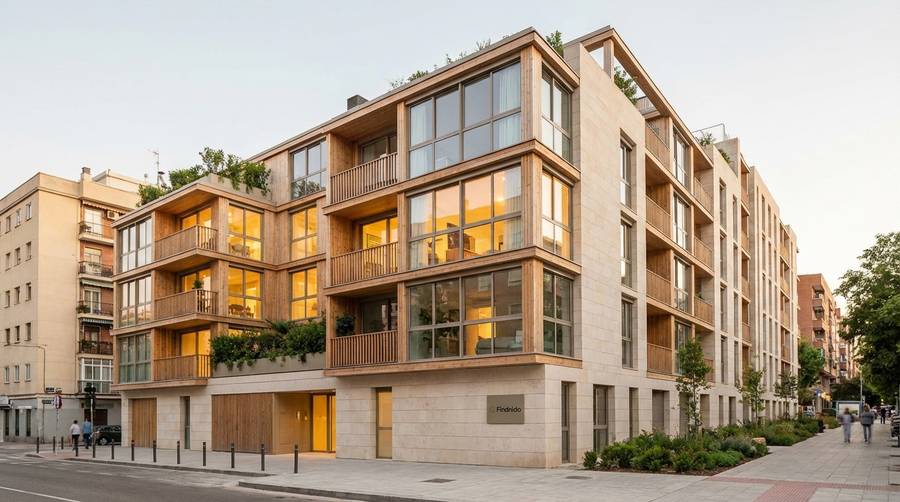
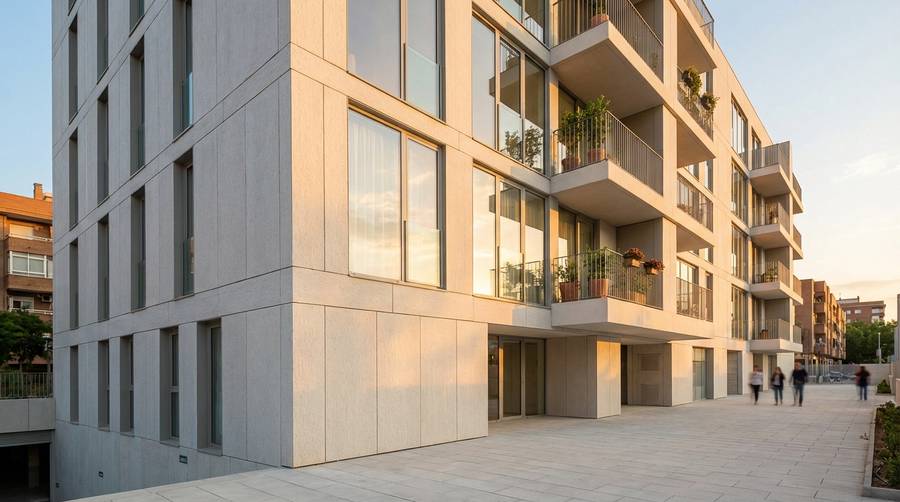
Modular Housing Case Study: High-Rise Turnkey Success
A Spanish developer chose modular construction for a high-rise turnkey project. This case study details choices in materials, a strict schedule, real cost metrics and measurable energy savings—plus practical advice for future autopromoters.