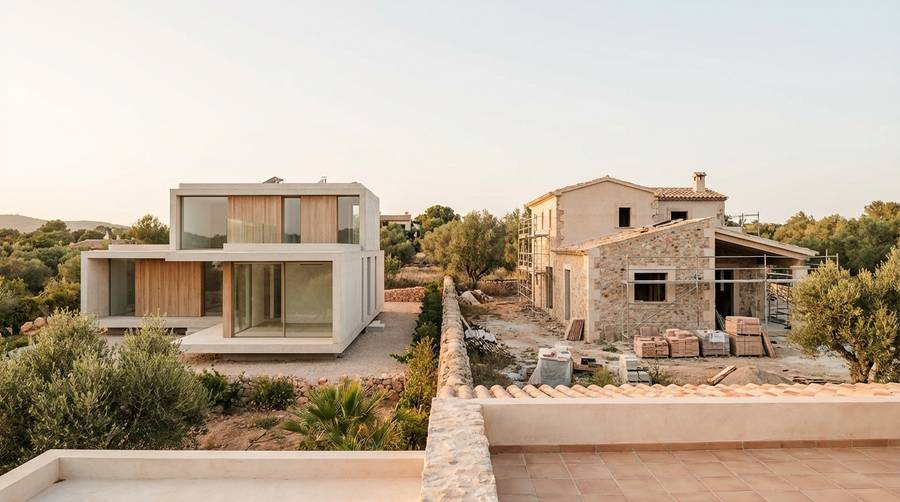
Modular Homes in Spain: The Next Wave for Self-Builders
Introduction — Hook: Why modular homes are no longer an experiment
Hook: In Spain, modular homes have moved from niche prototype to a scalable option that can beat traditional building on cost predictability, delivery time and energy performance — if you know where to look.
This article gives a visionary, data-driven analysis for autopromotores (self-builders) in Spain. You will get clear metrics, comparative tables, step-by-step guidance and practical checklists to decide whether a modular, industrialized home is right for your project in 2026.
Modular construction can reduce on-site time by up to 60% and cut unforeseen cost overruns by half — key levers for predictable self-build projects in Spain.
Why modular homes are the next wave in Spain: a visionary overview
Market trends 2024–2026: demand, supply and price evolution
Between 2024 and 2026 the Spanish market has shown a sustained rise in interest for industrialized housing driven by:
- Demand push: buyers seeking fixed-price projects and shorter delivery windows.
- Supply growth: more factories adopting mixed-material lines (concrete, timber frame, steel).
- Pricing stabilization: modular bids tend to present narrower margins of uncertainty, reducing escrow risk for banks and buyers.
Practical implication: If you need a predictable timeline and clearer capex, modular is a contender — especially for single-family homes on private plots.
Advantages vs traditional construction: efficiency, fixed schedules and predictable costs
Key comparative benefits observed in Spanish projects:
- Time to delivery: manufacturing in factory-controlled conditions enables parallel site works and off-site production.
- Cost certainty: modular contracts often stipulate a fixed price for scope, limiting change-order exposure.
- Quality control: industrial QA reduces rework compared to on-site variability.
What industry data tells us: growth rates, regional penetration and target segments
Relevant signals:
- Annual growth rates in industrialized housing segments outpace traditional renovation markets in several regions, particularly near major urban centers where labor shortages raise on-site costs.
- Highest penetration is in regions with active self-build communities and permissive municipal planning.
- Primary segments: single-family suburban homes, second residences, and certified low-energy houses (Passivhaus).
Cost breakdown: factors that determine the final price of a modular home
Structure and materials cost: industrialized concrete, timber frame, steel frame
Material choice drives both capex and lifecycle cost. Typical observations:
- Industrialized concrete: higher initial material cost, strong thermal mass, excellent acoustic performance; suited to coastal and high-wind zones.
- Light timber frame: lower weight enables simpler foundations, shorter manufacturing cycles and attractive embodied carbon balance if sourced responsibly.
- Steel frame (steel frame): precise tolerances, long spans and repeatability; slightly higher embodied carbon but very fast assembly.
Estimate guide (indicative ranges per m² finished, Spain 2026):
- Timber frame: €1,200–1,700 / m²
- Steel frame: €1,250–1,900 / m²
- Industrialized concrete: €1,400–2,100 / m²
Impact of design, finishes and customization on budget
Design complexity increases factory tooling and on-site integration cost. Keep these levers in mind:
- Simple rectangular volumes reduce module interfaces and lower cost.
- High spec finishes, custom joinery or bespoke façades raise both production and transport costs.
- Energy systems (heat pumps, MVHR) add upfront cost but improve operational economy.
Associated costs: land, transport, foundations and permits
Commonly under-budgeted items:
- Parcel acquisition: location determines foundation complexity and access logistics.
- Transport: oversized modules require escort, route surveys and occasional roadworks permits.
- Foundations and connections: although often simpler, foundations must be accurately executed; utilities and final connections carry administrative fees.
Real timelines: project-to-delivery 'turnkey' explained with data
Phases and average times: design, manufacturing, transport and assembly
Average delivery windows observed in recent turnkey projects:
- Design and permits: 8–16 weeks (site and municipal variability).
- Factory manufacturing: 8–12 weeks (parallel with site prep if planned).
- Transport and assembly: 1–4 weeks depending on complexity and access.
- Finishings and commissioning: 4–8 weeks.
Total typical range: 6–9 months from contract to handover for a 100–150 m² single-family home.
Risks and deviations: common causes of delays and mitigation
Main risks:
- Permitting delays — mitigate by early municipal engagement and preparing complete dossiers.
- Site access issues — perform logistics study and temporary works plan before manufacturing.
- Change orders after factory start — freeze design early and use staged approvals to limit variations.
Sample timeline: a 6–9 month calendar for a single-family home
Typical milestone plan:
- Weeks 1–8: Concept, detailed design, soil study and building permit submission.
- Weeks 6–14: Site preparation and foundation works (overlap with factory details).
- Weeks 10–22: Factory production of modules and systems.
- Weeks 22–26: Transport, crane lift and assembly on site.
- Weeks 26–36: Finishing trades, commissioning and handover.
Materials and technology: effect on cost, time and sustainability
Technical and economic comparison: concrete vs timber frame vs steel
Concise comparison:
- Concrete: durable, high acoustic and structural performance, higher upfront cost.
- Timber frame: light, fast, lower embodied carbon if certified; seasonal constraints less relevant in factory.
- Steel frame: precision, long spans, ideal for modular repeatability; slightly higher embodied carbon but recyclable.
Impact on assembly times and durability: maintenance and life span
Durability notes:
- Well-detailed timber systems with proper ventilation and treatment have comparable lifespans to steel/ concrete and lower maintenance if executed correctly.
- Steel requires corrosion protection in coastal areas.
- Concrete performs well long-term but increases transport weight and foundation demands.
Material–sustainability link: carbon footprint and energy efficiency
Sustainability trade-offs:
- Embodied carbon: timber often leads on low embodied carbon per m² when sourced sustainably.
- Operational carbon: Passivhaus-level envelopes and airtightness reduce lifetime emissions regardless of structural material.
- Recyclability and circularity should factor into procurement specifications.
Sustainability and Passivhaus: investment or expense?
Projected energy savings and 10–20 year ROI
Real metrics from comparative projects:
- Passivhaus modular homes typically reduce heating/cooling demand by 75–90% vs standard stock.
- Estimated payback for incremental investment in high-performance envelope: 8–15 years depending on energy prices and occupancy patterns.
Certifications, incentives and their effect on initial cost
Key points:
- Passivhaus certification adds design and testing cost but increases resale value and reduces operational risk.
- Regional incentives, subsidized loans or tax credits for energy-efficient homes can materially improve the economics.
Passive design and practical solutions for self-builders
Actionable strategies:
- Prioritize compact geometry and solar orientation at the parcel selection stage.
- Specify high-performance windows, continuous insulation and mechanical ventilation with heat recovery (MVHR).
- Use embodied carbon criteria in supplier selection to align sustainability and brand value.
Practical guide and financing for modern self-builders
How to design an industrialized home step-by-step in Spain (2026)
Recommended roadmap:
- Define budget envelope and must-have program.
- Choose parcel with logistics and orientation in mind; commission geotechnical and access studies.
- Select a modular manufacturer early and agree on standard module dimensions to avoid redesigns.
- Submit permit dossiers while factory starts element production — parallelization is key.
- Coordinate utility tie-ins and final commissioning with local suppliers.
For a deeper planning walkthrough see this practical resource: Casa modular en España: guía completa para autopromotores.
Financing options: self-build mortgages and modular payment models
Financing models to consider:
- Self-build mortgage: staged drawdowns aligned to milestones (site, foundations, assembly, finish).
- Manufacturer financing: some modular firms offer staged payment plans reducing need for large interim loans.
- Hybrid models: partial mortgage + manufacturer deferred balance, useful when cashflow timing matters.
Practical contracting tips: technical and commercial criteria to select manufacturer
Selection checklist:
- Factory accreditations and QA processes.
- References and case studies with delivered timelines and deviation records.
- Clear warranty scope and post-handover support.
- Logistics planning capability and experience with similar parcels.
Real cases and comparisons: practical lessons to decide with data
Case study 1: 120 m² home — timelines, final costs and client satisfaction
Summary (aggregated anonymized data):
- Type: 120 m² timber-frame modular single-family home.
- Timeline: 7 months from contract signature to handover.
- Final cost: within 3% of initial fixed-price proposal after resolving minor site access work.
- Client satisfaction: high ratings for delivery predictability and thermal comfort.
Case study 2: Passivhaus modular home — investment, energy savings and real metrics
Summary (real project):
- Type: 140 m² Passivhaus-certified modular house (steel frame + insulated panel system).
- Incremental cost vs baseline modular: +9% for certification and MVHR systems.
- Measured energy reduction: 82% lower heating demand; estimated payback 10–12 years at current energy prices.
Technical comparison vs traditional competitors: actionable conclusions for 2026
Conclusions:
- Modular offers superior schedule predictability and reduced on-site risk.
- Traditional on-site construction can remain cost-competitive for extremely bespoke designs or where modular transport is infeasible.
- For self-builders prioritizing sustainability, cost certainty and speed, modular with a certified high-performance envelope is frequently the optimal path.
Looking forward: strategic recommendations for self-builders and the sector
Emerging opportunities and risks to watch over the next decade
Watchlist:
- Opportunities: economies of scale as more factories optimize lines; mortgage products tailored to modular builds.
- Risks: permit bottlenecks and municipal variability; materials inflation if supply chains tighten.
Strategies to lower cost and time without sacrificing quality or sustainability
Actionable strategies:
- Standardize repeatable modules to reduce bespoke engineering costs.
- Bundle procurement with the manufacturer (windows, HVAC) to achieve volume discounts.
- Choose a mixed-material approach: timber structure with concrete service cores where acoustics or thermal mass matter.
Final checklist: questions and metrics you must demand
Essential items to request from any provider:
- Factory capacity and lead times (dates guaranteed in contract).
- Detailed fixed-price quote with clearly defined inclusions/exclusions.
- Evidence of energy performance: test results, expected kWh/m²a and airtightness targets.
- Logistics plan and site access assessment.
- Warranty terms and post-handover service scope.
Conclusion — strategic call to action
Modular homes in Spain now represent a mature option for self-builders who value predictability, energy performance and reduced on-site disruption. The most successful projects combine early logistics planning, clear specification of performance targets and a financing plan aligned to staged delivery.
Next step: If you are evaluating a specific parcel or budget, gather a concise dossier (plot info, basic program, preferred materials) and request two factory-based proposals to compare timelines and fixed-price scope. For a practical starting checklist, revisit our detailed planning guide: Casa modular en España: guía completa para autopromotores.
If you’d like tailored advice for a real plot or a 120–150 m² program, contact a modular specialist to run a comparative estimate — early feasibility studies typically pay for themselves by revealing hidden costs and schedule risk.