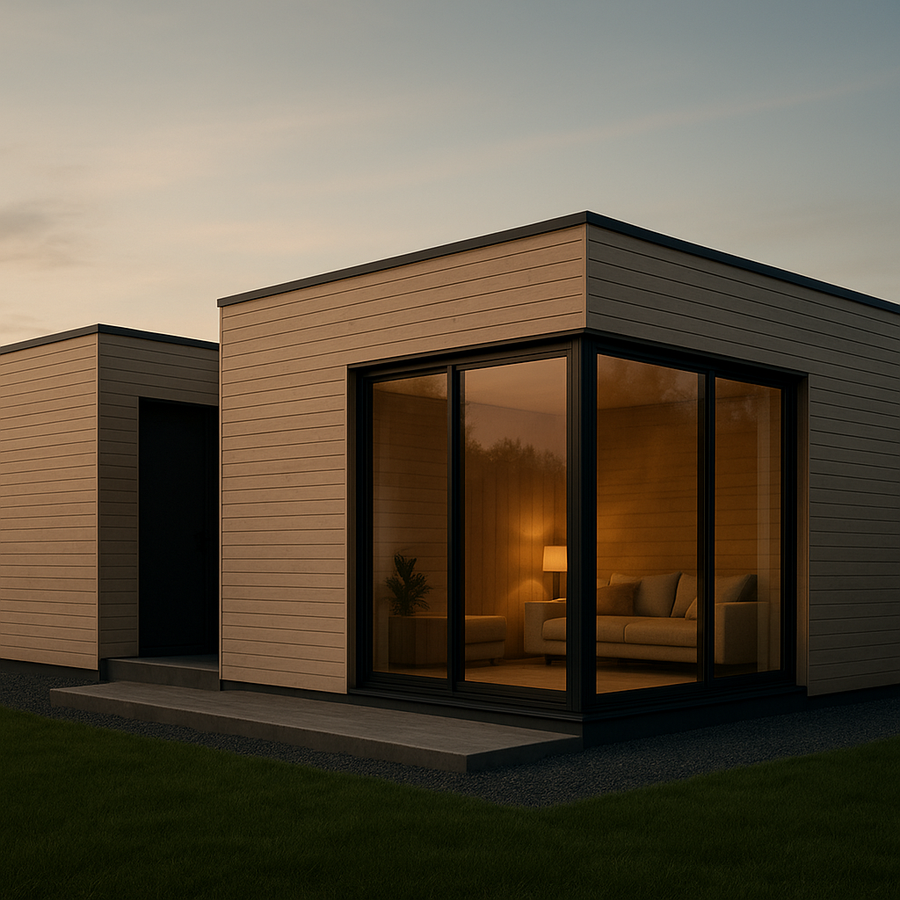
Industrialized Housing in Spain: 7 Advantages & Guide
1. Why choose industrialized housing: 7 advantages you must know
Hook: If you're planning to self-build in Spain, choosing industrialized housing can cut risk, shorten schedules and lock costs—if you know what to evaluate. This section gives seven concise, evidence-based advantages to help you decide.
1.1 Predictable timelines and closed schedules
What to expect: Industrialized projects commonly reduce on-site work by 40–70% compared with traditional builds. That means faster weather-independent progress and fewer surprises. Typical timeline example: design-to-delivery in 6–10 months for a 120–180 m² turnkey house versus 12–24 months for traditional.
1.2 Fixed-price contracts reduce budget risk
Why it matters: A well-specified turnkey contract transfers scope and many cost risks to the manufacturer. Expect change-order rules and clear allowances for finishes. For self-builders, this turns price volatility into a predictable cashflow plan.
1.3 Industrial quality control and fewer defects
Factory conditions mean consistency: Controlled environments, repeatable processes and third-party inspections reduce rework and defects common in on-site trades. That translates into fewer warranty claims and faster final inspections.
1.4 Improved energy performance potential
Prefabricated assemblies allow accurate insulation layering, airtightness detailing and integrated services—key to meeting high-performance standards like Passivhaus. Off-site assembly also helps ensure continuity of insulation and sealants.
1.5 Lower embodied carbon with material choice
Material-led reductions: Options such as engineered timber and optimized concrete mixes enable measurable reductions in embodied carbon versus conventional masonry when specified and sourced responsibly.
1.6 Cleaner site, faster handover
Less disruption: Shorter on-site periods reduce noise, dust and neighbour impact. This is especially valuable in peri-urban and sensitive rural plots.
1.7 Better integration of systems and finishes
Pre-tested systems: Mechanical ventilation, wiring looms and kitchen/bathroom pods can be delivered pre-fitted and tested, lowering commissioning time and improving first-time functionality.
Industrialized housing is not a single product but a method: when combined with clear specifications and a transparent turnkey approach, it delivers predictable schedules, price certainty and measurable energy performance.
2. Modern materials examined: industrialized concrete, timber frame and steel
Choosing the right structural system affects durability, thermal comfort, cost and carbon. Below is a technical-but-practical comparison for Spanish climates and contemporary Mediterranean design.
2.1 Characteristics, advantages and limits of each system
- Industrialized concrete: High thermal mass, excellent fire resistance and acoustic performance. Ideal for thermal buffering in mixed climates. Limitations: higher embodied carbon unless low-clinker mixes or recycled aggregates are used.
- Lightweight timber frame (entramado ligero): Fast assembly, low embodied carbon, natural finish options. Best for dry sites and designers wanting warm interior aesthetics. Limitations: needs careful moisture management and certified sourcing (FSC/PEFC).
- Steel frame (steel frame): Slim sections, long spans and precision. Good for open plans and multi-storey modules. Limitations: thermal bridging requires detailed insulation strategy and corrosion protection.
2.2 Thermal and acoustic performance by material
Thermal: Timber and high-performance insulated panels usually reach airtightness targets more easily; concrete benefits from thermal mass for passive gains. Hybrid solutions (timber + concrete slab) often balance both.
Acoustic: Heavy concrete cores outperform lightweight frames for airborne and impact noise unless acoustic layers are added to timber or steel systems.
2.3 Choosing by climate, design and budget
Guidelines:
- Coastal Mediterranean: prefer lightweight envelopes with moisture management and solar shading.
- Interior continental zones: use thermal mass or high-performance insulation to moderate temperature swings.
- Constrained budget with high energy targets: timber or optimized panels can deliver performance cost-effectively.
3. Turnkey process step by step: from plot to move-in
This section maps the typical turnkey workflow and highlights decision points that affect schedule, budget and compliance in Spain.
3.1 Site search and plot evaluation: permits and constraints
Key checks before purchase:
- Land use and urban planning classification (PGOU) and maximum buildability.
- Topography, access for crane and delivery vehicles, and distance to utilities.
- Geotechnical and drainage risks—factor these into foundation choice and costs.
Get a professional plot report and an initial feasibility with your modular provider before finalising purchase.
3.2 Design, prefabrication and assembly: realistic timelines
Typical phases:
- Concept and permit documentation: 4–8 weeks for a streamlined project with experienced teams.
- Factory production: 6–12 weeks depending on complexity.
- On-site foundations and assembly: 2–6 weeks; interior finishes and services commissioning: 2–6 weeks.
These are baseline figures; certification requirements and customisations extend timelines.
3.3 Finishes, inspections and final delivery: responsibilities and guarantees
What to clarify in the contract:
- Scope of turnkey—what is included (landscaping, fencing, utility connections).
- Warranty periods for structure, systems and finishes.
- Acceptance tests and documentation required for handover (airtightness, energy certificates, as-built drawings).
4. Sustainability and energy efficiency: how to reach Passivhaus-level performance
Reaching low-energy standards is achievable with industrialized methods because factory precision reduces thermal bridging and ensures airtightness.
4.1 Construction strategies for low energy demand
- Continuous insulation layers with factory-applied membranes.
- High-performance windows installed with tested passive details.
- Mechanical ventilation with heat recovery (MVHR) sized and commissioned in the factory when possible.
4.2 Materials and solutions to cut embodied carbon
Practical measures: specify low-clinker cement, recycled aggregates, cross-laminated timber or certified spruce panels, and avoid over-specification of non-resilient finishes. Request an Environmental Product Declaration (EPD) from suppliers for accurate comparisons.
4.3 Measuring outcomes: certifications and metrics
Use metrics: primary energy demand (kWh/m²·year), airtightness (ACH@50Pa), and whole-life carbon (kgCO2e/m²). Certification routes: Passivhaus Classic/Plus/Premium for energy; national EPCs for compliance. Real case: a 140 m² timber-frame Passivhaus can reach 0.6 ACH and 10–20 kWh/m²·year heating demand when executed correctly.
5. Financing for self-builders: mortgages and funding options for modular homes
Financing modular, turnkey homes in Spain is increasingly common. Banks evaluate the same core criteria as for traditional projects but focus on project readiness and credible suppliers.
5.1 Types of financing and banking criteria in Spain
- Mortgage for self-build: staged disbursements linked to construction milestones.
- Standard mortgage: for completed turnkey houses with a finished certificate.
- Bridge loans: to cover land purchase while project and permits are finalised.
Banks will request a detailed budget, work schedule, permits and a reliable turnkey contract with payment schedule.
5.2 Documentation and valuation of a modular project
Provide:
- Turnkey contract and manufacturer's technical specs.
- Project schedule and factory production guarantees.
- Independent valuation or comparables for completed modular homes in the region.
5.3 Tips to negotiate terms and disbursement schedules
- Prefer fewer, larger tranches tied to clear milestones (foundations, assembly, practical completion).
- Request bank-friendly guarantees from your provider, e.g., performance bonds or insurance for delayed delivery.
- Show energy-certification targets (Passivhaus or EPC) to strengthen loan terms; lower running costs can be persuasive to lenders.
6. Practical guide and next steps for your turnkey project
Consolidate choices before signing. The following checklist and short case study show concrete outcomes and selection criteria.
6.1 Decision checklist before contracting
- Confirm plot constraints, access and soil report.
- Agree fixed scope and allowances for finishes.
- Validate supplier references and factory visits when possible.
- Include airtightness and energy targets in contract with testing obligations.
- Clarify warranty, resp. for structure and services and who handles post-handover defects.
6.2 Case study: 140 m² turnkey home — times, costs and satisfaction
Overview: Mediterranean two-storey, 140 m², timber-frame industrialized home, turnkey.
- Timeline: design and permits 10 weeks, factory production 8 weeks, on-site assembly and finishes 6 weeks — total 24 weeks from contract.
- Cost example: turnkey delivered at fixed price of €1,600/m² (including foundations, connections and landscaping), with transparent allowances for kitchens and bathrooms.
- Performance: airtightness 0.7 ACH@50, heating demand 14 kWh/m²·year after MVHR and high-performance glazing.
- Client satisfaction: high scores for delivery time certainty and lower-than-expected running costs reported after 12 months.
6.3 How to choose a provider: technical comparison and transparent criteria
Selection criteria:
- Proven delivery times and verifiable references with completed homes.
- Factory QA processes and independent testing records (airtightness, acoustics).
- Clear turnkey scope with defined responsibilities for utilities and permits.
- Energy and carbon targets backed by modelling and post-occupancy metrics.
When evaluating offers, use a standard comparison matrix: timeline, fixed price vs allowances, warranty, energy targets and aftercare.
Conclusion
Bottom line: Industrialized housing offers Spanish self-builders a pragmatic path to faster delivery, cost certainty and high energy performance when paired with rigorous specifications and experienced suppliers. Focus your decision on documented delivery history, clear turnkey scope and measurable energy targets.
If you want a practical next step, start with a plot feasibility check and a comparative quote from two manufacturers that include airtightness and energy metrics. For a guided start, see our related guide Vivienda modular llave en mano: guía para autopromotores or explore Casa llave en mano: ventajas de la vivienda modular for a focused comparison.
Ready to evaluate your plot or get comparative quotes? Contact a trusted provider, request factory references and insist on measurable performance commitments before signing.
Artículos relacionados
Turnkey Modular Home: Smart Alternative to Traditional
A turnkey modular home offers autopromoters in Spain a predictable, fast and sustainable route to a new house. This guide explains systems, materials, energy strategies, the full process from plot search to handover, and financing options tailored to modular construction.