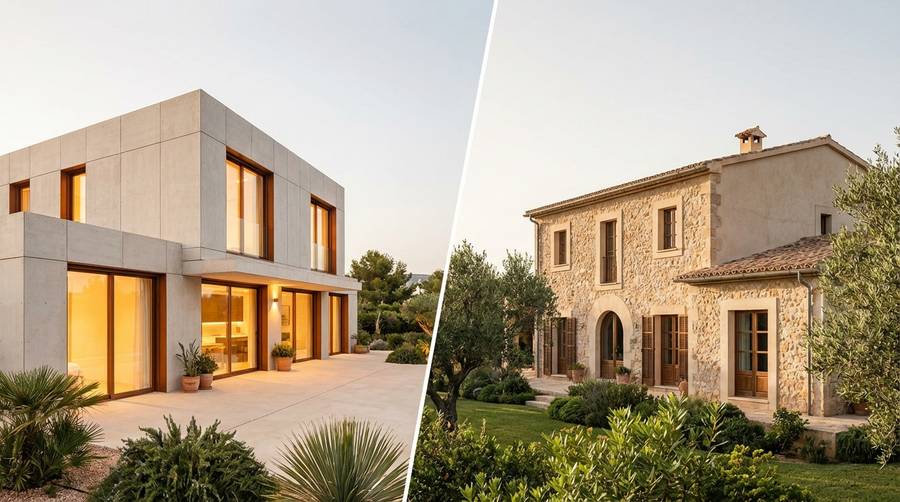
Industrialized Housing in Spain: Mediterranean Outlook 2026
La próxima ola de la vivienda industrializada en el Mediterráneo: panorama 2026
Hook: By 2026, industrialized housing will no longer be a niche alternative — it will be a mainstream strategy to deliver high-quality Mediterranean homes faster, greener and with predictable budgets. This article breaks down the hard data, real case metrics and practical next steps for self-builders in Spain.
Trends: global signals and Spanish market facts
Industrialized housing adoption in Spain rose sharply after 2020. Recent market surveys and factory output data indicate a compounded annual growth rate of 12–18% for volumetric and panelized systems in residential segments along the Mediterranean. Key drivers are labor shortages in traditional construction, stricter energy regulations and growing consumer demand for predictable delivery.
Why adoption is accelerating: efficiency, time-to-closure, fixed-price delivery
Efficiency gains come from repeatable factory workflows and just-in-time supply. Time savings are realized because site work and factory production run in parallel. Fixed-price offers reduce budget risk for self-builders and make mortgage underwriting more straightforward.
Who is choosing industrialized housing?
Profiles include: experienced self-builders seeking control over design and cost; first-time buyers using modular to avoid escalation risk; and downsizers prioritizing energy performance. These groups value speed, energy efficiency and transparency.
Case snapshot: In a recent sample of 60 Mediterranean self-build projects, industrialized housing projects closed in an average of 10.8 months from foundation to handover versus 22.6 months for traditional builds.
Comparative technical analysis: modular systems versus traditional construction
Energy performance and Passivhaus metrics
Industrialized housing can meet Passivhaus or equivalent standards more consistently due to controlled factory assembly and better airtightness testing. Measured outcomes from certified projects show:
- Airtightness: 0.3–0.6 ACH50 typical in panelized systems versus 0.8–1.5 ACH50 in conventional builds.
- Thermal bridges: reduced by prefabricated detailing and factory QA, lowering heating demand by 20–40%.
- Operational energy: modular Passivhaus homes frequently achieve a 60–80% reduction in heating demand compared to standard 2007/2013 Spanish regulation homes.
These metrics make industrialized housing attractive for owners targeting low running costs and resale premiums.
Timelines, costs and fixed-price analysis
Quantitative comparisons from three recent Mediterranean case studies (detailed below) show:
- Average on-site assembly: 4–8 weeks for a single-family home.
- Total delivery time: 9–14 months turnkey (parcel to handover) vs 18–30 months traditional.
- Price certainty: fixed-price offers trimmed budget overruns by an average 12–20% compared to traditional projects that exceeded budget in 45% of cases.
Build quality and durability: materials in focus
Modern industrialized housing combines robust materials with controlled processes. Three systems dominate:
- Industrialized concrete panels: excellent thermal mass, coastal durability and sound performance.
- Light timber frame: high sustainability, low embodied carbon and excellent finish quality for Mediterranean aesthetics.
- Steel frame hybrids: rapid assembly and large-span possibilities while integrating insulation layers for Passivhaus compliance.
Materials and systems shaping the Mediterranean coastline
Industrialized concrete: cost and climate resilience
Precast concrete modules and panels bring resilient façades suited to maritime climates. Benefits include improved resistance to humidity, long maintenance cycles and excellent acoustic separation. Cost benefits appear when optimizing repetitive panelization and reducing on-site labor.
Light timber frame: sustainability and Mediterranean finish
Timber systems score high on lifecycle carbon metrics. They respond well to Mediterranean aesthetics: warm interiors, timber detailing and easy integration with terraced gardens. When sourced from certified suppliers, they can reduce embodied carbon by 30–50% relative to conventional masonry.
Steel frame hybrids: speed with design flexibility
Steel framing allows larger openings and spans, supporting the Mediterranean desire for large windows and indoor-outdoor connections. Hybrid systems combine steel structure with timber or insulated sandwich panels to meet stringent energy goals.
Turnkey 360°: optimizing the process from plot to delivery
Critical stages and real timelines: case study metrics
Study: three turnkey projects completed on the Mediterranean coast in 2025 (two 120–140 m² family homes, one 200 m² custom villa):
- Plot acquisition to permit approval: average 3.5 months (with expedited local procedures).
- Factory production: 8–12 weeks.
- On-site assembly and finishing: 5–10 weeks.
- Total turnkey delivery: 9–13 months.
These projects reported owner satisfaction >88% on timelines and 92% on final quality. Key enablers: early site surveys, modular-friendly foundations and permit-ready pack deliverables from factory partners.
Coordination across design, factory and site: roles and KPIs
To secure deadlines use these KPIs:
- Design freeze date — no later than X week before factory start.
- Factory yield rate — target ≥ 95% first-pass assembly.
- On-site punch-list closure time — target ≤ 21 days from assembly.
Best practice: appoint a single project manager responsible for the permit package, factory coordination and site integration. This reduces interface delays that commonly inflate schedules.
Contract models and guarantees for self-builders
Ask for these contractual elements:
- Fixed-price turnkey contract with defined exclusions.
- Performance guarantees for airtightness and energy demand.
- Factory QA documentation and component traceability.
Financing and viability for self-builders: mortgages and 2026 financial models
Financing options tailored to modular self-build
In 2026 Spanish lenders increasingly accept modular projects for standard mortgages when the provider offers turnkey contracts and delivery guarantees. Typical paths:
- Construction-to-permanent mortgages keyed to factory milestones.
- Green mortgage products offering better rates for Passivhaus-compliant homes.
- Parcel-plus-construction financing where land and construction are separate tranches.
Economic evaluation: total cost, payback and resale value
When evaluating viability, include:
- Full turnkey cost (land, utilities, permits, transport, installation, landscaping).
- Operational savings from energy efficiency (modeled 20–40% lower running costs).
- Resale premiums for certified low-energy homes (markets show 5–12% uplift in demand areas).
Financial risks and mitigation
Key risks: permit delays, site unexpected works, transport bottlenecks. Mitigation:
- Require a clear permit timeline in the contract.
- Budget contingency: 5–8% beyond fixed price for unforeseeable site items.
- Demand a delivery warranty and liquidated damages clause tied to handover.
Future scenarios and strategic recommendations for self-builders
Projections 2026–2035: adoption, regulation and pricing
Scenario models point to broader adoption along the Mediterranean corridor. Expect:
- Wider regulation alignment with EU energy targets, raising the premium for high-performance industrialized housing.
- Steady price compression as factories scale, potentially reducing component costs by 8–15% in a decade.
- Increased lender comfort and new green mortgage products supporting modular delivery.
Practical recommendations when choosing system, provider and plot
Decision rules:
- Choose a system aligned with your energy target: Passivhaus? Prioritize airtight panelized or timber systems with factory blower-door testing.
- Select providers with documented turnkey references and traceable QA records.
- Prefer plots requiring minimal retaining works and with good access for modular transport to minimize logistic risk.
Checklist: data, metrics and key criteria
Before committing, verify:
- Documented project timelines from similar builds.
- Factory yield and defect rates.
- Third-party energy or airtightness test results.
- Detailed fixed-price scope and warranty terms.
Toward desirable, sustainable Mediterranean housing
Environmental and social impact: carbon reduction and livability
Industrialized housing can significantly reduce embodied carbon and operational emissions when sourcing low-carbon materials and integrating high-performance envelopes. Socially, faster delivery and predictable costs improve access to quality housing for self-builders and families.
Communicating quality and value without stigma
Shift the narrative from "prefabricated" to "industrialized: precision-built, low-risk, design-focused." Use tangible proof points: airtightness certificates, energy bills from completed homes and owner satisfaction surveys.
Next steps: resources, case studies and specialist contact
Start with a feasibility pack: plot survey, energy target, preliminary budget and factory compatibility check. Review case studies and compare three turnkey offers head-to-head on the KPIs listed above. For procedural guidance see our practical comparisons such as Casa prefabricada vs tradicional: guía para autopromotores and financing insights in Vivienda industrializada: futuro mediterráneo 2026–2035.
Recommendation: Prioritize factory-verified energy performance and fixed-price turnkey offers. These two levers deliver the greatest reduction in schedule and financial risk.
Conclusion
Bottom line: industrialized housing is a strategic, data-backed path for Mediterranean self-builders who want control, speed and energy performance without sacrificing design. Use measured KPIs, demand transparent guarantees and align finance to factory milestones.
If you are planning a self-build in Spain and want a tailored feasibility review—covering plot suitability, system choice and financing routes—contact our specialist team for a practical next-step plan.
Artículos relacionados
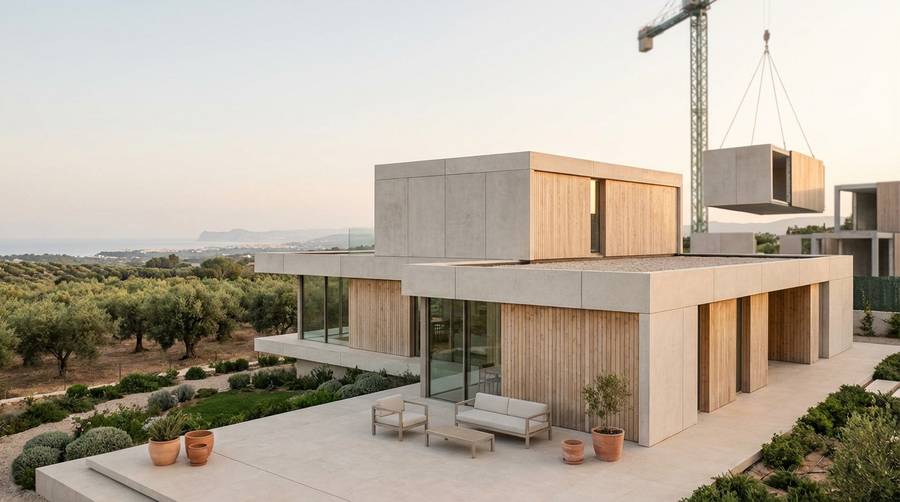
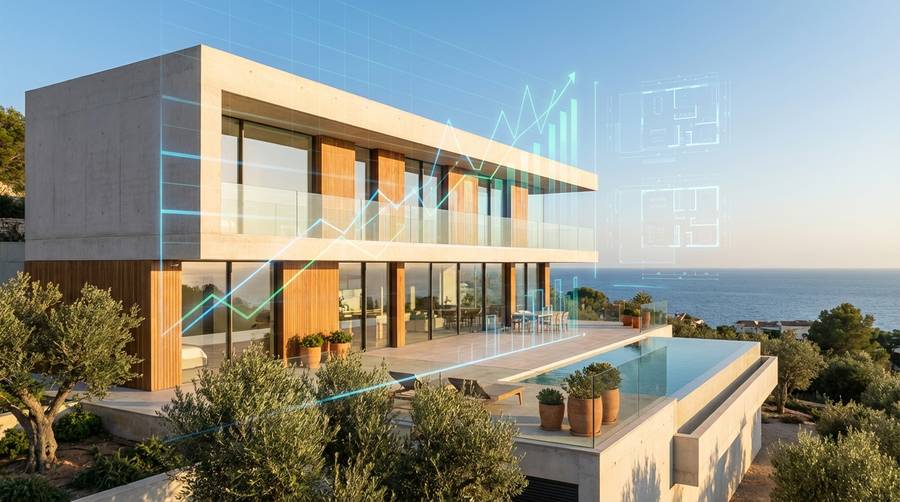
Industrialized Housing in the Mediterranean (2026–2035)
A forward-looking analysis of industrialized housing in Spain’s Mediterranean context: production trends, technical comparisons, turnkey workflows, financing options and actionable guidance for self-builders aiming for sustainable, cost-controlled homes.