


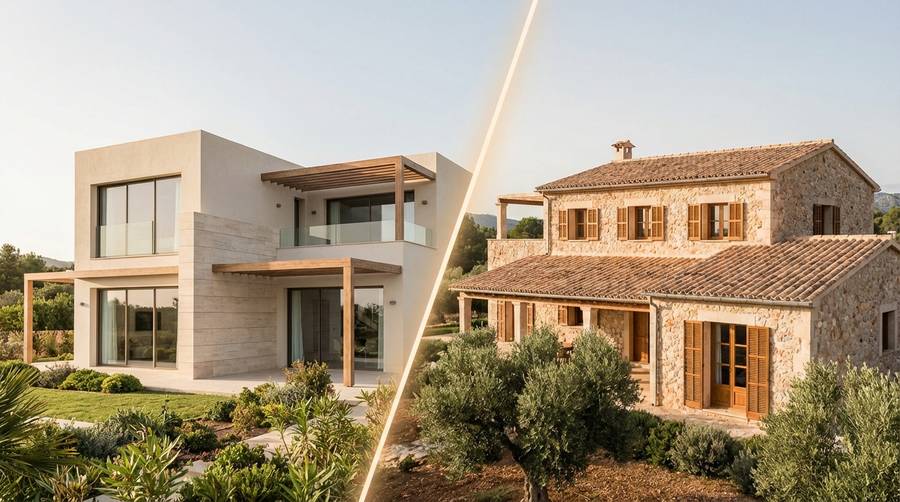
Prefabricated House vs Traditional Home: Clear Pros & Cons
Industrialized housing today: what a prefabricated house means for the self-builder
Hook: If you're planning to build a home in Spain, choosing between a prefabricated house and a traditional build will shape your budget, schedule and long-term comfort. This article breaks down the facts you need to decide, with real metrics, practical steps and checklists tailored to autopromotores in 2026.
Clear definition: modular, prefabricated and industrialized construction
A prefabricated house refers to homes where major components—panels, modules or structural elements—are manufactured off-site in controlled factory conditions and assembled on-site. Industrialized housing includes modular units, panelized systems and hybrid approaches that combine on-site work with factory production. The defining benefits are repeatability, quality control and shorter on-site time.
General advantages versus traditional construction: time, control and fixed price
Key differences you should weigh:
- Time to enclosure: Prefab projects typically reach weather-tight status in weeks rather than months.
- Budget predictability: Many offers are closed-price packages, limiting cost drift common in traditional projects.
- Quality control: Factory production reduces variability caused by weather, subcontractor availability and on-site sequencing.
Profile of the ideal autopromotor in Spain (2026)
The best candidates for prefabricated housing are buyers who value schedule certainty, energy performance and transparent costing. They often have a clear plot, realistic budget, and prefer professional coordination (turnkey) rather than managing dozens of trades themselves.
Objective comparison: prefabricated house vs traditional home
Execution times and guaranteed schedules: real data and ranges
Typical ranges observed in recent Spanish projects:
- Prefabricated house: 3–6 months from start of on-site works to delivery for a single-family home (100–200 m2) when the foundation is ready.
- Traditional build: 12–24 months for comparable projects, depending on weather and coordination.
These figures exclude land search, permits and utility connections. In practice, factory lead time for components can be 6–12 weeks; overlapping production with on-site groundwork shortens total calendar time.
Costs: fixed price, deviations and common hidden expenses
Advantages: Many prefabricated providers offer a closed-price contract covering manufacture, assembly and basic finishes. This reduces the likelihood of the frequent 10–30% cost overruns seen in traditional builds driven by change orders and delays.
Watch out for:
- Site-specific works (foundations, access, connection to utilities) often sit outside the factory quote.
- Land preparation surprises: slope remediation, retaining structures or complex geotechnical needs add cost.
- Upgrades to finishes, bespoke items or regulatory-imposed changes can increase final price.
Build quality and durability: warranties and maintenance
Factory-controlled production improves consistency: components are assembled with jigs, audited and tested before shipping. That translates to fewer defects at handover and clearer traceability of materials.
Durability equals the chosen system and detailing. Ensure your contract includes:
- Clear warranty periods for structure, envelope and installations.
- Maintenance schedules and spare-parts lists.
- Quality control reports and test certificates for insulation, airtightness and structural elements.
Data point: Well-managed prefabricated projects in Spain can reduce on-site labor time by up to 60% and achieve airtightness figures compatible with low-energy standards.
Materials and systems: how to choose by priorities
Industrialized concrete: thermal and structural performance
When to choose: If you prioritise mass, thermal inertia and long-term structural robustness, industrialized concrete panels or precast elements are strong options. They perform well in thermal storage and complement passive solar strategies.
Trade-offs: Higher transport and handling costs; requires attention to connections to avoid thermal bridges.
Light timber frame: speed, insulation and sustainability
When to choose: For rapid assembly, excellent insulation-to-weight ratio and a lower embodied carbon footprint, timber frame systems shine. They integrate well with high levels of insulation and moisture-controlled factory assembly.
Considerations: Fire and moisture detailing must be handled carefully; choose seasoned suppliers with tested fire and acoustic solutions.
Steel frame (steel frame): design flexibility and seismic behaviour
When to choose: Steel frame offers open-plan flexibility and predictable structural behaviour under seismic loads. It's especially relevant in complex geometries or multi-storey modular builds.
Considerations: Steel has higher embodied energy than wood, but good recyclability and precision in manufacture. Thermal bridging requires careful thermal break detailing.
Sustainability and energy efficiency: how industrialization helps
Passivhaus strategies applied to prefab homes
Prefabrication supports Passivhaus principles by enabling precise insulation, continuous airtight layers and factory-tested window installations. Achievable benefits:
- Lower heating and cooling demand by 70–90% compared with conventional Spanish stock.
- Predictable airtightness numbers (e.g., n50 values often below 1.0 h-1 in controlled assemblies).
Reducing carbon footprint: life-cycle and material choices
Choose low-carbon materials (certified timber, optimized concrete mixes, recycled steel) and consider modular designs that minimise waste. Factory production reduces on-site waste and allows material recovery at the end of life.
Real efficiency: consumption, certifications and measured examples
Measured projects show energy use for space heating in high-performance prefabricated homes in Spain can be under 15 kWh/m2·year when combined with ventilation heat recovery and solar gains. Aim for certifications or third-party tests to validate performance.
Turnkey process for self-builders: steps, roles and timings
From finding a plot to delivery: typical timeline and milestones
Suggested condensed timeline for a turnkey prefabricated project:
- 0–3 months: plot search, feasibility, basic design and budgeting.
- 2–6 months: planning permit and detailed design (can overlap with procurement).
- 6–9 months: factory manufacture of components while site works prepare foundations.
- 9–12 months: assembly, connections, finishes and handover.
Timelines vary by municipality and complexity. A well-managed turnkey provider orchestrates these phases to reduce waiting between steps.
Permits and paperwork in Spain: licences, planning and documents
Key administrative items to plan for:
- Local building permit (licencia municipal) and any urban planning adjustments.
- Technical project documentation (estudio geotécnico, proyecto técnico, memoria de instalaciones).
- Utility connection agreements and final occupancy certificate (licencia de primera ocupación).
Turnkey suppliers often offer administrative support as part of their package; confirm precisely which permits are included.
Coordination with suppliers and quality control
Successful projects have a defined QA process: factory inspections, third-party tests (air permeability, insulation U-values), and an on-site checklist at key milestones. Insist on an agreed defect list and a documented handover protocol.
Financing and costs: mortgages for self-build and payment models
Financing options in Spain for modular homes and self-build
Available routes:
- Self-build mortgages (hipoteca para autopromoción): staged disbursement tied to progress milestones.
- Traditional mortgage post-completion: bank provides financing once the property has the occupancy certificate.
- Bridge loans or construction loans: to cover land purchase and early works, replaced later by a mortgage.
Banks increasingly accept prefabricated construction if the provider is established and documentation proves permanence of the dwelling.
How to present your project to a bank: documentation and metrics
Prepare the following to increase approval chances:
- Detailed turnkey quote with scope and clear exclusions.
- Technical project signed by an architect/engineer.
- Schedule of payments and expected completion date.
- Cost control measures and warranty statements.
Comparative total cost example: timeline, investment and ROI
Example (100 m2 single-family home, illustrative figures):
- Prefabricated turnkey package (manufacture, assembly, standard finishes): €1,200–1,600/m2.
- Traditional build (same finishes): €1,400–1,900/m2, with higher variance and common 10–25% overruns.
Factor in land, connections and VAT. Prefab can deliver faster occupancy and earlier energy savings, improving short-term ROI for owners using the house or renting it.
Practical cases and decision guide: pick the best path for your project
Real case studies: times, costs and satisfaction metrics
Case A (Timely turnkey): 140 m2 timber-frame house in Valencia region. Timeline: 10 months from contract to handover. Final cost: within 3% of initial quote. Occupant satisfaction: very high for thermal comfort and indoor air quality.
Case B (Complex site): 180 m2 hybrid steel-concrete home on sloped plot. Timeline: 14 months due to extensive foundation work. Prefab assembly reduced on-site disruption and improved schedule predictability after groundwork completed.
Checklist to decide: questions before committing
- Do you have a plot with clear access and straightforward ground conditions?
- Is schedule certainty more important than extreme customisation?
- Have you budgeted separately for foundations, connections and landscaping?
- Does the provider include airtightness and energy performance tests in the contract?
- Do you have a clear financing plan that aligns with the provider's payment schedule?
Recommended next steps for self-builders (action template)
- Audit your plot: commission a quick geotechnical and access report.
- Request three turnkey proposals with detailed exclusions and timelines.
- Ask for measured performance examples (blower door tests, U-values).
- Consult your bank early with the preferred proposal to validate financing terms.
- If you want to learn market trends, read Vivienda prefabricada: panorama 2026 y visión hasta 2030 for wider context.
Conclusion
Bottom line: A prefabricated house offers clear advantages in schedule certainty, quality control and potential energy performance—especially when you choose the right materials and a reputable turnkey provider. Traditional builds remain appropriate when extreme customisation or specific on-site constraints make modular solutions inefficient.
If you're an autopromotor in Spain, start by auditing your plot, obtaining detailed turnkey quotes and checking the provider’s measured performance. A data-driven comparison will reveal whether modular industrialized housing aligns with your priorities.
Next step (CTA): If you want, share your plot details and budget constraints and we can outline a tailored checklist to evaluate prefabricated options for your project.
Artículos relacionados

Industrialized Housing in Spain: Trends and Roadmap 2026
A data-driven, actionable guide for self-builders and developers navigating industrialized housing in Spain. Trends, materials, Passivhaus integration, turnkey processes, financing and real project metrics to plan and deliver resilient, efficient homes.