


Industrialized Housing vs Traditional Homes in Spain
Introduction — Hook: Why this comparison matters now
If you're planning to build a home in Spain, the choice between an industrialized (prefab/modular) home and a traditional on-site build determines budget, timeline and future running costs. This article cuts through marketing claims and offers a clear, actionable comparison based on real metrics, modern materials and financing options for autopromoters in 2026.
Industrialized housing can reduce build-time variability by up to 60% while delivering predictable costs—key benefits for families and self-builders facing market uncertainty.
Why consider industrialized housing in Spain today
Market context and demand from self-builders
Spain's self-build segment has grown due to land availability at the urban fringe, rising construction labor costs, and buyers seeking energy-efficient, modern homes. Industrialized housing answers those demands with factory-controlled processes and shorter on-site times.
General advantages versus traditional construction
Primary advantages of industrialized housing:
- Predictable timelines: factory schedules reduce weather delays.
- Fixed-price contracting: many suppliers offer turnkey packages that limit unexpected cost overruns.
- Higher quality control: components built under controlled conditions yield consistent assemblies.
- Energy performance: efficient envelopes and airtightness make Passivhaus-level targets achievable.
Key questions to ask before deciding
Before choosing, ask:
- Is the plot size and topography compatible with factory modules or panelized systems?
- What warranties and transfer processes cover workmanship and components?
- How transparent is the price breakdown (land, structure, finishes, MEP, permits)?
- Do you require bespoke architecture or will a modular approach meet your aesthetic needs?
Comparative analysis: prefab/modular vs traditional build
Construction times: predictable schedules and closed timelines
Industrialized advantage: A common outcome is a 4–9 month delivery from contract to handover for a single-family home, depending on finish level and site works. Traditional builds often span 12–24 months.
- Factory work parallel to site prep: while foundations and utilities are prepared, modules or panels are produced.
- On-site assembly: final assembly and finishes require a smaller, focused schedule—reducing exposure to weather.
Costs and budget control: fixed price, contingencies and transparency
Industrialized offers stronger cost certainty through fixed-price turnkey offers. However, transparency varies:
- Included in turnkey: structure, envelope, primary MEP, basic finishes and commissioning are often bundled.
- Common exclusions: land purchase, complex foundations, off-site utility works, local taxes and some landscaping can be excluded—verify contracts.
Practical tip: Request a line-by-line cost list and an allowance schedule for finishes. Confirm what triggers a change-order and how it's priced.
Quality and durability: real-world performance and maintenance
Quality depends on design, materials and assembly. Industrialized workflows allow tighter tolerances and better factory QA, but longevity still relies on material choice and detailing.
- Durability markers: proven structural systems (concrete panels, steel frames, certified CLT or engineered timber) with appropriate detailing perform on par with traditional masonry.
- Maintenance: modern façades and installed systems may reduce maintenance frequency, but always confirm manufacturer timelines for elements like sealants and window gaskets.
Materials and construction systems: how they affect choice
Industrialized concrete: thermal and structural advantages
Precast and industrialized concrete deliver high thermal mass, acoustic performance and structural robustness. For Spanish climates, concrete can stabilize indoor temperatures and pair well with insulation to meet energy targets.
- Advantages: fire resistance, longevity, low deformation, good sound insulation.
- Considerations: heavier foundations and transport logistics; upfront carbon footprint must be managed with low-carbon mixes.
Lightweight timber framing: speed, sustainability and comfort
Timber frame systems (panelized or modular) are fast, lightweight and generally lower in embodied carbon. Engineered timber offers dimensional stability and good thermal performance.
- Advantages: rapid manufacture, renewable resource, good indoor comfort.
- Considerations: detailing for moisture management is critical; use treated or certified wood and ventilated façades.
Steel frame (steel stud / cold-formed): strength and design flexibility
Steel frame systems provide slender structures, long spans and ease of modular connections. They are well-suited for multi-level or irregular geometries.
- Advantages: precision, recyclability, fast assembly.
- Considerations: thermal bridging must be managed; combine with continuous insulation strategies.
Sustainability and energy efficiency: the measurable impact
Applying Passivhaus strategies to industrialized homes
Industrialized processes make consistent airtightness and high-quality insulation easier to achieve. Factory-controlled junctions reduce on-site variability—key to reach Passivhaus or near-Passivhaus levels.
- Actionable step: Require blower-door test targets and documented U-values in the contract.
- Design integration: orient glazing, include shading and plan for mechanical ventilation with heat recovery (MVHR).
Reducing carbon footprint and circular material use
Choose materials with Environmental Product Declarations (EPDs), recycled content and potential for future disassembly. Timber and recycled steel perform well when sourced responsibly.
Real consumption and medium-term savings: examples and metrics
Measured examples from recent projects show:
- A timber-framed turnkey home achieving 30–50 kWh/m²-year heating demand when built to high-performance envelope standards.
- Operational savings of 40–60% on HVAC energy compared to similar-sized traditional homes with poor insulation.
Note: Actual savings depend on occupant behavior, system sizing and local climate. Always request modeled energy performance and, where possible, post-occupancy data.
Turnkey process and financing: from plot to keys
Stages of a turnkey service: plot search to handover
A typical turnkey workflow includes:
- Feasibility and site survey (topography, access, utilities).
- Design and permit package (architect, engineering, local approvals).
- Factory manufacture while site works proceed (foundations, connections).
- On-site assembly, systems commissioning and final inspections.
- Handover with documentation, warranties and maintenance guidance.
Practical tip: Ensure your provider issues a single-point warranty covering structure, envelope and systems for at least 2–10 years depending on components.
Financing and self-build mortgages in 2026
Financing options for autopromoters include:
- Self-build (autopromoción) mortgages: staged draws aligned to project milestones—verify lender acceptance of industrialized delivery schedules.
- Construction-to-mortgage conversion: some lenders convert a construction loan to a permanent mortgage upon completion.
- Private financing and developer guarantees: can supplement traditional mortgages for upfront land purchase.
Checklist for financing: provide the lender with the turnkey contract, detailed cost breakdown, manufacturer guarantees and projected energy performance (lower running costs help mortgage approval).
Risks, guarantees and how to verify transparency
Common risks include contract ambiguity on exclusions and late variations. Mitigate them by:
- Requesting a detailed schedule of works and an allowances table.
- Verifying supplier track record and asking for completed project references with contactable clients.
- Insisting on performance tests (airtightness, thermal imaging) before final payment.
Case studies and comparative metrics to inform your decision
Case 1: Modular home delivered in 6 months — timelines, costs and satisfaction
Project summary: 140 m² family home, timber modules, turnkey package.
- Timeline: 6 months contract-to-handover (site prep 6 weeks, factory 10 weeks, on-site assembly 2 weeks).
- Cost: €1,700/m² turnkey (land excluded). Final cost within 2% of contract due to fixed pricing.
- Performance: Achieved 28 kWh/m²-year heating demand; occupant satisfaction 9/10 at 12 months.
Case 2: Light-frame timber build — energy efficiency and ROI
Project summary: 180 m² two-storey house, panelized timber, high-performance envelope.
- Timeline: 9 months total.
- Cost: €1,650/m² turnkey including MVHR and photovoltaic-ready electrical layout.
- Return: Energy savings estimated at €900/year versus a conventional build; payback of additional envelope cost in ~8–12 years depending on energy prices.
Interpreting metrics for your project
Scale the examples to your local context: plot constraints, finish level and chosen supplier influence timelines and costs. Use the case study metrics as baselines, not guarantees.
Conclusion: Practical recommendation — prefab or traditional?
Balanced summary of key pros and cons
Choose industrialized housing if you value:
- Schedule certainty and reduced on-site time.
- Transparent, fixed-price packages and better factory QA.
- High energy performance targets and lower medium-term running costs.
Choose traditional construction if you need:
- Fully bespoke forms or complex site-specific masonry aesthetics.
- Extensive in-situ custom detailing that is hard to modularize.
Quick decision checklist for self-builders
- Plot assessable for module access and foundation type?
- Do you have a fixed budget and need schedule certainty?
- Is high energy performance a priority (Passivhaus/low energy)?
- Supplier offers documented warranties, test results and references?
- Have you verified lender acceptance of industrialized delivery milestones?
Next steps and resources
Start with a feasibility study: site survey, budget outline and a shortlist of industrialized providers. Ask for comparable case studies with real post-occupancy data. If helpful, request a sample turnkey contract for review by your legal advisor.
Final thought: Industrialized housing is not a one-size-fits-all solution, but for many autopromoters in Spain it offers a modern, sustainable and predictable path to a high-performance home.
Call to action: If you'd like, we can help evaluate your plot and provide tailored comparisons and a shortlist of verified industrialized housing providers—contact us to begin a feasibility review.
Artículos relacionados
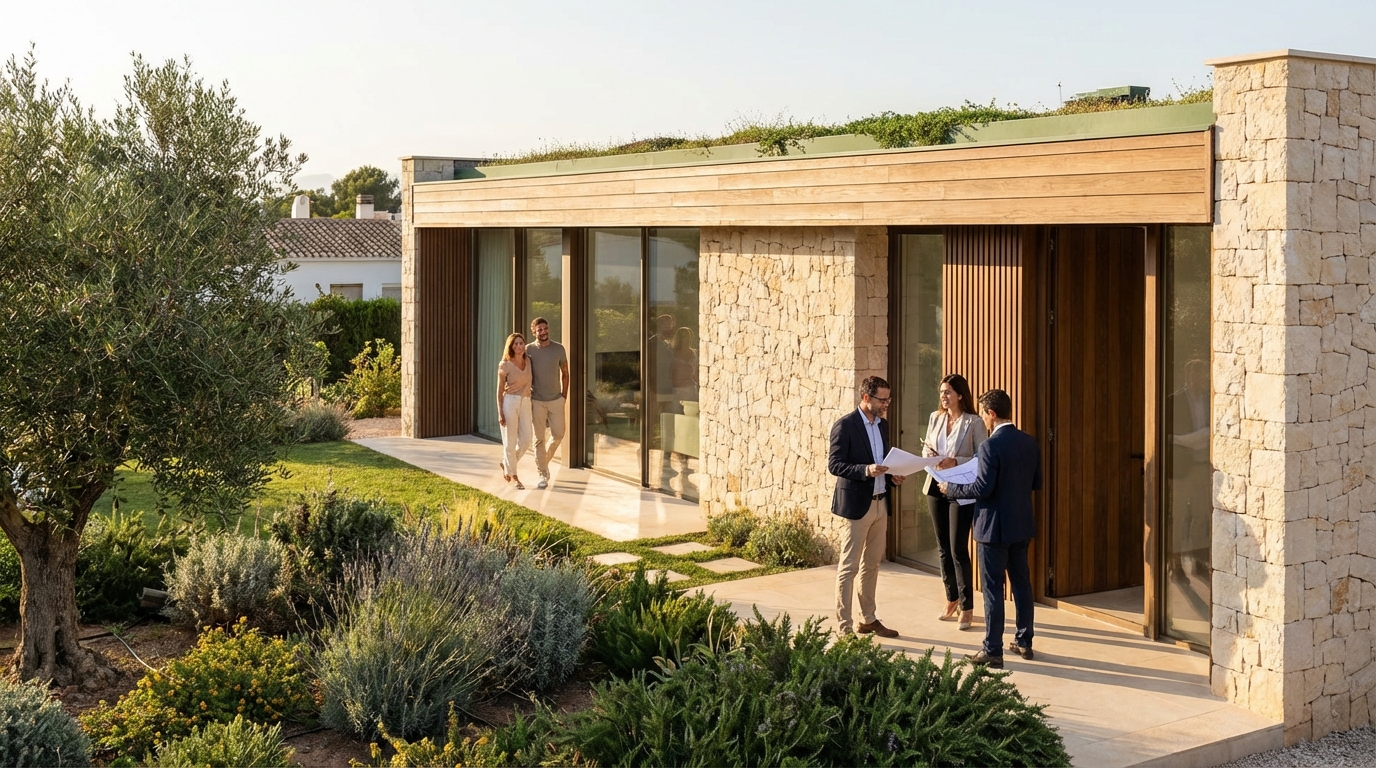
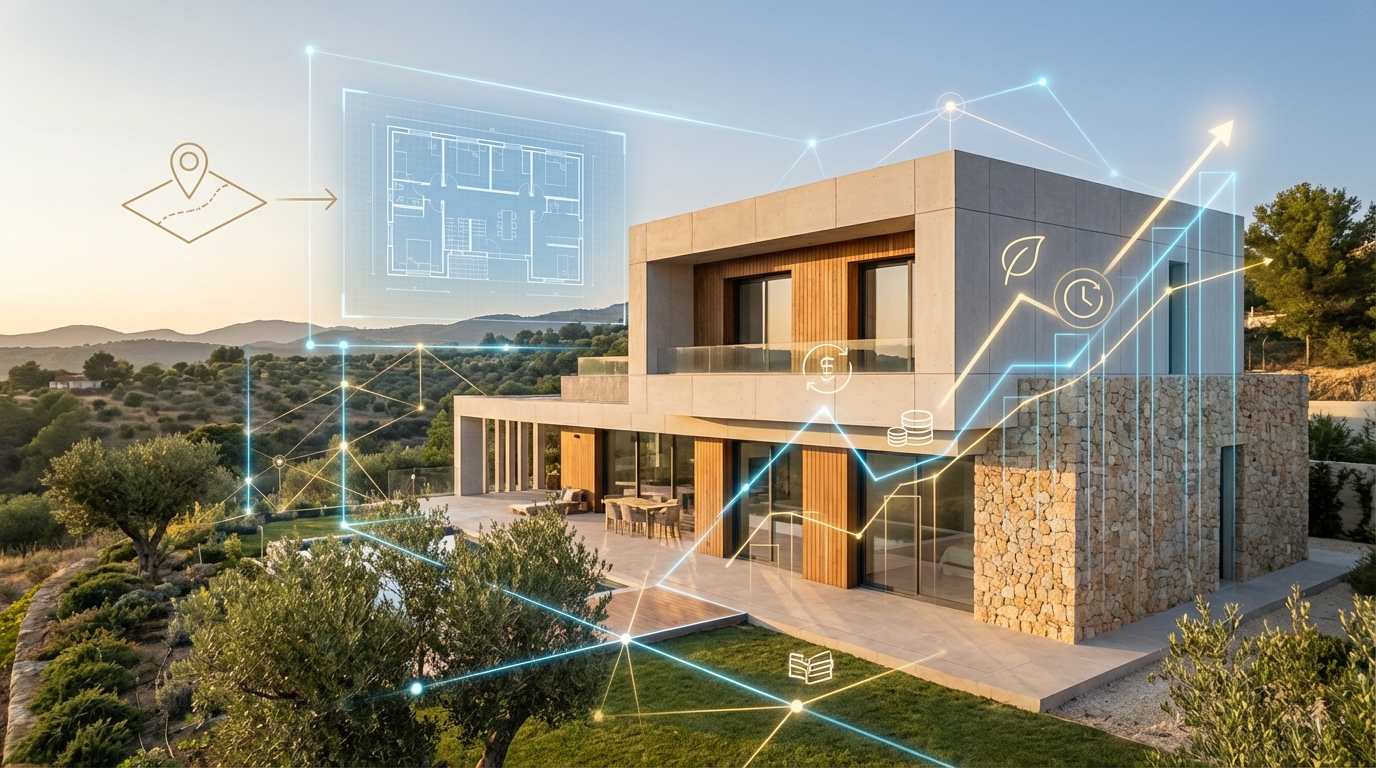
Industrialized Housing: Spain’s Next Housing Revolution
A data-driven, actionable analysis of how industrialized housing (modular, prefabricated) will transform Spain’s residential landscape by 2030 — from materials and Passivhaus integration to turnkey processes and financing strategies for autopromotores.
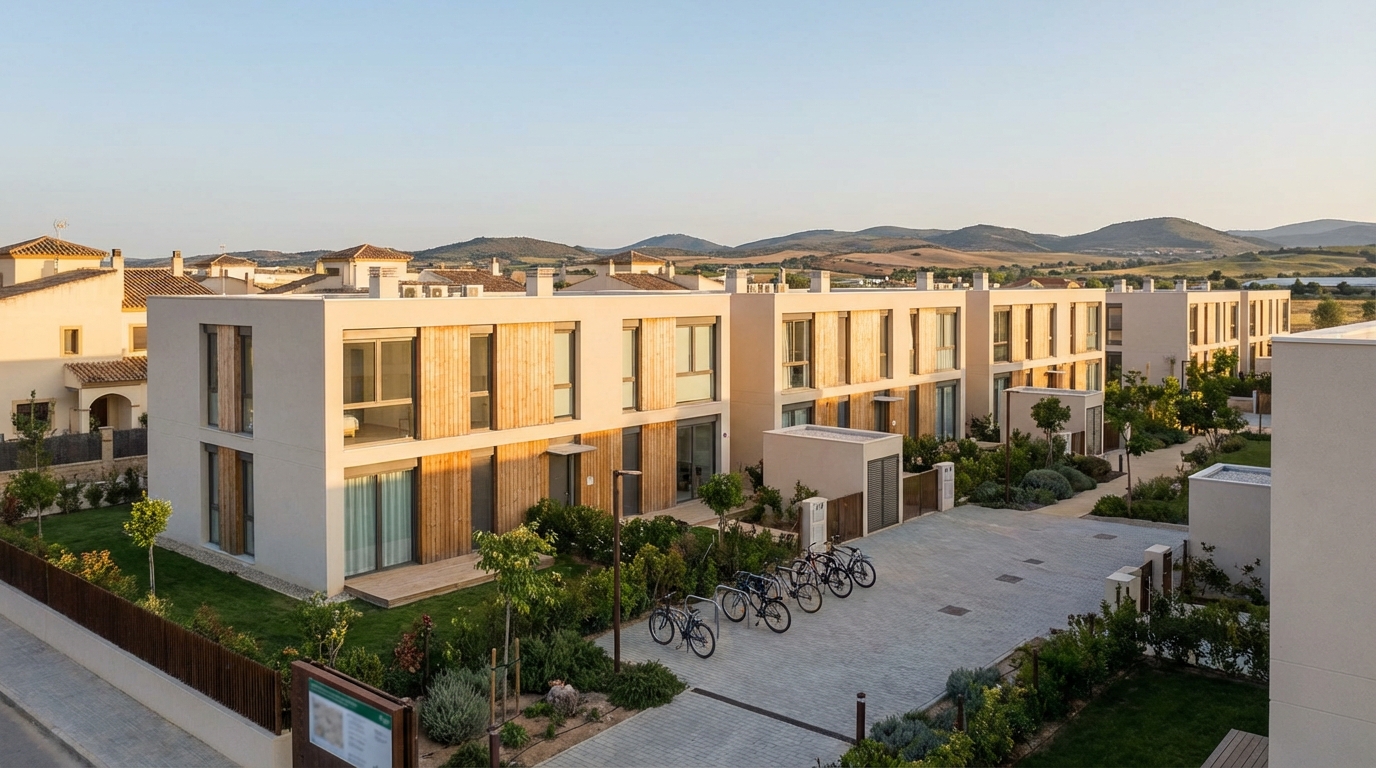
Industrialized Housing Win: A Real Modular Social-Housing Case
A step-by-step case study of a public modular housing promotion in Spain: why industrialized housing delivered faster, cleaner budgets and higher resident satisfaction—plus practical lessons for policymakers and self-builders.