Industrialized Housing in Spain: Trends and Roadmap 2026
Industrialized Housing in Spain: Trends and Roadmap 2026
Hook: In 2026, industrialized housing is no longer an experimental niche — it is a pragmatic pathway to faster delivery, predictable budgets and high-performance homes in Spain. This article slices through hype to deliver industry data, technical comparisons and step-by-step guidance for autopromoters and builders who want to lead.
Why industrialized housing dominates the sector conversation (2026 overview)
Market growth and key figures for Spain: numbers and forecasts
From 2020 to 2026 the modular and industrialized housing sector in Spain registered average annual growth rates between 8% and 12% depending on segment. Urban fringe self-build and low-density suburban projects drove most volume. Key drivers include construction sector labor shortages, price volatility in traditional on-site builds, and growing demand for energy-efficient homes.
Concrete figures to anchor strategy:
- Average factory assembly time for a 120 m² single-family modular home: 4–8 weeks.
- On-site finishing and commissioning typical window: 6–10 weeks.
- Price certainty: many turnkey industrialized offers now lock main contract price within +/- 3% after initial scope definition.
Adoption drivers: time, cost and quality control
The three most cited reasons clients choose industrialized housing are:
- Speed — shorter critical-path activities and parallelization (design, approvals and factory production).
- Cost predictability — fixed pricing for packages reduces escalation risk.
- Quality control — factory conditions enable repeatable assembly tolerances and consistent QA protocols.
For autopromoters, these translate into fewer surprises during construction and clearer timelines for financing and occupancy planning.
Current barriers and how industrialization is overcoming them
Common barriers: perception of low-quality prefabs, regulatory fragmentation across municipalities, and constrained finance products. Industry reactions include:
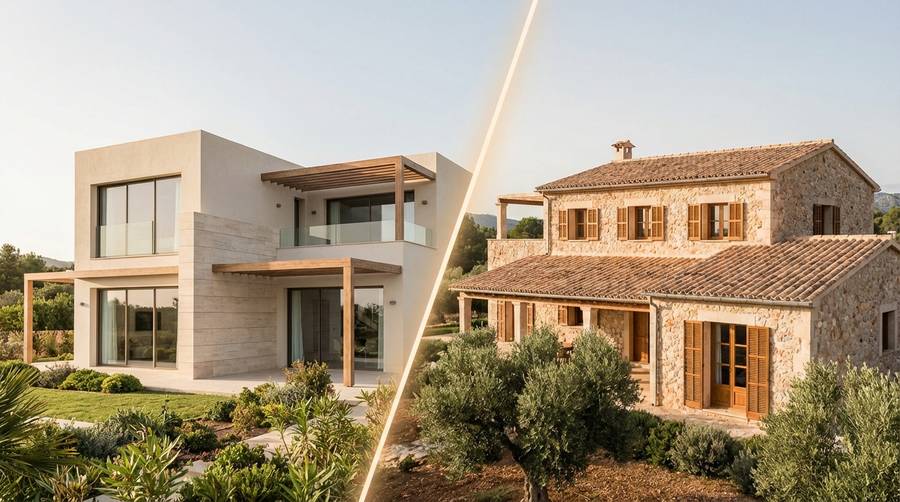
- Design standardization that preserves architectural quality and delivers Mediterranean aesthetics.
- Pre-approval design libraries aligned with municipal codes to cut permit time.
- Collaborations with banks to create specific mortgage lines for autopromotion modular projects.
Data point: Projects that adopt factory workflows report a 25–40% reduction in on-site labor hours and a 15–25% reduction in schedule risk compared to traditional builds.
Materials and construction systems shaping the next decade
Technical comparison: industrialized concrete vs timber frame vs steel frame
Each system carries trade-offs. Below is a distilled technical comparison focused on Spanish climates and construction culture.
- Industrialized concrete: Excellent thermal mass, robust fire resistance, and high acoustic performance. Best for suburban plots where weight and foundation costs are manageable.
- Light timber frame (entramado ligero): Fast assembly, lightweight foundations, excellent embodied carbon credentials when sourced responsibly. Ideal for tight-site access and high thermal performance envelopes.
- Steel frame: Precise tolerances, long spans, and integration with mechanical systems. Good for bespoke layouts and larger open-plan designs, but requires careful detailing to avoid thermal bridges.
Real performance: durability, maintenance and thermal behavior
Performance is determined as much by detailing and assembly quality as by material choice. Practical observations from recent projects:
- Well-detailed timber-frame envelopes in Spain show equivalent long-term durability to concrete when protected from moisture and with appropriate ventilation strategies.
- Concrete modules score higher on acoustic insulation — relevant in dense peri-urban locations.
- Steel frame solutions require thermal break strategies and careful condensation control to match Passivhaus-level performance.
Emerging innovations and residential applicability
Notable innovations with near-term impact:
- Prefabricated CLT cores combined with light timber outer skins for hybrid solutions that balance mass and speed.
- Factory-installed MVHR (mechanical ventilation with heat recovery) packages tuned for Spanish heating/cooling profiles.
- High-performance factory-applied façades that integrate insulation, rainscreen and solar shading in single elements to reduce on-site trades.
Efficiency and sustainability: applying Passivhaus to industrialized housing
Integrating Passivhaus criteria in an industrial chain
Passivhaus is a performance target, not a construction method. Industrialization actually makes several Passivhaus principles easier to achieve:
- Thermal continuity: factory assembly reduces on-site errors that create thermal bridges.
- High-performance glazing and airtightness: controlled environments allow precision sealing and pre-test before transport.
- Optimized ventilation: MVHR units can be fully commissioned in factory and balanced on delivery.
Design decisions to prioritise early:
- Orientation and shading strategy tailored to the plot.
- Window-to-wall ratios that consider glare, overheating and solar gains across Spanish microclimates.
- Facade composition that supports continuous insulation and avoids complex on-site interfaces.
Environmental metrics: carbon and energy reductions
Measured outcomes from recently completed modular homes show:
- Operational energy reductions of 60–85% compared to typical Spanish new builds when Passivhaus criteria are met.
- Embodied carbon depends on material choices: timber-dominant solutions can reduce embodied carbon by 20–40% versus full concrete solutions, assuming responsible sourcing.
- Lifecycle thinking: when optimized for long-term energy savings, industrialized Passivhaus homes achieve payback on embodied carbon faster due to lower operational demands.
Certifications and on-site verification that convince self-builders
Practical certification pathways:
- Passive House Institute (PHI) certification where possible for marketing and verification.
- Complementary energy labels (e.g., EPC A, local sustainability badges) that are relevant to financing and regulatory incentives.
- On-site blower door and commissioning records performed at handover to demonstrate airtightness targets.
The turnkey process for autopromoters: from plot to handover
Key phases and realistic timelines
A transparent timeline reduces risk for banks and buyers. Typical turnkey pathway and timing:
- Parcel search and feasibility: 4–12 weeks (depending on planner inputs).
- Design and permitting: 8–20 weeks (standardized designs shorten this).
- Factory production: 4–12 weeks (parallel with permitting in many workflows).
- Site preparation and foundation: 2–6 weeks.
- Assembly, finish and commissioning: 4–10 weeks.
Total end-to-end delivery typically ranges from 5 to 9 months for standardized single-family projects and up to 12–18 months for bespoke larger homes.
Cost control and guarantees: contracts, milestones and fixed pricing
Best practices to protect autopromoters:
- Use milestone-based payments tied to factory production stages and site handover.
- Include price review clauses limited to clearly defined external indices (e.g., steel or timber sub-items) with caps.
- Secure a single point of contractual responsibility in the turnkey provider to avoid finger-pointing among suppliers.
Roles and expectations: what the autopromoter should demand
Autopromoters should expect transparency and technical documentation:
- Clear BIM or shop-drawing packages, including interfaces for MEP (mechanical, electrical, plumbing).
- QA documentation and factory test results.
- Warranty terms for structure, envelope and systems with defined response windows.
Financing and mortgage solutions for modular self-builders
Financing options in 2026: autopromotion mortgages and dedicated lines
Spanish banks increasingly offer tailored products: construction-to-permanent loans, staged drawdown mortgages and specific autopromotion lines for modular builds. Distinguishing characteristics:
- Staged disbursements aligned with factory milestones shorten interest exposure.
- Some lenders accept factory production contracts and QA data as part of credit assessment.
- Lower perceived schedule risk can translate into more favorable pricing compared to bespoke on-site builds.
Documentation and preparation to win bank approval
Prepare a crisp loan package that includes:
- Fully specified turnkey contract with milestones and penalties.
- Factory production schedule and test certificates.
- Site documentation, technical drawings and EPC/energy models if targeting Passivhaus or A-level certification.
Strategies to reduce financial risk and improve access to credit
Practical steps:
- Standardize designs to reduce appraisal uncertainty.
- Use escrow accounts or third-party inspections to reassure lenders during production.
- Leverage local grants or incentives for energy-efficient homes to reduce upfront capital needs.
Case studies with metrics: real projects and key lessons
Project A: timeline, costs and client satisfaction (comparative data)
Overview:
- 120 m² single-family home, timber-frame industrialized system.
- Total schedule: 28 weeks from contract to handover.
- Final cost variance: +2% from initial fixed-price package.
- Client satisfaction (NPS-like survey): +78 (very high in delivery, communication and thermal comfort).
Key lesson: Early alignment on site services and drainage avoided a common source of late-change orders.
Project B: energy performance and operational savings (kWh and CO2)
Overview:
- 140 m² hybrid concrete-timber home built to Passivhaus principles.
- Measured annual heating & cooling demand: ~18 kWh/m²·year.
- Operational CO2 reduction vs a reference new build: ~68% per year.
- Owner-reported annual utility saving: €900–1,200 depending on local energy tariffs.
Key lesson: Investing in high-quality windows and MVHR packages delivered outsized returns on comfort and energy bills.
Practical lessons to replicate success and avoid pitfalls
- Lock scope early and include contingency allocations for site unknowns.
- Choose a turnkey provider with demonstrable factory QA protocols and backlog transparency.
- Validate foundations and local utilities before factory production to prevent costly delays.
Vision 2030: plausible scenarios and opportunities
Technological and market trends that will reshape residential offerings
Forecasts to watch:
- Increased hybridization of materials for cost and carbon optimization.
- Wider use of digital twins for production monitoring and post-occupancy performance tracking.
- Platformization: marketplaces that match parcels, standard designs and factory schedules to reduce search friction.
Emerging business models: partnerships, retail and integrated platforms
Business models likely to scale:
- Turnkey aggregators who bundle finance, land scouting and delivery for autopromoters.
- Retail-style show homes and configurators that let buyers choose validated options without bespoke design fees.
- Manufacturer-developer alliances to secure supply chains and reduce lead times.
Strategic recommendations for companies and self-builders
If you want to lead:
- Invest in standardization without sacrificing architectural quality.
- Push for transparent QA metrics and publish them — data builds trust.
- Collaborate with lenders early to craft finance products that reflect lower schedule and cost risk.
Conclusion — a pragmatic call to lead the change
The industrialized housing sector in Spain is maturing into a reliable alternative to traditional on-site construction. For autopromoters, the opportunity is clear: deliver higher-performing homes faster and with more predictable budgets. Achieving this requires disciplined design decisions, rigorous factory QA and early engagement with finance partners.
If you are planning a self-build in Spain, start by asking potential turnkey providers for:
- Detailed production schedules and milestone-linked payment plans.
- Factory QA reports, airtightness pre-tests and commissioning records.
- Real project references with measurable energy performance data.
Practical insight: Standardization and verified performance are the fastest route to lowering financing costs and achieving true lifecycle savings.
Interested in comparing specific systems or preparing a bank-ready package for your project? Contact a specialist platform that coordinates land search, design, factory production and financing — it transforms ambition into delivered, livable reality.
Call to action: Reflect on which trade-offs matter most for your plot — speed, cost certainty or lowest operational energy. If you'd like, we can help map a realistic timeline and financing checklist tailored to your parcel and goals.