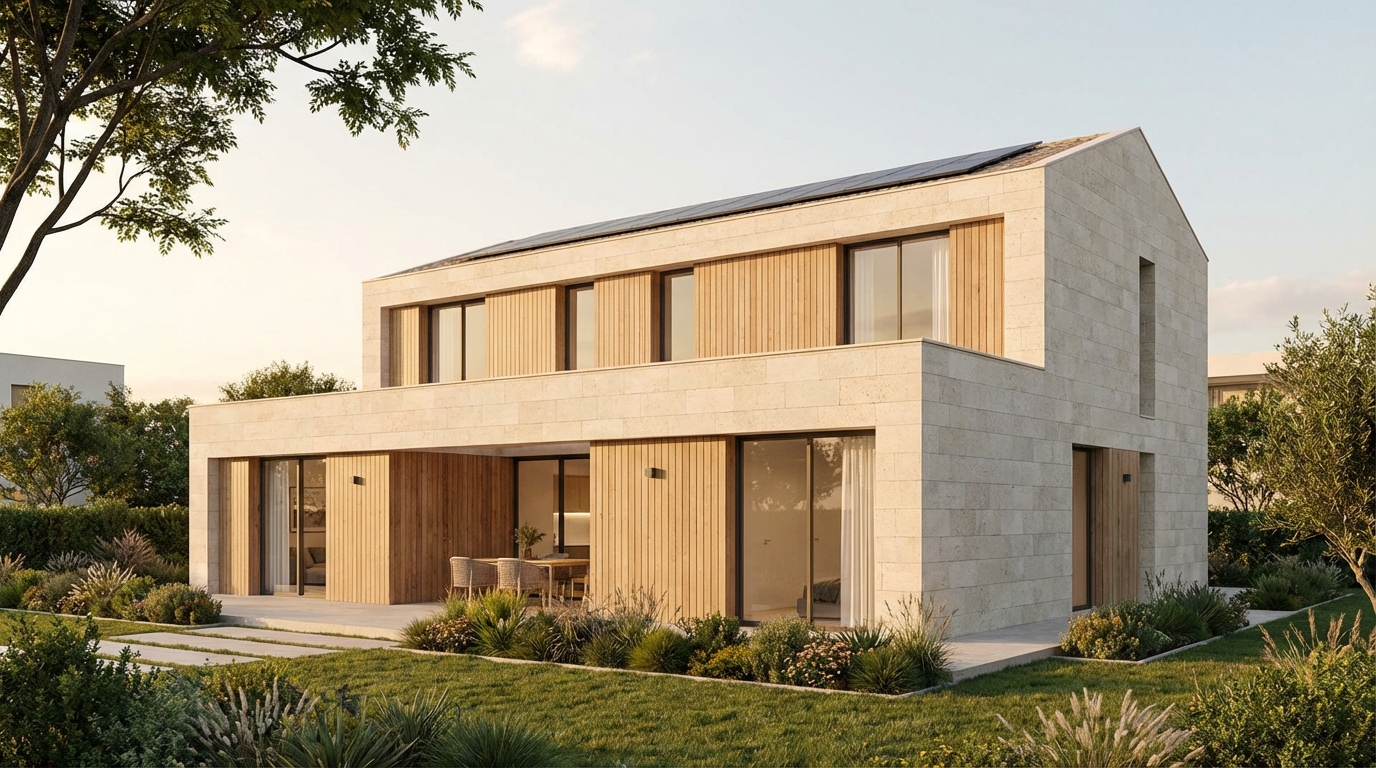
Industrialized Housing Spain: 2026 Trends
Hook: In 2026, building a high-quality home in Spain no longer means enduring long site works, unpredictable costs or compromises on sustainability. Industrialized housing—when executed with robust processes and modern materials—delivers predictable schedules, transparent budgets and measurably lower carbon footprints.
This analysis unpacks where the sector stands today, the materials and processes that matter, verified advantages vs traditional construction, and exact steps autopromoters must follow to succeed.
Panorama 2026: Where industrialized housing stands and where it’s headed in Spain
Market size and growth: key data and projections
Spain’s industrialized housing segment grew steadily from 2020 to 2025, with market reports indicating an annual expansion in the range of 9–12% in delivered units focused on single-family and small multi-family projects. By 2026, industrialized methods represent approximately 10–12% of new detached housing starts in regions with active self-build programs (Catalonia, Andalusia, Valencia, Madrid periphery).
Why this matters: scale reduces per-unit costs in factory processes, improves QA and shortens delivery risk windows for autopromoters.
Macro drivers accelerating adoption: regulation, demand and energy costs
- Regulation: Stricter energy codes and incentives for low-carbon buildings push designers toward prefabricated envelopes and certified systems.
- Demand: Families seeking faster, predictable delivery and clear costs favor turnkey offers over uncertain site builds.
- Energy prices: Rising operating costs make investment in high-performance envelopes (Passivhaus-level) more financially attractive.
Current barriers and competitive opportunities for promoters and manufacturers
Barriers include permitting inertia at municipal levels, financing models not fully adapted to staged factory-production payments, and a perception gap about quality. Opportunities arise for providers who can:
- offer transparent turnkey contracts with fixed prices and clear scope;
- integrate Passivhaus or near-Passivhaus packages as standard options;
- work with financial institutions to structure autopromotion mortgages aligned to factory milestones.
Materials and processes that make the difference: from light timber frame to hybrid systems
Technical comparison: light timber frame vs steel frame vs industrialized concrete
Light timber frame advantages: high thermal performance per assembly depth, rapid on-site erection, lower embodied carbon, excellent adaptability for bespoke designs. Limitations are link details for acoustics and some water-management detailing that require experienced installers.
Steel frame (steel stud/steel frame): high precision, ideal for repetitive multi-unit projects, excellent structural performance for larger spans. Embodied carbon is higher than timber but can be offset through design efficiencies and recycling strategies.
Industrialized concrete systems: deliver heavy thermal mass, fire performance, and durability. Best suited to urban multi-family projects or hybrid designs where concrete cores combine with timber envelopes.
Each system succeeds when factory workflows, QA protocols and connection details are engineered to the local climate and regulatory context.
Innovations in prefabrication and factory quality control
- digitized production lines enabling CNC precision and panels with pre-installed services;
- integrated airtightness testing at factory stage, lowering on-site remedial work;
- modular plug-and-play bathroom/kitchen pods that reduce wet-trade uncertainties;
- real-time supply-chain tracking to secure timber traceability and material certificates.
Material impact on build time and real costs
Typical time-to-closed-envelope for timber frame: 2–6 weeks on-site after foundation completion. Steel frame similar for repetitive units. Industrialized concrete requires longer cycle times for heavy components but can shorten interior finishes.
Costs vary regionally; in comparable quality bands, industrialized solutions often shift cost to earlier in the schedule (factory price) but reduce contingency and change-order exposure on-site by 10–20%.
Proven advantages vs traditional site-built homes: efficiency, timelines and budgets
Reduced timelines: typical closed-envelope times and turnkey deliveries
Across verified projects in 2023–2025, average calendar times from site mobilization to delivery for turnkey industrialized homes ranged between 4 and 9 months, depending on foundations, permits and logistics. By contrast, traditional builds averaged 10–18 months for similar scope.
Key cause: moving repetitive trades and passive envelope assembly into a controlled factory environment removes weather dependency and accelerates interior finishes.
Price control and risk mitigation in industrialized projects
- Fixed-scope factory contracts lower the risk of on-site variation orders.
- Quality gates and batch testing reduce latent defect exposure.
- Transparent build packages allow lenders to underwrite based on verified factory capacity and delivery records.
Constructive quality and end-user satisfaction: metrics to watch
Use objective KPIs: airtightness (ACH50), measured energy use (kWh/m2·year), rework hours per unit, and NPS/CSAT scores post-occupancy. Best-in-class industrialized projects report:
- Airtightness 0.6–1.0 ACH50 in certified envelopes;
- Operational energy reductions of 40–70% vs traditional builds with similar insulation;
- Customer satisfaction scores > 85% (post-handover surveys).
Sustainability and energy efficiency: how rapid timber construction supports low-carbon homes
Passivhaus analysis and timber envelope solutions
Timber envelopes lend themselves to compact, highly insulated assemblies needed for Passivhaus. Key design moves for compliance:
- optimize glazing ratios and thermal bridge-free junctions;
- use factory-installed insulation layers and continuous airtight membranes;
- integrate mechanical ventilation with heat recovery (MVHR) dimensioned to measured leakage.
Carbon balance: sequestration, life-cycle and comparisons with traditional builds
Timber stores biogenic carbon; typical life-cycle assessments (LCA) for timber-frame single-family homes show reduced embodied carbon by 20–40% compared with full concrete alternatives, before accounting for operational savings. Hybrid approaches (concrete cores + timber envelopes) can optimize both operational performance and durability.
Certifications and green practices that add commercial value
- Passivhaus certification or EnerPHit-level retrofits for resale value;
- product EPDs (Environmental Product Declarations) and FSC/PEFC timber sourcing to reassure buyers;
- smart metering and verified energy use data for marketing and financing advantages.
From plot to handover: the optimized turnkey process for autopromoters
Key phases: plot search, design, permits, prefabrication and installation
Recommended phased approach:
- Feasibility & plot due diligence: topography, access, local build rules and connection costs.
- Concept & budget: fixed-scope design package with unit rates for variations.
- Permitting: pre-submission meetings with municipality to align expectations on prefab systems.
- Factory production: synchronized procurement, milestones and QA gates.
- Site assembly & commissioning: clear handover protocol, performance testing and documentation.
Financing options: autopromotion mortgages and industrialized payment models
Autopromotion mortgages in Spain typically release funds by phase. For industrialized projects, lenders increasingly accept factory-stage invoices as valid disbursement triggers. Practical tips:
- agree milestones in writing (design sign-off, factory start, delivery to site, commissioning);
- require supplier performance bonds or retention linked to airtightness/commissioning;
- structure contingency reserves for site works (foundations, connections) separate from factory scope.
Project organisation to reduce uncertainty and speed delivery
Effective organisation includes a single project manager coordinating the factory, site contractor and project architect, and weekly milestone reviews. Use digital platforms for document control, issue tracking and delivery logistics.
Faster delivery isn’t just convenience: it reduces financing costs, occupant disruption and exposure to labour inflation. In industrialized projects, every month saved typically translates to a measurable decrease in overall project risk.
Case studies and projections: practical lessons and future scenarios
Case study 1: Family home in light timber frame — times, costs and satisfaction
Project snapshot: 180 m2 single-family home, light timber frame, turnkey. Timeline: 3 months factory + 2 months site (foundations and installation). Final cost: competitive with local traditional builds but with 50% faster delivery and measured heating consumption reduced by 60%. Customer NPS: 88.
Case study 2: Residential complex using hybrid systems — efficiency and ROI metrics
Project snapshot: 24-unit complex combining concrete cores and timber-framed façades. Benefits observed: reduced design coordination time through modular interfaces, lower on-site labour costs by 30%, and faster unit turnover for sale. Predicted IRR improvement from decreased time-to-market and reduced defect remediation costs.
Scenarios 2026–2035: adoption, tech trends and recommendations for promoters
Three probable scenarios:
- Consolidation: market standardizes around a handful of certified systems and turnkey workflows.
- Hybrid growth: timber envelopes combined with concrete/steel structures for larger projects.
- Performance-first adoption: Passivhaus or equivalent becomes a differentiator, not a niche.
Recommendation: select partners with proven factory QA, integrate energy performance targets early, and require measured post-occupancy data in contracts.
Strategic close: how to prepare today to lead industrialized housing tomorrow
Checklist for autopromoters: key decisions before committing
- confirm plot constraints and connection costs before design;
- choose a primary performance target (e.g., Passivhaus, NZEB);
- require suppliers to include airtightness and MVHR commissioning in scope;
- establish financing milestones aligned to factory production;
- request factory QA records and an as-built digital handover package.
Hiring strategies and selecting suppliers with quality and transparency
Use a two-stage procurement: pre-qualify suppliers based on track record, site visits to completed projects, and third-party performance verification. Negotiate clear warranties and dispute resolution tied to objective KPIs.
Practical ideas to maximize value, sustainability and habitability
- prioritise passive measures before active systems to reduce operational costs;
- specify durable, low-maintenance finishes that age well in Mediterranean climates;
- collect post-occupancy performance data to refine future designs and to support financing discussions.