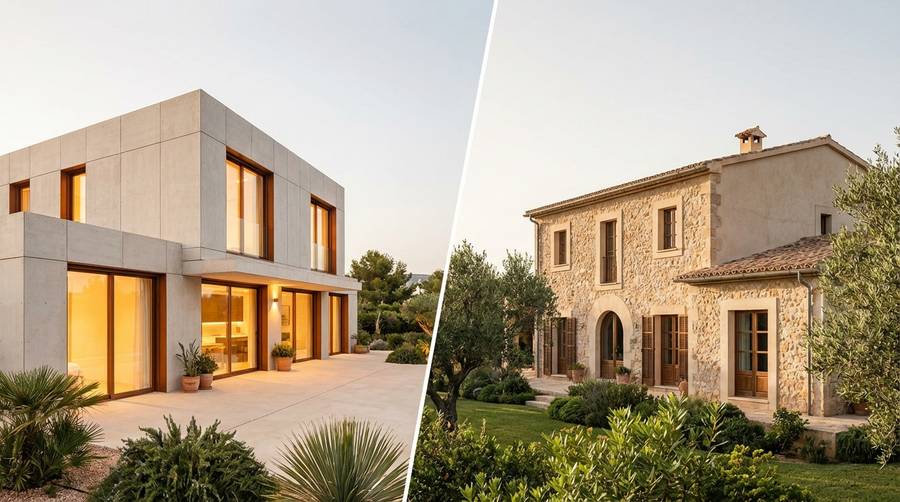
Industrialized Housing: Common Mistakes and Practical Fixes
Why Choose Industrialized Housing in the Mediterranean: Benefits and Precautions
Hook: If you plan to build a modern, energy-efficient home in Spain, industrialized housing can slash delivery time and control costs — but only when you avoid predictable mistakes.
Industrialized housing combines factory-quality production with site assembly. In the Mediterranean context this means faster enclosed schedules, higher thermal performance and a predictable budget — if you make the right choices up front. Below I examine the main advantages and the practical precautions every self-builder should take.
Advantages versus traditional construction: efficiency, fixed schedules and predictable budgets
- Time to envelope: Factory production and parallel site prep commonly reduce enclosure time by 40–60% compared with traditional builds.
- Cost certainty: Fixed-price manufacturing contracts limit change-driven overruns when scope is clearly defined.
- Quality control: Controlled humidity and repeatable assembly improve material performance — especially with industrialized concrete, timber frame and steel frame systems.
Common risks and how to anticipate them from design
Risk: Late changes inflate cost and delay delivery. Fix: freeze key dimensions and interfaces early, and document allowances for finishes and fittings.
Anticipate transport constraints, foundation details and local permit windows. Build a contingency calendar tied to permit expiry and factory production slots.
Criteria for choosing materials: industrialized concrete, timber frame and steel frame
- Industrialized concrete: excellent for acoustic and thermal inertia; ideal for Mediterranean climates when combined with high-performance insulation.
- Light timber frame (entramado ligero): fast, renewable, good for mid-rise and highly insulating envelopes compatible with Passivhaus strategies.
- Steel frame: high precision, long spans and repeatable connections — choose when dimensional stability and large glazing are priorities.
Choose the construction system that aligns with your climate goals, window strategy and long-term maintenance plan — not just initial cost.
Common Planning Mistakes and Practical Solutions
Not defining the program of needs: checklist for a complete briefing
Many projects stall because the brief is vague. Use this minimal checklist before you sign any contract:
- Number of occupants and future-proofing needs (accessibility, flexible rooms)
- Net vs gross area targets and fixed furniture footprints
- Energy target (e.g., near-Passivhaus), hot water strategy and HVAC preferences
- Interior and exterior finishes budget bands and fixed allowances
- Timeline constraints and preferred delivery windows
Actionable tip: Turn the checklist into a short, numbered brief and attach it as an annex to contracts to avoid scope drift.
Underestimating regulations and permit management: key steps in Spain 2026
Regulations in Spain are evolving rapidly around energy performance. Do not assume a permit will be routine.
- Confirm local urban plan limitations (occupancy, height, footprint).
- Gather mandatory documents early: topographic survey, geotechnical report and basic project aligned to the municipal checklist.
- Plan for energy compliance: thermal transmittance (U-values), airtightness targets and renewable contribution must be documented.
Actionable tip: Engage a local architect experienced with industrialized systems and the municipality’s technical office to pre-validate unusual details.
Poor site selection: orientation, access and technical viability
A great prefab solution will fail if the plot is unsuitable. Check:
- Road access for large trucks and crane placement for assembly.
- Topography and foundation type — steep or rocky sites may erase factory-time savings.
- Solar orientation and shading which impact glazing size and energy performance.
Actionable tip: Do a simple site viability audit that quantifies additional cost for retaining walls, rock excavation, or special foundations before choosing the system.
Typical Design Failures and How to Fix Them
Not optimizing the envelope for energy efficiency: Passivhaus-compatible fixes
Design that ignores envelope detail undermines factory benefits. Fixes:
- Use continuous insulation strategies and avoid thermal bridges at corners and interfaces.
- Specify high-performance windows with low-e coatings and warm-edge spacers sized for your orientation.
- Plan for controlled ventilation with heat recovery; factory-integrated ducts reduce on-site work.
Actionable tip: Run a simple thermal bridge audit and an early blower-door target. If you aim near Passivhaus, set airtightness targets of ≤0.6 ACH at design stage.
Rigid designs that block industrialization: adapt plans for modular assembly
Common mistake: designing custom shapes that negate repeatable factory processes. Keep these principles:
- Standardize module widths and floor-to-floor heights to reduce bespoke pieces.
- Limit on-site joints: plan large panels or modules that integrate cladding, insulation and windows where possible.
- Design interfaces (floor, wall, roof) with clear tolerances — factories work best with ±5–10 mm disciplines.
Forgetting systems integration: coordinate structure, HVAC and joinery
When structure and services are designed separately, you get clashes on site. Require a coordination model:
- Deliver a 2D coordination drawing set that shows structural openings, service cavities and final joinery positions.
- Include routing corridors in modules for plumbing, ventilation and electrics.
- Agree on responsibility splits: who makes final penetrations and who seals the airtightness layer?
Manufacturing and Assembly Failures and Their Corrections
Production delays due to lack of coordination: tracking protocols and KPIs
Delays are often preventable with simple protocols. Implement:
- A production schedule with weekly milestones and a shared dashboard.
- KPIs such as on-time delivery rate, defect rate per batch and cycle time per module.
- Clear escalation paths for design clarifications that could hold the line.
Actionable tip: Require the manufacturer to provide a production Gantt and a monthly risk register as part of reporting.
Insufficient factory quality control: inspection checklist and tests
Prevent surprises with a simple factory QA checklist:
- Material traceability and storage conditions (esp. timber and insulation).
- Dimensional checks for module frames and window openings.
- Airtightness box-tests on sample panels and mechanical ventilation commissioning in the factory when possible.
Assembly errors on site: training and technical supervision
Assembly is speed-sensitive. Ensure:
- Site crew certified in the manufacturer’s assembly system and supervised by a technical lead.
- Pre-mobilization dry runs for crane picks and module sequencing.
- Acceptance criteria at each assembly milestone with sign-offs and photos.
Financing, Contracts and Guarantees: Legal Mistakes and Fixes
Not securing financing for self-build: mortgage and credit options
Autopromoción needs tailored financing. Typical routes:
- Construction-to-permanent mortgages structured in tranches aligned to factory milestones.
- Specialized lines for modular homes that accept factory contracts as collateral.
- Leveraging equity in the plot to reduce interest during production.
Actionable tip: Get pre-approval with the financier and align release conditions to production milestones to avoid cashflow shocks.
Ambiguous contracts with manufacturers: essential clauses and warranties
Key clauses to include:
- Detailed scope with defined tolerances and finish levels.
- Schedule with penalties or bonuses linked to milestone achievement.
- Clear warranty language covering structure, waterproofing and airtightness, and remedies for defects.
Not securing final cost: fixing prices and planning contingencies
To avoid open-ended costs:
- Fix the price for a defined scope and list provisional sums for items likely to vary.
- Include a contingency reserve of 5–10% for unforeseen site or regulatory adjustments.
- Use change-order procedures with written approval and impact assessment on time and price.
Real Cases and Metrics: Detected Errors and Lessons Learned
Case study 1: Reducing schedule and controlling cost (before/after data)
Project A: 140 m2 single-family home near Valencia.
- Initial model (traditional): estimated envelope completion 28 weeks; actual 34 weeks; cost overrun +12%.
- Revised (industrialized concrete panels): envelope completion 12 weeks; final delivery 20 weeks; cost variance +2%.
- Key change: early site audit and factory-integrated windows eliminated two weeks of rework on air seals.
Case study 2: Energy improvement and client satisfaction (metrics)
Project B: 160 m2 timber-frame home near Málaga targeting near-Passivhaus.
- Airtightness achieved: 0.55 ACH (design target 0.6).
- Space heating demand reduced by 78% vs baseline conventional design.
- Client satisfaction score (post-occupancy survey): 9/10; main praise was consistent indoor comfort and predictable final cost.
Final checklist to avoid repeating common mistakes
- Define needs clearly and attach a brief to contracts.
- Validate site access and foundations before choosing a system.
- Set airtightness and energy targets early.
- Agree on responsibilities for services integration.
- Contractually fix milestones, reporting and warranties.
How to Guarantee a Successful Turnkey Delivery and Avoid End-of-Project Surprises
Critical path from plot search to delivery: milestones and responsibilities
Typical critical path and who owns it:
- Plot feasibility (client/architect): site audit, geotech and access checks.
- Permit submission (architect/consultant): include factory details early.
- Factory production (manufacturer): weekly reports and QA sign-offs.
- Assembly (site contractor + manufacturer): crane plan and module acceptance.
- Commissioning & handover (manufacturer/installer): systems tests, airtightness and client inspection.
Clear communication with the developer and client: tools and key meetings
Recommended rhythm:
- Weekly production calls during manufacture.
- Pre-assembly site meeting including crane operator and assembly foreman.
- Handover workshop with demonstration of systems and maintenance plan.
Actionable tip: Use shared cloud folders for drawings, photos and checklists so issues are documented and traceable.
Delivery criteria and aftercare: acceptance, documentation and maintenance
Before sign-off ensure:
- All tests passed and copies of certificates delivered (airtightness, thermal, electrical).
- As-built drawings and maintenance manuals handed to the client.
- Warranty and emergency contact procedures explained in writing.
Conclusion
Bottom line: Industrialized housing delivers speed, quality and energy performance — but only when planning, design, manufacture and finance are coordinated from the start. The most expensive mistakes are preventable with targeted checklists, clear contracts and measurable KPIs.
If you are planning a self-build in Spain, use the checklists in this guide, align your brief with a chosen construction system and demand factory QA reports. For practical step-by-step support or a project review, feel free to contact a specialised team that understands Mediterranean industrialized housing.
Ready to reduce surprises? Start with a concise project brief and a site feasibility audit.
Casa prefabricada vs tradicional: guía para autopromotores | Vivienda industrializada: futuro mediterráneo 2026–2035
Artículos relacionados


Industrialized Housing in the Mediterranean (2026–2035)
A forward-looking analysis of industrialized housing in Spain’s Mediterranean context: production trends, technical comparisons, turnkey workflows, financing options and actionable guidance for self-builders aiming for sustainable, cost-controlled homes.