Industrialized Housing: Common Mistakes and Fixes
Why avoid the most common mistakes in industrialized housing
Hook: Building an industrialized home promises speed, cost control and energy performance — but simple, repeating mistakes still turn fast builds into expensive headaches. This article cuts to the chase: concrete, practical actions to prevent delays, reduce cost overruns and secure a turnkey delivery.
We focus on the specific risks that raise costs or extend schedules in modular and factory-built homes in Spain, and offer clear solutions you can apply today.
Recurring risks that make turnkey projects more expensive or slower
- Poor early coordination between architect, manufacturer and site leads to rework.
- Inadequate material choices for climate and certification targets.
- Weak factory quality control causes on-site fixes and warranty claims.
- Administrative delays in permits stop the schedule cold.
- Underestimated financing needs create stress and scope cuts mid-project.
How this article helps: a resolutive approach with practical tips
This is not theory. You will get:
- A prevention checklist to use before signing a contract.
- Step-by-step fixes for design, materials, factory QA, energy strategy and permits.
- Realistic budget/financing guidance and comparisons to evaluate offers.
Proactive coordination in month zero reduces the probability of costly rework by more than 60% — the difference between a seamless turnkey delivery and a delayed, over-budget project.
1. Poorly planned design and site adaptation
Consequences: parcel incompatibilities, access and orientation problems
Designs that ignore site specifics create avoidable problems: modules that do not fit transport routes, poor solar orientation, or difficulties connecting utilities. These issues surface late and force design changes on-site that are expensive and slow.
Practical solutions: pre-site studies, modular adjustments and architect–factory coordination
- Perform a site constraints study before design starts: topography, access width, tree protection, utility connection points and microclimate.
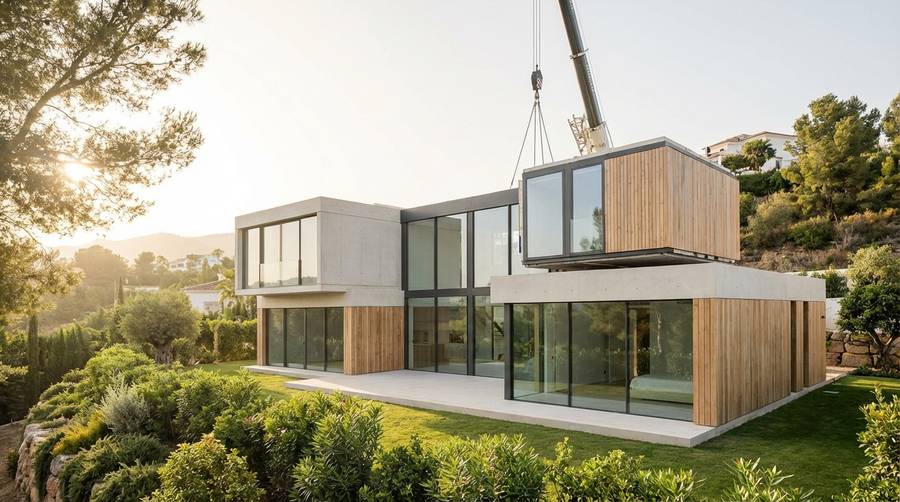
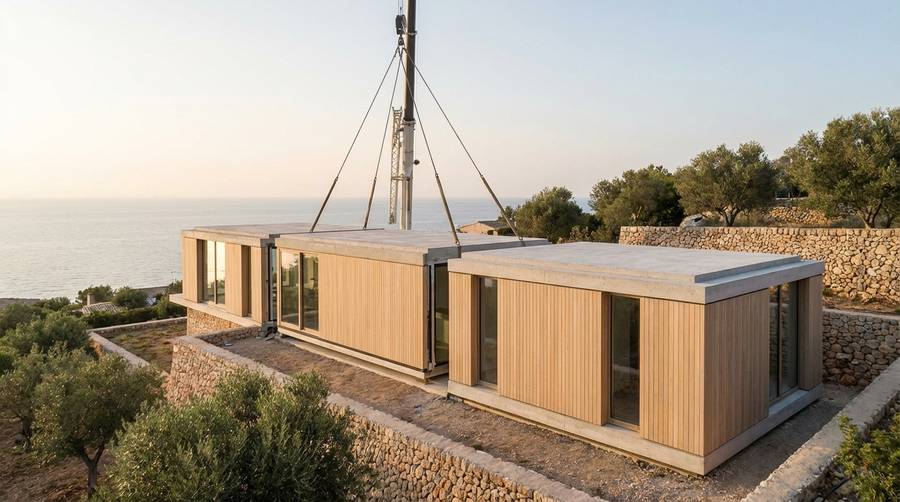
- Define transportation envelopes early: maximum module dimensions and crane reach tied to the chosen factory process.
- Use modular-friendly design rules: design joints, service shafts and lifting points with the manufacturer during schematic design.
- Coordinate architect and factory: weekly alignment meetings in the first two design phases avoid mismatches.
Preventive checklist before signing any contract
- Verified site access (truck/low-loader) and crane pads.
- Parcel geotechnical and topographic reports available.
- Preliminary alignment with manufacturer on module sizes.
- Confirmed utility connection locations and capacities.
2. Picking materials unsuitable for climate or certifications
Common mistakes: choosing systems without evaluating efficiency and durability
Picking materials based on price or trend — without testing for Spanish climates or certification goals (e.g., Passivhaus) — can produce high energy use, condensation issues or early deterioration.
Recommended alternatives: industrialized concrete, light timber frame and steel frame
- Industrialized concrete: excellent thermal mass and durability for seaside or inland climates. Use factory-cast panels with continuous insulation joints for airtightness.
- Light timber frame (entramado ligero): high prefabrication potential, rapid assembly, and very good thermal performance when built with quality membranes and mechanical ventilation.
- Steel frame (steel frame): ideal where long spans or large glazed façades are required. Prioritise thermal breaks and verified airtight details.
How to validate materials and systems
- Request technical data sheets and service life estimates.
- Ask for references and visit completed projects with similar climate and scale.
- Review energy test data or Passivhaus component certificates when aiming for high efficiency.
3. Problems in the production chain and factory quality control
Typical failures: dimensional issues, inconsistent finishes, missed deadlines
Manufacturing defects or poor dimensional control mean modules arrive needing adjustments. This produces site labor, schedule slip and client dissatisfaction.
Solutions: factory audits, reception protocols and workshop tests
- Factory audit before contracting: check tolerances, production capacity, lead-times and quality systems.
- Define acceptance criteria: dimensional tolerances, finish quality, and M&E pre-commissioning checkpoints.
- Require shop tests: door/window operation, electrical circuits, plumbing pressure tests and airtightness mock-ups where possible.
Best practices: photo logs, milestone controls and contractual guarantees
- Use scheduled photo/video logs for each module production milestone.
- Include clear factory acceptance milestones in the contract tied to payments.
- Obtain written guarantees on tolerances and finishes with remedies for defects.
4. Mistakes in energy efficiency and sustainability certification
Impact: higher consumption, failure to meet Passivhaus or energy label
Neglecting the thermal envelope, continuity of insulation, or window performance results in comfort problems, unexpected bills and failed certifications.
Fixing it: integrate thermal strategy from design, continuous envelope and right glazing
- Design for envelope continuity: thermal bridges and airtightness must be addressed at module joints.
- Choose certified windows: U-values and solar factor must match performance targets for the Spanish climate.
- Combine MVHR and efficient HVAC: a good ventilation strategy is essential for indoor comfort and energy targets.
Practical measure: early energy simulations and final commissioning
- Run energetic simulations at the schematic stage and update at each design milestone.
- Perform airtightness tests pre-delivery when possible, and final commissioning on site.
5. Permits, paperwork and regulations that stall the project
Typical issues: incomplete documentation and scope changes during licensing
Administrative blockers are a major risk: missing reports, conflicting plans or late design changes can freeze a permit for months.
Practical solutions: administrative planning, a single responsible person and checklists
- Assign a permits lead: one person coordinates submissions, corrections and liaison with the town hall.
- Create a permit checklist: include all municipal requirements, technical reports and third-party approvals.
- Freeze scope during licensing: limit design changes while licence is being processed. Significant changes should trigger a formal change control.
Coordination tip: urbanism, MEP and schedule alignment
Integrate urban planning, installations and build schedule into a single master plan. This prevents milestone mismatches and avoids increased financial carrying costs.
6. Financing, costs and managing the expectations of the self-builder (autopromotor)
Common errors: underestimating indirect costs and lacking contingency
Self-builders often focus on the factory price and forget site works, connections, taxes, financing costs and a realistic contingency (usually 8–12%).
Solutions: realistic budgeting models, autopromotion mortgages and staged payments
- Build a full cost model: land, taxes, site works, connections, landscaping, insurance, permits and furniture.
- Plan financing: explore a dedicated hipoteca para autopromoción (autopromotion mortgage) or staged construction lending tied to milestones.
- Use milestone payments: link supplier and manufacturer invoices to clearly defined deliverables and QA checks.
Recommendation: case metrics to compare offers and timings
Evaluate proposals using uniform metrics: total time to delivery, factory lead-time, on-site erection days, and included scope. Compare real project examples to ensure apples-to-apples comparisons — for example, a well-managed light timber frame turnkey project frequently reduces on-site work by 60% compared with conventional builds.
Practical next steps to ensure success with your industrialized house
Actionable checklist: from parcel search to turnkey delivery
- Complete site due diligence before design—topography, utilities and transport access.
- Choose a manufacturer early and validate module dimensions and factory capacity.
- Set technical acceptance criteria and factory QA milestones in the contract.
- Run energy simulations early and plan for airtightness testing.
- Assign a permits lead and freeze scope during licensing.
- Prepare a full budget with contingency and consider an autopromotion mortgage.
How to use case studies and technical comparisons to decide
Study completed projects with similar climate and scale. Focus on measured metrics: construction days on site, final energy consumption, and client satisfaction. For system comparisons and measured factory metrics, see our technical guide Sistemas productivos de fábrica and the higher-level comparison in Vivienda industrializada vs tradicional: guía 2026.
Recommended contacts: roles to involve early
- Architect familiar with modular construction and Spanish regulations.
- Manufacturer with factory audit reports and references.
- Project manager or site director for on-site coordination.
- Financial advisor experienced in autopromotion mortgages.
Conclusion
Industrialized housing in Spain can deliver predictable costs, faster delivery and superior energy performance — but only when early coordination, the right materials, robust factory QA, energetic design and realistic financing are in place. Use the checklists and preventive actions above as a working plan from day one. They will reduce risk, protect your budget and help you reach a true turnkey handover.
If you want a tailored checklist for your parcel or a factory audit template, contact a specialised team who can guide your project through the key milestones with data-driven decisions.
Ready to reduce risk on your next modular home? Reach out for an initial consultation or download our factory-audit checklist to get started.