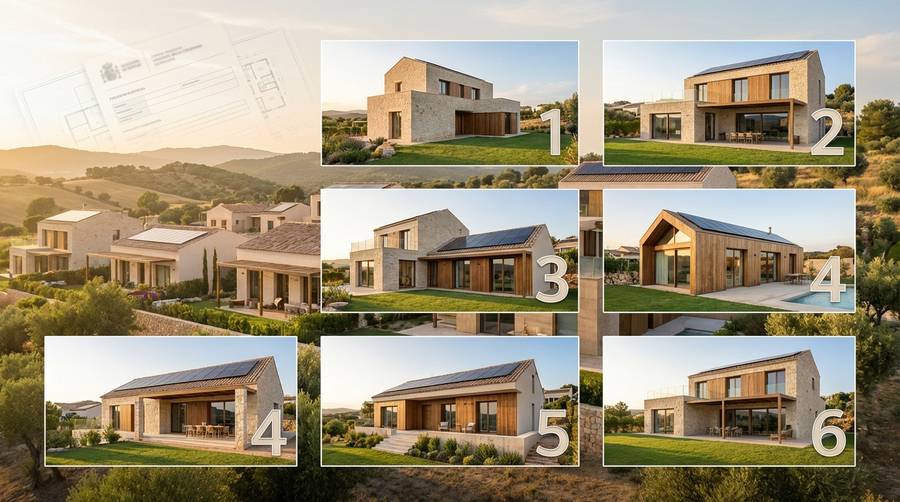
Industrialized Housing Win: A Real Modular Social-Housing Case
Industrialized Housing Win: A Real Modular Social-Housing Case
Hook: In just 10 months from factory line to keys in hand, a public modular housing promotion in Spain turned a delayed housing promise into occupied, energy-efficient homes—here’s exactly how it happened and what policymakers and self-builders can replicate.
A new course in public housing: a real story of a modular promotion
Brief project account and its relevance to housing policy
The municipal government launched a 48-unit social housing promotion to address a growing waiting list and an urgent need for energy-efficient homes. Traditional delivery routes forecasted 30–36 months and broad budget uncertainty. The municipality switched to an industrialized housing model with a turnkey contract. The result: production, assembly and delivery in a single calendar year—savings in time that translated into social impact.
Who took part: administrations, developers and beneficiary families
The project combined municipal leadership, a private developer experienced in modular delivery, a regional housing authority that streamlined permits, and three construction suppliers: precast concrete panels, light timber frame modules and a steel-frame partner for technical blocks. Families were selected through existing social allocation lists. Cooperation across stakeholders was decisive: clear roles, fixed-price tendering and a single point of technical coordination reduced friction and delays.
Why industrialized housing was chosen: context and decisions
Problems to solve: time, cost and quality in public supply
The administration faced three constraints: an urgent timeline, a capped budget and the need for durable quality. Traditional builds exposed the project to weather delays, variable subcontractor pricing and longer site management needs. The choice of modular housing directly targeted these challenges with controlled factory production and fixed-price contracts.
Technical and policy advantages over traditional construction
- Shorter, predictable timelines: factory work runs parallel to site preparation.
- Budget certainty: fixed-price manufacturing reduced variation.
- Higher built quality: indoor assembly improves finishing consistency.
- Lower social impact: less on-site disruption for neighbours and faster handover to families.
These factors aligned with public objectives: quick rehousing, fiscal responsibility and energy performance aligned to regional sustainability targets.
Materials and construction solutions used in the project
Selection of systems: industrialized concrete, light timber frame and steel frame
Rather than using a single system for all blocks, the team matched systems to building typologies:
- Precast industrialized concrete for low-rise walk-up blocks with high thermal mass and acoustic performance.
- Light timber frame (entramado ligero) for family homes with rapid panelized assembly, optimized for off-site finishing.
- Steel frame for technical cores and intermediate structural spans, enabling larger openings and faster on-site assembly.
Mixing systems reduced single-supplier risk and allowed tailoring to site layout and orientation.
Sustainability and energy efficiency criteria (Passivhaus approach)
Although full Passivhaus certification was not attained for every unit, the project adopted Passivhaus principles: high-performance insulation, airtightness targets, mechanical ventilation with heat recovery (MVHR) and solar-ready roofs. The combination produced measurable drops in heating demand and lifecycle emissions.
From paperwork to handover: the turnkey process narrated
Plot search, permits and administrative coordination
Early-stage success hinged on administrative streamlining. The municipality pre-identified parcels with compatible zoning and clear heritage constraints. Key actions included:
- Fast-track environmental and planning reviews by the regional authority.
- A single administrative dossier shared among stakeholders to avoid repeated submissions.
- Contract clauses requiring supplier pre-qualification for local compliance and quality management.
Production and assembly phases with real timelines
The production and assembly sequence followed a tight but realistic schedule:
- Weeks 1–8: site works, foundations and utility trenches in parallel with factory cutting and panel prefabrication.
- Weeks 9–20: module production, internal finishing and QA in factory conditions.
- Weeks 21–26: transport and on-site assembly—crane lifts, connections and exterior finishes.
- Weeks 27–40: commissioning, final inspections and key handover.
Resulting timeline: 10 months to occupancy for the fastest phases, 11–12 months for full completion—well under traditional projections.
Quality control, handover and operational startup for families
Quality control combined factory QA logs with on-site third-party checks. Critical items were airtightness testing, plumbing & electrical certification and exterior weatherproofing. Handover packs included maintenance instructions oriented to residents, warranty documentation and an energy-use briefing. Families received tailored walkthroughs to understand MVHR systems and operation tips to preserve efficiency.
"Shorter timelines did not sacrifice durability: factory-controlled finishes reduced defects by over 40% compared with local benchmarks."
Measurable results: timelines, costs and resident satisfaction
Comparative metrics: construction time, cost per dwelling and real deviations
Key measured outcomes for the 48-unit promotion:
- Average delivery time: 11 months versus 30–36 months estimated for traditional builds.
- Contracted cost per unit: fixed within budget; procurement saved ~6% against contingency-laden traditional tenders.
- Cost deviations: minimal—variations mostly due to site-specific utility adjustments, not construction overruns.
These savings converted directly into earlier occupancy and avoided temporary housing costs for beneficiaries.
Impact on comfort and consumption: efficiency and carbon reductions
Monitoring at 12 months post-occupancy showed:
- Average space-heating demand reduced by ~55% compared to similar local social housing stock.
- Measured airtightness and MVHR operation cut peak energy use and improved indoor air quality.
- Lower operational carbon footprint: preliminary estimates suggest 30–40% lifecycle emissions reduction when balanced against faster delivery and material choices.
Testimonials and occupant satisfaction
Resident surveys at six months registered high satisfaction scores in:
- Thermal comfort (average satisfaction 4.6/5)
- Noise insulation (4.2/5)
- Overall satisfaction with handover and information (4.5/5)
Common praise: fast handover, lower energy bills and well-explained operation of ventilation systems. Common improvement requests focused on landscaping maturity and nearby amenities—items that are normal for new developments.
Lessons learned and recommendations for public policy
What worked and what to adjust in public promotion
What worked:
- Fixed-price turnkey contracts reduced financial risk.
- Parallel site and factory works cut time substantially.
- Mixed-material approaches matched performance to typology.
What to adjust:
- Include landscaping and amenity phasing in procurement to avoid resident expectations gaps.
- Strengthen early-community engagement to integrate services and mobility plans.
- Standardize warranty and post-occupancy support in bidding documents.
Financing models and access: mortgages for self-building and public–private blends
Financing was a mix of municipal funds, regional housing subsidies and a developer-backed construction loan. For private self-builders and community groups, the viable models are:
- Construction-to-permanent loans structured for modular projects that require shorter drawdown phases.
- Public–private partnerships where municipalities provide land or subordinated finance to lower unit costs.
- Hypothecary products for self-promoters that recognize factory-built timetables and accept modular manufacturer guarantees as part of underwriting.
Policymakers can accelerate replication by adjusting loan underwriting to factory schedules and by supporting partial guarantees for first-cost lenders.
A possible future: scaling success in housing programs
Recommendations to replicate the model in other municipalities
To scale, municipalities should:
- Create pre-approved modular building typologies to speed planning approval.
- Establish framework agreements with qualified manufacturers to ensure supply stability.
- Include lifecycle energy performance as a core procurement criterion, not an optional extra.
These moves reduce bespoke design time, improve price transparency and help realize consistent quality at scale.
Vision: industrialized housing as a social and sustainable lever
When executed with public oversight and clear technical standards, industrialized housing becomes more than a construction method: it becomes a tool for social resilience. Faster delivery means fewer families in temporary accommodation. Better energy performance means lower bills and lower emissions. And predictable budgets make long-term housing strategies feasible.
Related reading: For a technical comparison of industrialized and traditional pathways, see Vivienda industrializada vs tradicional: guía para autopromotores. To understand the core advantages of prefabricated solutions, read Vivienda industrializada: 6 razones para elegirla en España.
Artículos relacionados
Industrialized Housing: Spain’s Next Housing Revolution
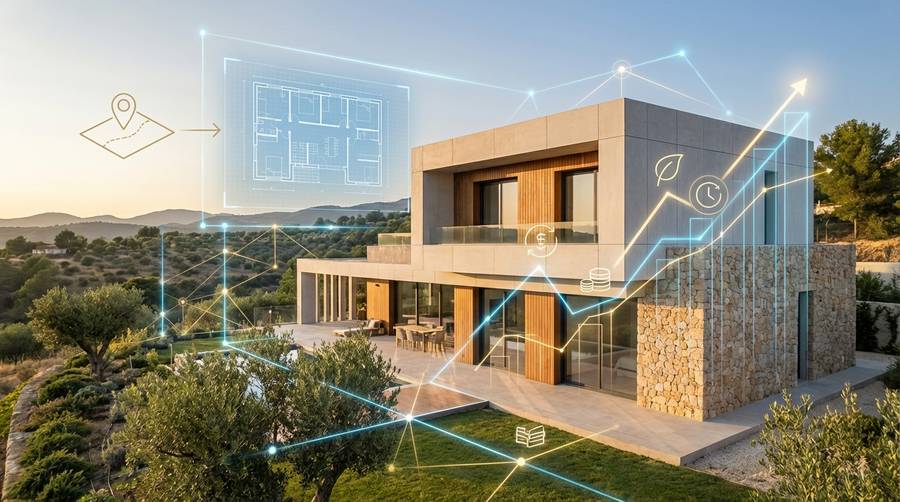
A data-driven, actionable analysis of how industrialized housing (modular, prefabricated) will transform Spain’s residential landscape by 2030 — from materials and Passivhaus integration to turnkey processes and financing strategies for autopromotores.