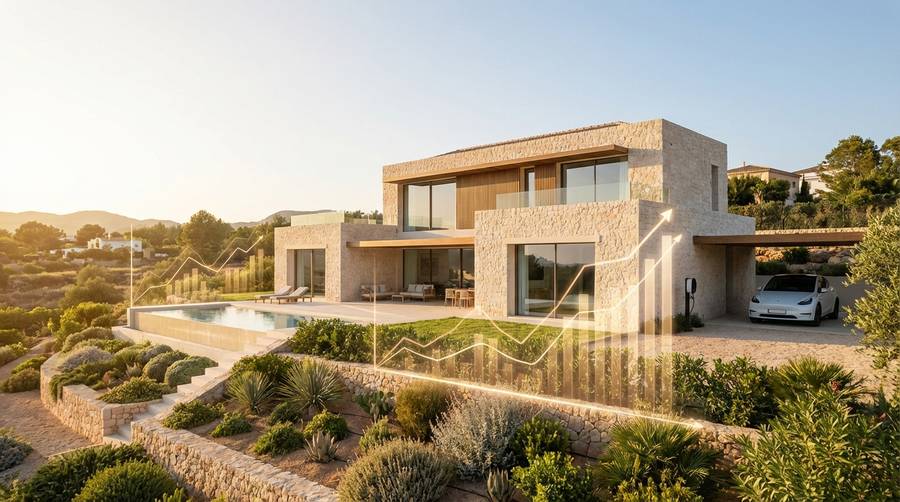
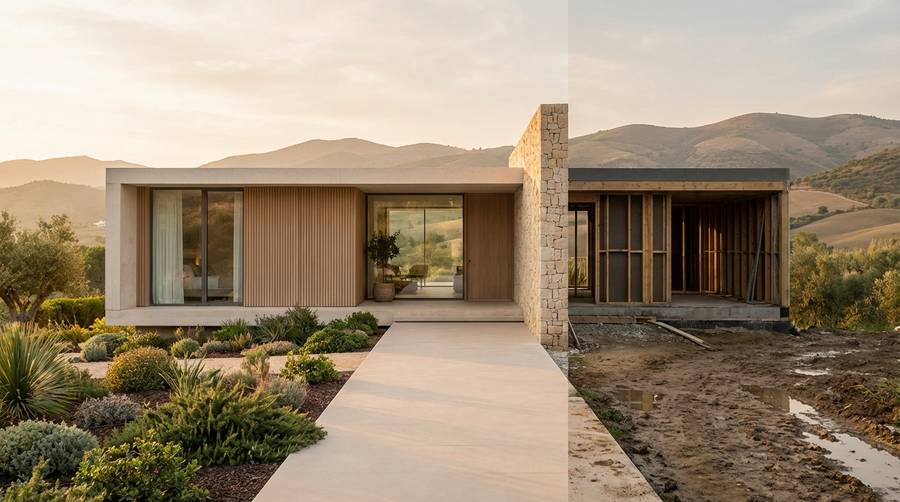
Prefabricated House Success: A Turnkey Modular Home Case in Spain
How the project began: from idea to choosing a prefabricated house
Hook: When a young family in Valencia decided to build a contemporary home, they wanted certainty: fixed cost, predictable schedule and high energy performance. That decision took them from months of doubt to a finished turnkey prefabricated house in under a year.
Family context and goals: budget, schedule and lifestyle
The clients were a two‑parent household with one child and a remote work requirement. Their priorities were clear: a comfortable Mediterranean aesthetic, large daylight areas for home offices, and low operational costs. They set a firm budget and a non‑negotiable move‑in date tied to school terms.
Why choose industrialized housing over traditional build
They compared traditional on‑site construction versus industrialized modular methods. The deciding factors were time certainty, price transparency and superior factory quality control. Modular manufacturing promised shorter on‑site windows, reducing weather delays and unexpected cost overruns.
Selection criteria: plot, permits and local rules in Spain
Key selection criteria for the parcel included access, solar orientation, and town planning constraints. Early verification of local regulations—setback rules, maximum buildable area and connection requirements—prevented later redesigns. The team recommended validating the plot before committing to design, saving both time and money.
Initial challenges and clear objectives: what had to be solved
Site limitations and urban planning constraints
The plot sloped gently and sat within a zone with strict façade and height rules. The solution combined a compact footprint with a stepped design to respect setbacks while capturing southern light. The modular solution allowed precise control of dimensions so every panel and module fit the municipal envelope.
Need for energy efficiency and carbon reduction
The clients aimed for a near‑Passivhaus level of comfort. This required an airtight enclosure, high‑performance glazing and mechanical ventilation with heat recovery. Achieving these in a factory‑controlled process reduced thermal bridging and assured quality of insulation and seals.
Fixed budget and schedule: avoiding time and cost overruns
With a fixed price contract, the team set milestones and penalties for late delivery by the manufacturer. The factory timetable synchronized with on‑site groundwork to ensure the assembly window stayed compact. This alignment is critical: delays in foundations are the most frequent cause of cost creep in modular projects.
Constructive solution: system, design and materials selected
Choosing the structural system: industrialized concrete vs timber frame vs steel frame
After technical comparison, the project adopted a hybrid approach: load‑bearing industrialized concrete plinths for durability at ground level, and a light timber frame upper structure for speed, indoor comfort and better embodied carbon performance. This mix balanced robustness with efficiency.
Premium Mediterranean finishes: light façades, wood and stone
To achieve the desired aesthetic, the specification used lime‑based light renders, engineered wood cladding for accents, and local stone for plinths and pathways. These choices deliver a contemporary Mediterranean look while remaining low‑maintenance.
Integrating large openings and natural light for a warm contemporary home
Factory‑installed high‑performance windows allowed large, thermally efficient openings. The layout prioritized southern and western glazing for daylight and passive gain, while shading devices and deep overhangs control summer overheating.
Turnkey process step by step: how everything was managed without surprises
Plot search and validation, permits and administrative coordination
Project management began with a checklist: cadastral checks, seismic zoning review, utility connection feasibility and a preliminary meeting with municipal planning. Early engagement with the town architect reduced the risk of last‑minute demands.
Design, factory production and onsite assembly with sealed timelines
The design phase lasted eight weeks from preliminary to execution drawings. Production in the plant took ten weeks while on‑site civil works progressed in parallel. Assembly, roof and envelope completion occurred over seven working days—an example of the time compression modular construction offers.
Final delivery, checks and client satisfaction
The handover included a comprehensive checklist: airtightness testing, mechanical commissioning, glazing inspection and finishes confirmation. A final walkthrough corrected minor snagging items within two weeks. The clients moved in on the promised date.
Result: a premium turnkey prefabricated house delivered within the agreed budget and schedule, with measurable energy savings and high occupant comfort.
Sustainability and efficiency: real metrics from the case
Passivhaus strategies and measures adopted to cut energy use
Key measures included continuous insulation, triple‑glazed windows with low‑e coatings, mechanical ventilation with 90%+ heat recovery, and careful airtightness detailing tested in the factory and on site.
Materials and solutions to reduce embodied carbon
The team prioritized low‑carbon concrete mixes for foundations, certified timber for structure, and locally sourced finishes. Using off‑site manufacturing also reduced waste: the factory reported a material waste rate below 2% compared to typical on‑site rates above 10%.
Quantified results: estimated consumption, annual savings and indoor comfort
- Predicted primary energy demand: ~35 kWh/m²·year (approaching low‑energy standards).
- Estimated heating demand reduction: ~70% compared to an equivalent conventional build.
- Annual energy cost saving: approximately €850–€1,100 depending on occupant behavior.
Financing and economic viability for self-builders
Mortgage and funding options for modular self‑builders
Financing a modular turnkey home follows similar routes to conventional new builds, but lenders increasingly recognize factory guarantees and fixed price contracts. Options used in this project included a staged mortgage tied to key milestones and a complementary self‑builder line for plot acquisition.
Cost breakdown: fixed budget and savings against traditional construction
The project worked with a closed budget. Major line items included land purchase, turnkey construction (including VAT and connections), landscaping and fees. Compared to a conventional build of similar quality, the modular route achieved estimated savings of 8–12% when accounting for reduced delays and lower on‑site supervision costs.
Real example: total cost, payment schedule and return on investment
The total turnkey cost for the 150 m² house (plot excluded) was approximately €235,000 including high‑performance finishes and landscaping. Payments were staged: 20% on contract, 40% at factory start, 30% at on‑site assembly start, and 10% on handover. The projected payback from energy savings and reduced maintenance was under 12 years, while quality of life and time value for the family added intangible returns.
Outcomes, testimonials and practical lessons for future self‑builders
Final metrics: delivery time, budget deviation and satisfaction level
- Total calendar time: 9 months from contract to handover.
- Budget deviation: within 1.8% of the signed turnkey price (contingency covered a minor client change).
- Client satisfaction: 9.5/10 on a post‑handover survey for comfort, schedule and communication.
Client testimonial: experience, resolved issues and enjoyed benefits
In their words: "We needed certainty. The fixed price and timeline were decisive. The house is warm in winter and cool in summer; we are saving on bills and love the light. There were small snags, but they were solved quickly. The whole process felt transparent."
Actionable recommendations for those planning a premium prefabricated house
- Validate the plot first: verify constraints before finalizing design.
- Choose a sealed turnkey contract: insist on milestone‑based payments and clear warranties.
- Demand factory testing: airtightness and component fit‑checks reduce on‑site surprises.
- Prioritize passive measures: good orientation and shading cut mechanical needs.
- Plan financing early: align mortgage stages with manufacturer milestones to avoid cash pressure.
For a deeper dive on common pitfalls and how to solve them, see Casa prefabricada premium: errores y soluciones and for market trends see Casa prefabricada premium: trends and guide 2026.
Closing thoughts and a gentle call to action
This case demonstrates that a premium prefabricated house can deliver on the three pillars most self‑builders care about: time certainty, cost control and energy performance. The factory approach reduces variability and increases predictability—two invaluable assets when managing a family move and school calendars.
If you are considering self‑building in Spain, start with plot validation, insist on sealed turnkey terms and prioritize passive design. When done correctly, modern industrialized housing offers tangible savings, measurable energy benefits and a high‑quality Mediterranean living experience.
Ready to explore a tailored turnkey route for your plot? Contact a specialist to review your parcel and outline feasible systems—early validation is the single best step to avoid costly changes later.
Artículos relacionados