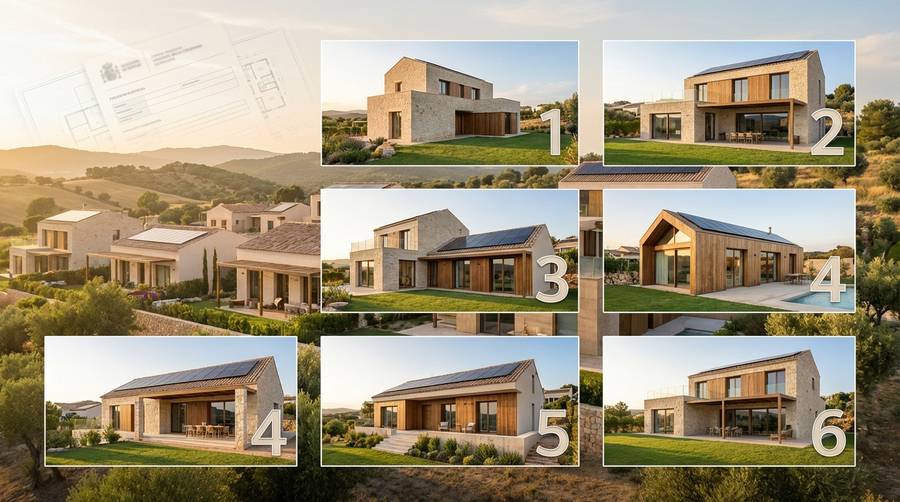
Industrialized Housing: Spain’s Next Housing Revolution
Panorama futuro: why industrialized housing will redefine housing policy in Spain
Hook: In Spain, industrialized housing is no longer niche — it is a scalable strategy to deliver affordable, high‑quality homes faster and with lower carbon footprints. Policymakers, promoters and self‑builders (autopromotores) face a short window (2026–2030) to integrate industrialized production into housing policy and funding programs.
Macro trends: residential industrialization growth through 2030
Market indicators show double‑digit annual growth for modular building components in Southern Europe. Industry surveys and procurement data indicate:
- Time to delivery reduced by 30–50% versus traditional build for single‑family housing.
- Factory defect rates cut by half due to controlled QA and repeatable processes.
- Unit cost volatility reduced: fixed‑price contracts and batch production minimize surprises.
These trends position industrialized housing as a tool to meet affordable housing targets while improving predictability for budgets and timelines.
Impact on public programs and affordable housing
Industrialization unlocks new program models for public and social housing:
- Modular procurement shortens project cycles, allowing faster turnover of affordable units.
- Standardized modules simplify grant management and lifecycle budgeting.
- Predictable costs enable public agencies to underwrite more units within the same budget.
Actionable idea: public tenders should adopt performance‑based specifications (energy targets, assembly time, LCA metrics) rather than prescriptive on‑site methods.
Regulatory barriers and risks
Two main obstacles slow adoption: local permitting frameworks that assume traditional masonry builds, and fragmented certification paths for novel assemblies. Overcoming these requires:
- Model permitting templates for industrialized systems.
- Clear LCA and fire/safety guidance aligned with Spanish code (CTE) and EU regulations.
Regulation aligned with industrial processes reduces time to occupancy by 20% and lowers financial risk for lenders — a decisive factor for scaling modular housing.
Advantages compared: prefabricated houses vs traditional construction
Efficiency and time control: closed schedules and less site uncertainty
Key point: Offsite manufacture moves critical path activities into a factory. For autopromotores, this means:
- Clear, short production windows (manufacture + on‑site assembly often < 12 weeks for a typical 120–150 m² house).
- Fewer weather delays and subcontractor coordination issues.
- Better adherence to delivery milestones — critical for mortgage drawdowns and cashflow.
Costs and quality: fixed price, predictability and measurable savings
Compared with traditional builds, industrialized projects deliver:
- Price certainty: fixed‑price turnkey offers reduce exposure to material price swings.
- Lower indirect costs: shorter site occupation reduces interim financing and site overhead.
- Quantified savings: typical projects report 8–15% lower all‑in costs when accounting for lower overruns and shorter financing periods.
Quality and habitability: finishes and client satisfaction
Factory control improves finishing consistency. Recent user surveys show higher satisfaction in climate comfort, acoustic performance and finish quality versus comparable on‑site homes.
For deeper context on core trade‑offs and material choices, see Vivienda industrializada vs tradicional: guía para autopromotores.
Materials and systems that will shape 2026–2030
Industrialized concrete: performance and use cases
Precast and industrialized concrete panels offer durability and thermal mass suited to Mediterranean climates. Benefits include:
- High fire resistance and longevity.
- Thermal inertia that smooths diurnal temperature swings.
- Compatibility with factory integration of mechanical chases and window units.
When to choose concrete: urban plots with strict acoustic/fire requirements or multi‑family projects seeking long lifecycles.
Light timber frame and steel frame: technical compare and sustainability
Timber frame (entrama do ligero) and steel frame systems excel in speed and low embodied carbon:
- Timber: lower embodied CO2, fast fabrication, high thermal performance when paired with modern insulation.
- Steel frame: precision, long spans, and repeatability; slightly higher embodied carbon but excellent recyclability.
Choice depends on client priorities: timber for carbon‑sensitive self‑builders; steel for complex geometries or larger spans.
Innovations in insulation and finishes to meet Passivhaus goals
New factory‑applied insulation panels and airtight membrane assemblies enable modular homes to reach Passive House performance without complex on‑site detailing. Practical steps:
- Specify factory‑installed continuous insulation with tested junction details.
- Use balanced mechanical ventilation with heat recovery sized to the completed unit.
- Require third‑party airtightness testing (Blower Door) at factory and post‑assembly.
Sustainability and energy efficiency: a roadmap to cut carbon
Passivhaus strategies applied to industrialized housing in Spain
Applying Passivhaus principles in modular construction is not theoretical — it is operationally efficient. Key measures:
- High‑performance glazing with correct solar control for Mediterranean orientations.
- Optimized thermal envelope manufactured to tight tolerances.
- Integrated MVHR systems sized to the unit and factory‑tested.
These steps reduce heating/cooling demand dramatically and improve occupant comfort year‑round.
Life cycle assessment: materiality, transport and emissions
To evaluate real carbon impact, run LCA with these focal points:
- Embodied emissions of structural systems (timber v steel v concrete).
- Transport distance: factory proximity matters for modular components.
- Operational emissions across a 30–50 year horizon.
Factoring in shorter construction times and reduced waste, industrialized housing often outperforms poorly executed traditional builds on whole‑life carbon.
Benefits: energy use, certifications and resale value
Measured benefits for certified modular homes include:
- Operational energy reductions of 60–80% vs baseline housing.
- Higher EPC/energy class and easier path to certifications (Passivhaus, BREEAM).
- Improved resale value due to documented performance and lower maintenance needs.
Turnkey process optimized: from plot to handover
Key phases and a sample timeline
A streamlined turnkey timeline for a 120–150 m² house often looks like:
- Plot search & feasibility: 2–6 weeks (site analysis, utility checks).
- Design and approvals: 8–16 weeks (architect + structural factory coordination).
- Manufacturing: 6–10 weeks (modules, finishes).
- On‑site assembly and commissioning: 2–4 weeks.
- Handover and warranties: 1–2 weeks.
Compared to conventional routes, total calendar time is typically reduced by 30–50%.
Roles and responsibilities: coordination for success
Clear role definition prevents scope gaps:
- Client/autopromotor: land procurement, finance, final decisions.
- Design lead (architect): ensures site‑specific compliance and habitability.
- Factory supplier: manufacturing, QA, logistics.
- General coordinator: handles permits, utility hookups, and final commissioning.
Successful projects formalize responsibilities via an integrated turnkey contract with milestones and acceptance tests.
Case metrics: real turnkey efficiencies
Recent turnkey projects in Spain report:
- Average total project time of 5–7 months from contract signature to keys.
- Cost overruns under 3% in fixed‑price deliveries (versus typical 10–20% in traditional builds).
- Client satisfaction scores > 4.4/5 for comfort and finish quality.
For concrete examples and a buyer's perspective, consult Vivienda industrializada: 6 razones para elegirla en España.
Financing and mortgages for self‑building modular homes
Financing models: mortgages for autopromoters and tailored lines
Lenders increasingly recognise modular workflows. Viable financing routes include:
- Stage‑based drawdown mortgages tied to factory milestones and assembly completion.
- Specific autopromoter products combining land mortgage with construction financing.
- Green mortgage discounts when certified to low‑energy standards.
Bank criteria and documentation
Banks typically require:
- Turnkey contract with fixed price and clear milestones.
- Factory QA documentation, component tests and warranty details.
- Permits and energy performance projections (EPC or Passivhaus pre‑assessments).
Economic impact: savings and credit viability
Shorter build times and fixed pricing lower interim finance needs and reduce lender risk. Practically, this strengthens the credit case by lowering expected loan‑to‑value volatility and accelerating household entry into completed, mortgage‑serviced assets.
Practical guide and case studies: designing and delivering an industrialized house in Spain (2026)
Step‑by‑step: from concept to keys
- Define budget and primary performance targets (energy class, Passivhaus ambition).
- Select plot and confirm utilities, orientation and local rules.
- Pick structural system based on carbon and acoustic needs (timber, steel, precast concrete).
- Agree turnkey contract with factory QA clauses and acceptance tests.
- Monitor manufacturing through third‑party QA and schedule logistics to align with on‑site prep.
- Full assembly, systems commissioning (MVHR, renewables) and final airtightness test.
Detailed case studies
Example A (Timber frame single‑family, Mediterranean coast):
- Area: 130 m². Total calendar time: 5.5 months. Final cost: within 2% of contract. Energy use: ~20 kWh/m²·yr (heat pump + PV).
Example B (Precast concrete multi‑floor pilot):
- Area: 6 units. Assembly time per building: 6 weeks. Lifecycle savings projected: 25% lower maintenance cost over 30 years.
Comparative performance vs competitors
When comparing vendors, request these verified metrics:
- Factory lead time and measured defect rate.
- Measured airtightness and in‑use energy tests.
- Whole‑life cost models and LCA outputs.
Looking ahead: recommendations for policy makers, developers and self‑builders
Policy recommendations to scale industrialization
To accelerate adoption, we recommend:
- Standardised permitting templates for modular systems.
- Incentives for factory proximity and low‑carbon materials.
- Support for pilot public procurement with performance‑based KPIs.
Practical advice for autopromotores
Choose suppliers with transparent QA, fixed‑price turnkey offers and documented energy performance. Insist on:
- Third‑party testing (airtightness, thermal performance).
- Clear logistics and site preparation responsibilities.
- Warranties that cover both structure and critical systems.
Vision 2030: metrics to measure success
Adopt a compact dashboard for each project and program:
- Time to occupancy (days).
- Cost variance (% of contract).
- Operational energy (kWh/m²·yr).
- Embodied carbon (kg CO2e/m²).
Conclusion
Bottom line: Industrialized housing offers a measurable path to faster delivery, better quality and lower lifecycle carbon for Spain’s housing needs. For autopromotores, the benefits are tangible: shorter timelines, fixed costs and buildings that perform. For policymakers, industrialization is a lever to expand affordable housing capacity with controlled budgets.
If you are planning a self‑build or advising public programs, adopt performance‑based procurement, demand factory QA data and prioritise systems that enable Passivhaus performance. For tailored guidance on selecting suppliers, financing structures or a turnkey approach, contact a specialist to translate these principles into a project plan.
Interested in practical comparisons and a buyer's checklist? Explore our linked guides or reach out to discuss your parcel and targets.
Artículos relacionados
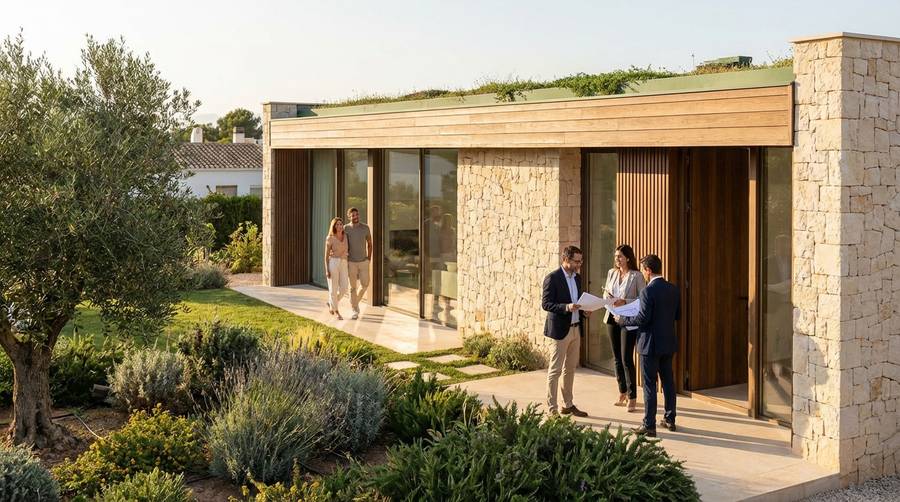
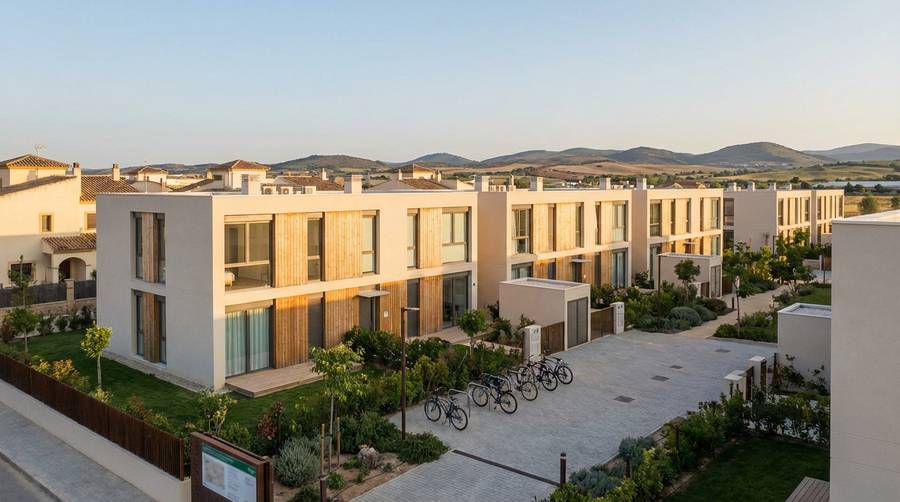
Industrialized Housing Win: A Real Modular Social-Housing Case
A step-by-step case study of a public modular housing promotion in Spain: why industrialized housing delivered faster, cleaner budgets and higher resident satisfaction—plus practical lessons for policymakers and self-builders.