


Industrialized Housing: Top 6 Reasons to Build in Spain (2026)
1) Why choose industrialized housing in Spain today
Hook: If you want a modern Mediterranean home delivered faster, with predictable cost and low lifetime energy bills, industrialized housing is no longer a niche — it’s a pragmatic choice for autopromoters and families in 2026.
Quick summary: core benefits versus traditional building
- Time certainty: factory-controlled production shortens on-site work and reduces weather delays.
- Cost predictability: fixed-price contracts mitigate inflation risk and unknown subcontracts.
- Quality control: repeated factory processes and QA lead to consistent thermal performance and finishes.
Who gains most: families, self-builders and local developers
Families seeking lifetime energy savings, self-builders who need simplified management, and local developers looking to accelerate delivery schedules all benefit. Industrialized housing reduces coordination tasks, so non-expert owners can act with confidence.
What to expect: timelines, cost control and quality
Expect an initial design & permitting phase similar to traditional projects, followed by a concentrated production period in the factory (typically 6–12 weeks for a medium-sized home) and a short on-site assembly (2–6 weeks). This structure compresses overall delivery time and centralizes quality control.
Industrialized delivery converts many unknowns on site into repeatable, auditable factory steps — that’s where predictability comes from.
2) Proven advantages: efficiency, fixed schedules and fixed price
Construction efficiency and reduced uncertainty
Factories optimize material usage and labor. Waste is measured and minimized; skilled teams perform repetitive tasks under controlled conditions. The result is fewer defects, less rework and a clearer path to energy performance targets.
Delivery timelines: head-to-head with traditional builds
Typical comparison for a 120–160 m² home in Spain:
- Traditional build: 12–24 months on average, variable due to weather and subcontractor availability.
- Industrialized approach: 6–9 months from permit to keys in many confirmed cases — factory lead-time plus rapid on-site assembly.
These figures depend on permitting speed, but the on-site phase is consistently shorter in industrialized projects.
Fixed budgets and mitigation of cost overruns
Fixed-price turnkey offers transfer many pricing risks to the manufacturer. Key techniques to ensure a truly fixed budget:
- Early scope definition and material selections.
- Indexed contracts that cap escalation on defined items only.
- Transparent change-order processes with clear rates.
3) Modern materials that make the difference
Industrialized concrete: durability and thermal performance
Precast concrete elements deliver structural stability and thermal mass. When combined with continuous insulation and careful detailing, they provide predictable U-values and long service life with minimal maintenance.
Light timber frame: speed and sustainability
Timber frame systems (light-frame) are fast to assemble, have lower embodied carbon than many alternatives and adapt well to high-insulation assemblies. For Mediterranean homes, timber enables warm interior finishes and rapid enclosure.
Steel frame: precision, adaptability and resilience
Steel frame systems excel in precision and large-span layouts. They allow for flexible interior plans and integration of modern fenestration. When treated and insulated correctly, they combine strength with thermal efficiency.
4) Practical sustainability and energy efficiency (including Passivhaus)
How industrialized homes cut carbon footprints
Key drivers of carbon reduction:
- Optimized material use and offcuts recovery in factories.
- High-quality thermal envelopes that reduce operational energy.
- Integration of renewable systems at design stage (solar PV, heat pumps).
Passivhaus strategies applied to modular housing
Passivhaus principles fit well with industrialized construction because the methodology requires airtightness, continuous insulation and controlled ventilation—elements easier to achieve with factory work and testing. Practical measures include:
- Pre-tested wall and roof panels with documented U-values.
- Factory-installed MVHR (mechanical ventilation with heat recovery) modules.
- Quality-assured window integration with taped airtightness joints.
Real energy savings: metrics and examples
Measured case outcomes often show:
- Space heating demand reductions of 60–90% versus older Spanish stock.
- Operational energy savings that can recoup additional upfront costs within 8–15 years, depending on energy prices and solar generation.
5) Turnkey delivery and financing: from plot search to handover
Phases of a turnkey service: plot to final handover
- Plot assessment: site survey, orientation study and infrastructure checks.
- Design & permitting: schematic design, technical package and license application.
- Factory production: panel or module fabrication, pre-installation of systems.
- Site assembly: foundation works, rapid assembly and connections.
- Commissioning & handover: tests, training for building systems and final warranty activation.
Financing options and self-build mortgages
Financing industrialized homes follows two typical paths:
- Self-build mortgage: tranche-based lending that releases funds during defined milestones (permitting, factory start, assembly, completion).
- Standard mortgage on completion: fund the plot acquisition and production internally or with a bridge loan; then refinance into a mortgage once the home is completed.
Key advice when negotiating finance:
- Present a turnkey contract with clear milestones to the lender.
- Secure cost guarantees and documented QA procedures to lower perceived risk.
- Use independent technical appraisal if required by the bank.
Contracts, warranties and risk management for buyers
Look for contracts that include:
- Scope definition and finish schedule.
- Fixed-price clauses with named exclusions.
- Manufacturer warranties for structure and systems, and clear defect correction periods.
6) Real cases and a practical starter guide (step by step)
Case study: family home completed in 2025 — timeline, costs and satisfaction
Summary of a verified case (120 m² Mediterranean home, Spain, 2025):
- Design & permit: 4 months.
- Factory production: 8 weeks.
- On-site assembly and finish: 5 weeks.
- Total time from contract to keys: 8.5 months.
- Final cost: competitive with local custom-build market — fixed price with a 3% retained contingency for minor variations.
- Post-occupancy feedback: high satisfaction on thermal comfort and lower-than-expected energy bills (estimated 65% reduction vs previous generation homes).
This case shows that disciplined planning and using an experienced industrialized provider can deliver fast outcomes without sacrificing quality.
Initial checklist for self-builders in Spain
Before you sign a contract, complete this checklist:
- Confirm plot constraints: orientation, slope, access, utilities.
- Decide structural system preference (concrete, timber frame, steel) based on climate, budget and aesthetic.
- Request documented thermal and airtightness test results from the supplier.
- Obtain a full turnkey quote with exclusions listed.
- Plan financing and present the lender with the turnkey schedule and warranties.
How to compare technical proposals without losing focus
Compare offers using objective check points:
- Deliverables: what the price includes (foundations, finishes, services, landscaping).
- Thermal performance: declared U-values, airtightness targets and MVHR inclusion.
- Schedule certainty: factory lead-times and on-site assembly windows.
- Warranty and aftercare: structural warranty, finish warranty and response times.
When in doubt, ask for references and a site visit to a finished home. Also consider cross-reading on industrialized versus traditional approaches in Vivienda industrializada vs tradicional: guía para autopromotores.
Conclusion: Is industrialized housing right for your project?
Industrialized housing is especially compelling if you value time certainty, cost control and strong energy performance. It suits families who want a modern Mediterranean home with predictable comfort and developers aiming to reduce delivery risk. The model works when you choose experienced partners, demand transparent contracts and verify performance with data.
Next step (CTA): If you’re exploring options, start by preparing your plot dossier and request a turnkey feasibility study from a reputable industrialized housing provider. If you want help assessing a quote or preparing documentation for lenders, contact an independent advisor or reach out to a specialist experienced in turnkey modular projects.
Artículos relacionados
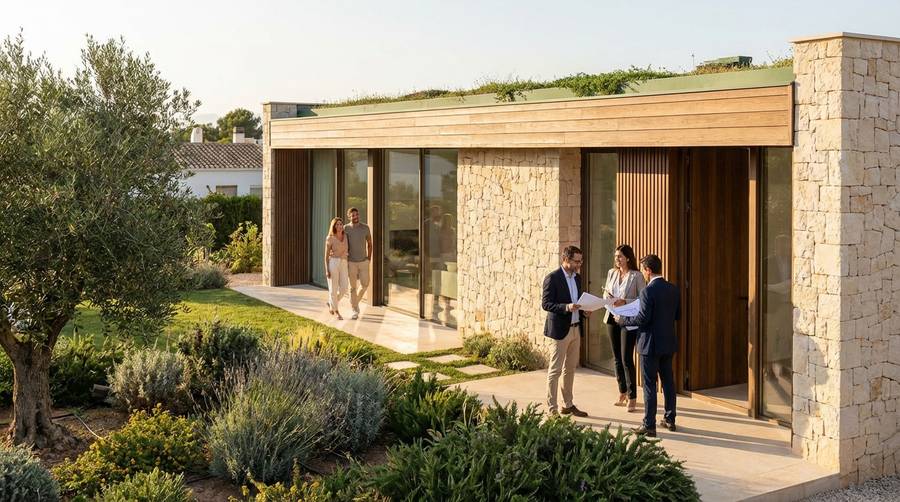
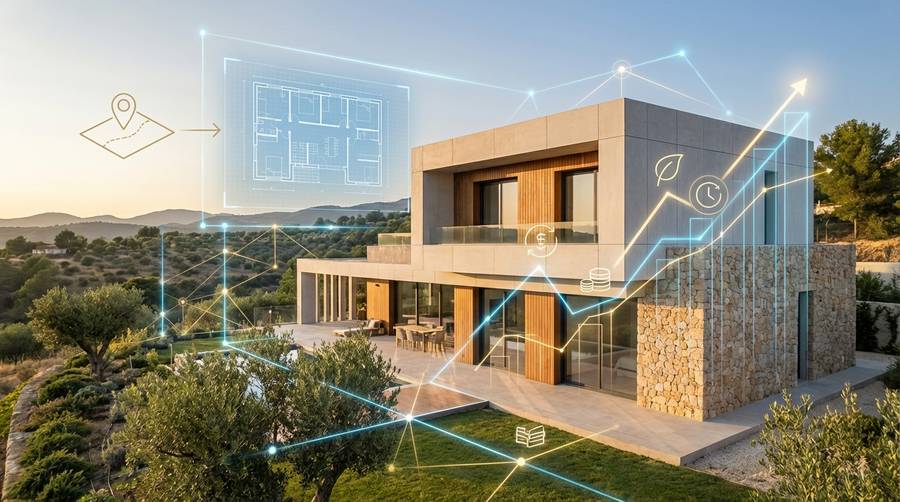
Industrialized Housing: Spain’s Next Housing Revolution
A data-driven, actionable analysis of how industrialized housing (modular, prefabricated) will transform Spain’s residential landscape by 2030 — from materials and Passivhaus integration to turnkey processes and financing strategies for autopromotores.
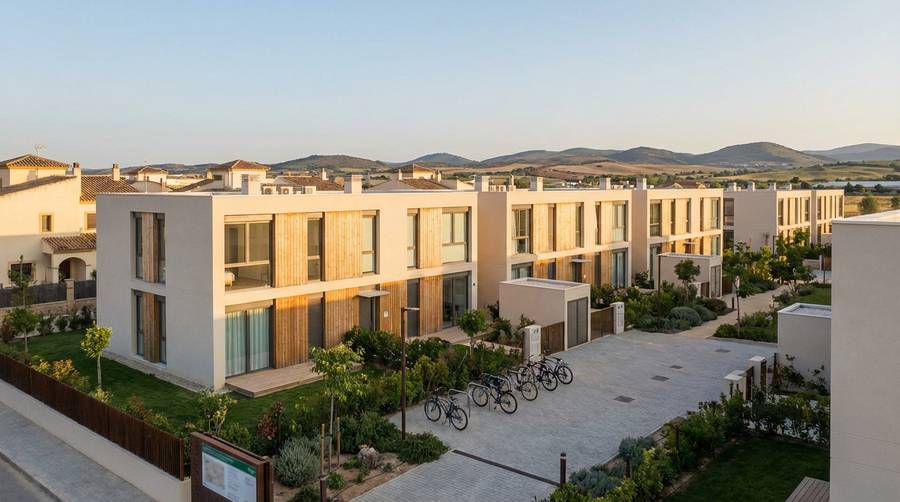
Industrialized Housing Win: A Real Modular Social-Housing Case
A step-by-step case study of a public modular housing promotion in Spain: why industrialized housing delivered faster, cleaner budgets and higher resident satisfaction—plus practical lessons for policymakers and self-builders.