


Industrialized housing: Scaling energy retrofit in Spain
Introduction — Hook: Why now is the decisive decade for Spain's building stock
Spain faces a narrow window to decarbonize buildings at scale. More than 60% of existing homes were built before modern efficiency standards. With 2030 climate targets approaching, the country must move beyond one-off retrofits. This article analyzes the future of industrialized housing and energy retrofit solutions, translating trends into measurable tactics for developers, communities, and autopromoters.
Vision: Why large-scale energy retrofit is Spain's next big challenge
National context and 2030–2050 climate objectives: key data
Spain's long-term climate goals require a steep fall in building emissions. Current estimates suggest buildings contribute roughly 30% of national emissions when accounting for heating, cooling, and electricity. The European Commission and Spanish authorities expect renovation rates to rise from 0.5% to 2–3% annually to meet net-zero pathways by 2050.
Two implications are immediate:
- Volume problem: tens of thousands of façades and building envelopes must be upgraded each year.
- Quality imperative: retrofits must deliver guaranteed energy performance, not incremental improvement.
Macroeconomic and social benefits of a scaled strategy
Industrialized retrofits can unlock multiple public goals:
- Job creation: standardized factories and regional assembly hubs create stable manufacturing employment.
- Energy security: reduced heating demand lowers import exposure.
- Affordability: predictable costs and shorter disruptions help occupant acceptance.
Barriers today: regulation, financing and market inertia
Three structural barriers slow adoption:
- Fragmented permit and approval processes across municipalities.
- Limited mortgage and financing products tailored to autopromoters and condominiums seeking deep retrofits.
- Perceptions associating prefabrication with low quality—a stigma we can reverse with measured data and real case studies.
Technological trends accelerating industrialized energy retrofits
Prefabricated and modular systems for high-performance envelopes
Factory-produced façade modules reduce on-site uncertainty. Benefits include:
- Shorter on-site schedules: façade replacement in weeks, not months.
- Higher quality control: thermal continuity and airtightness tested in controlled conditions.
- Scale economies: repeated components lower unit prices.
For multifamily blocks, modular façades and insulated panels provide a predictable upgrade route while minimizing resident disruption.
Modern materials: industrialized concrete, light timber frame, and steel frame
Material selection affects carbon footprint, speed, and cost:
- Industrialized concrete: excellent thermal mass and durability; now produced with lower clinker content to cut embodied carbon.
- Light timber frame: low embodied carbon and fast assembly; well-suited to above-grade envelope upgrades.
- Steel frame: high precision and prefabrication compatibility, especially for complex geometries.
Choice depends on context: seismic zones, architectural constraints, and lifecycle CO2 targets.
Passivhaus-level strategies and complementary systems
Passivhaus principles are increasingly paired with industrialized methods. Key components:
- Continuous insulation and thermal bridge-free details.
- Mechanical ventilation with heat recovery (MVHR) sized and commissioned at factory-level for consistency.
- Energy management systems that integrate photovoltaic generation and demand-side controls.
Well-executed industrialized retrofits can cut operational energy demand by 60–85% versus pre-upgrade baselines, while halving on-site construction time.
Emerging business models: turnkey industrialized retrofit at scale
Industrialized value chain: design, factory production, field assembly
A mature industrial model breaks work into repeatable stages:
- Standardized design kits for common typologies.
- Factory production with QA, pre-installation of systems, and performance testing.
- Rapid on-site assembly and commissioning.
This value chain shifts risk from on-site variables to factory control. For autopromoters, it means greater predictability and fixed-price offers.
Financing and mortgage products for autopromoters and communities
Financing must evolve to match the new delivery model. Practical instruments include:
- Energy-performance mortgages: loans whose terms reflect projected energy savings.
- Turnkey retrofit loans: structured to cover design, factory production and installation under one contract.
- Community pooling: enabling condominiums to aggregate demand and access lower rates.
Public programs and green bonds can further lower capital costs when aligned with measurable retrofit outcomes.
Public-private frameworks and green funding streams
To scale, industrial providers must align with EU funds and national incentives. Priority actions:
- Standardize reporting to unlock European green financing.
- Coordinate municipal permitting to reduce project lead time.
- Leverage demonstration projects to prove cost curves and risk profiles.
Measuring impact: metrics and representative case studies
Priority indicators: energy reduction, construction time, cost per m²
Policymakers and investors should track a compact KPI set:
- Primary energy reduction (%) — measured pre- and post-retrofit.
- On-site duration (days) — median for façade or envelope works.
- Cost per m² (€) — lifecycle perspective including maintenance and energy savings.
- Embodied carbon (kgCO2e/m²) — cradle-to-installation baseline.
Case study 1 — Multi-family block retrofit: outcomes at a glance
Context: 48-unit concrete block in a mid-sized Spanish city. Approach: modular external insulation panels and MVHR retrofit. Results:
- On-site work: 28 days of external scaffolding and 12 days of façade panel installation.
- Energy reduction: 72% lower heating demand, validated after one winter.
- Cost: €300/m² envelope upgrade, excluding subsidies; with public grants, net cost fell to €210/m².
- Resident satisfaction: 85% positive feedback on comfort and reduced bills.
Lessons: factory QA accelerated installation and improved airtightness beyond on-site expectations.
Case study 2 — Single-family industrialized retrofit: carbon and payback
Context: suburban single-family home, 180 m². Approach: timber-frame insulated façade modules, rooftop PV, MVHR. Results:
- Embodied carbon: reduced by 25% versus traditional heavy-weight retrofit scenario.
- Operational savings: annual energy bill cut by €1,100 (approx. 65%).
- Simple payback: 9–11 years after factoring subsidies and a green mortgage discount.
Technical comparisons: industrialized vs traditional retrofit
Constructive efficiency and quality control
Factory production ensures repeatable details and documented testing. Traditional on-site builds depend on weather and individual craftsmanship. On average, prefabricated modules improve airtightness by 20–40%.
Real costs and closed schedules
Industrialized processes deliver tighter cost certainty. Key outcomes:
- Lower contingency: contingency lines shrink because fewer unknowns remain at installation time.
- Shorter disruption: for occupied buildings, reduced refurbishment time increases acceptability.
Long-term energy performance and maintenance
Predictable assembly translates into predictable long-term performance when commissioning and guarantee frameworks exist. Maintenance needs are comparable or lower when durable materials are specified.
Strategic recommendations to accelerate industrialized retrofits
Policy and regulation priorities
Authorities can unlock scale by:
- Harmonizing permits across municipalities.
- Creating performance-based incentives, not component subsidies.
- Financing skills development to grow factory workforces.
Best practices for promoters, communities and autopromoters
On the project level, follow three disciplined steps:
- Standardize: adopt a kit-of-parts approach for common building typologies.
- De-risk: require factory QA, full-system testing and energy guarantees.
- Finance: align retrofits with mortgage or loan products that recognize energy savings.
For community projects, aggregating demand enhances bargaining power and reduces per-unit costs. See cross-references on stakeholder communication in Rehabilitación energética masiva: guía práctica 2026 for monitoring frameworks.
How to measure success: KPIs and stakeholder reporting
Implement quarterly reporting on the KPIs listed earlier. Clear, transparent data builds confidence with funders and occupants. For implementation errors and fixes, consider guidelines from Errores comunes en vivienda industrializada y cómo solucionarlos.
Future outlook: adoption scenarios to 2030–2040
Technology adoption and market maturity scenarios
Three plausible scenarios:
- Consolidated industrialization (optimistic): market share of modular retrofits rises to 40% by 2035.
- Gradual hybridization (baseline): factories supply components while much work remains site-driven.
- Fragmented status quo (pessimistic): uptake stalls due to regulatory and financing gaps.
Continuous innovation: circular economy and digitalization
Future gains will come from linking digital design, BIM-integrated factories, and materials circularity. Reuse of façade modules and tracked embodied carbon accounting will become competitive advantages.
Call to action for sector actors and autopromoters
If you are a developer, community leader, or autopromoter, start by piloting one industrialized retrofit with rigorous measurement. Document outcomes publicly to lower market risk. For practical guidance and lessons from real projects, consult Vivienda industrializada: caso de éxito en rehabilitación energética.
Conclusion
Industrialized housing and modular energy retrofits are not a theoretical future—they are a pragmatic route to meet Spain's climate and housing challenges. The benefits are measurable: faster delivery, controlled costs, and significant energy savings. Success requires aligning policy, finance, and factory-ready design. For autopromoters and communities, the opportunity lies in early adoption and tight measurement of outcomes.
If you want a tailored feasibility assessment for your building or plot, contact a specialist to map costs, timelines, and financing options. The longer we wait, the higher the social and economic costs will be.
Artículos relacionados
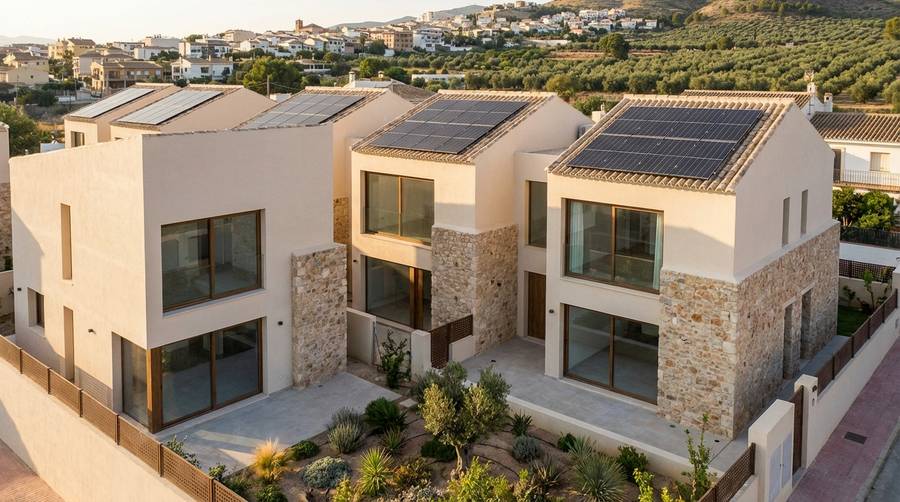
Industrialized Housing Success: Scalable Energy Renovation
A real Spanish pilot transformed a tired neighborhood into a reference in energy renovation using industrialized housing. This case study breaks down decisions, materials, timelines, measurable results and a practical guide for autopromoters in 2026.
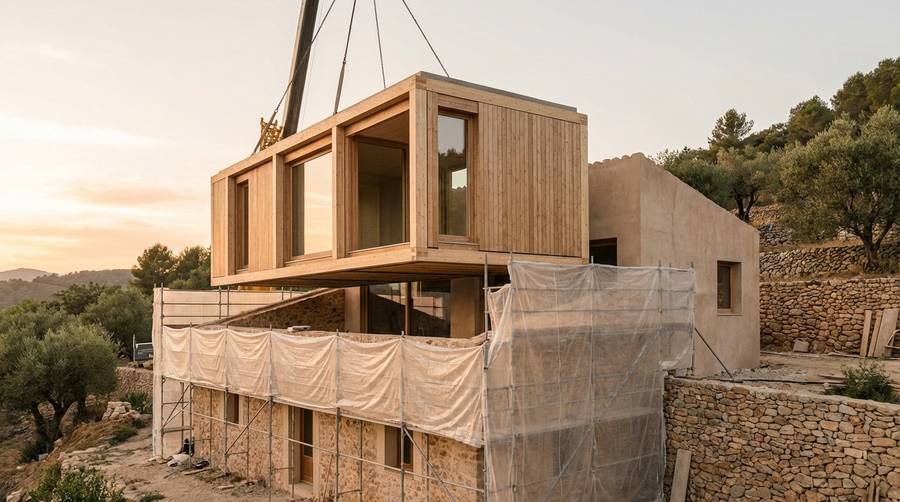
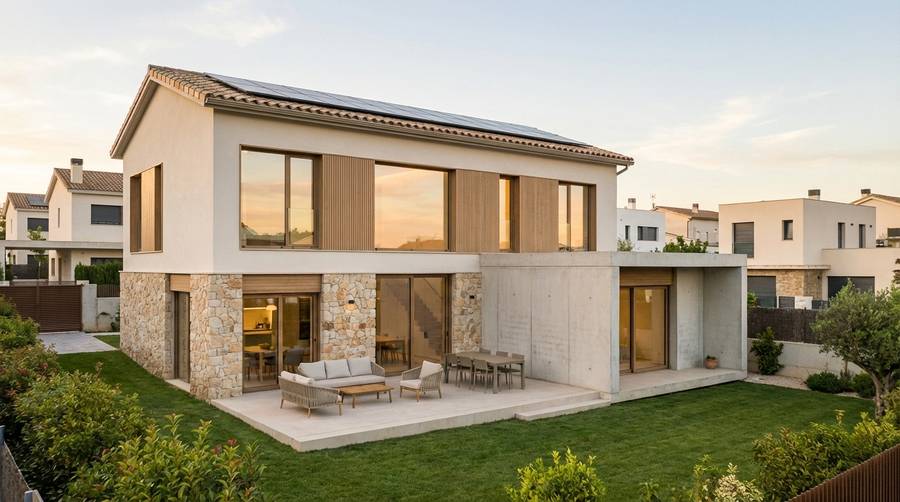
Industrialized Housing: Complete Guide for Spain 2026
A practical, step-by-step guide for self-builders and developers in Spain who want to adopt industrialized housing. Learn materials, energy strategies, turnkey workflows, financing options and real-case metrics to plan successful modular and prefabricated projects in 2026.