


Industrialized Housing Recovery: Flood-to-Home in 6 Months
Rebirth after the flood: a family reclaimed their home in 6 months
Hook: When a flood swept through their town, Marta and Luis faced a choice: wait months for a traditional rebuild or pursue a faster, more predictable route. They chose industrialized housing—and moved into a finished Mediterranean home in just 6 months. This is their story, with measurable results and actionable lessons for anyone planning an autopromotion in Spain.
Initial situation: damage, needs and decisions after the disaster
The flood destroyed the ground floor and left structural uncertainties. The family needed a safe, durable solution with tight budget control. Key constraints were:
- Urgency: restore a permanent home within a year.
- Budget predictability after insurance payouts.
- Energy efficiency: reduce future running costs and flood risk via resilient design.
After consulting engineers and insurers, the family evaluated two options: traditional reconstruction on-site or moving to an industrialized, off-site manufactured solution built to modern standards.
Why they chose a prefabricated approach over traditional rebuild
Marta and Luis prioritized speed, fixed pricing and quality control. The industrialized option offered:
- Shorter on-site time—most assembly completed in weeks rather than months.
- Fixed cost packages that reduced budget risk.
- Higher factory-quality control reducing delays and defects.
They selected a turnkey provider experienced in Mediterranean contemporary architecture to ensure the finished house matched local aesthetics and resale value goals.
"We regained stability fast: from unusable to a warm, energy-efficient home in six months. That predictability changed everything."
Rapid assessment and planning: defining clear objectives
Soil, plot review and legal requirements in Spain
The team began with a rapid but thorough site assessment:
- Verify parcel flood maps and elevation requirements.
- Check local urban planning rules (ordenanza) and maximum buildable area.
- Confirm utility connections and access for crane and transport.
Early engagement with the town hall and a technical architect avoided common administrative delays. The team lodged simplified documentation for an autonomous promoter (autopromotor) which accelerated permits.
Design criteria: prioritizing habitability, efficiency and budget
The brief focused on three priorities:
- Resilience: elevate finished floor level and choose durable materials.
- Comfort and daylight: large windows and passive solar strategies for Mediterranean climates.
- Certainty: fixed scope to control cost—included finishes, fittings and landscaping.
The design balanced simple geometry (which reduces manufacturing complexity) with Mediterranean elements: light façades, wood accents and sheltered terraces.
Model selection and financing options for autopromotion
The family evaluated modular typologies and structural systems—concrete industrialized panels, steel frame and timber frame—selecting a hybrid solution: industrialized concrete plinth with upper steel frame and timber cladding. Financing combined insurance compensation with a targeted autopromoter mortgage tailored for modular builds, which lenders increasingly accept when a turnkey contract and technical specifications are provided.
Turnkey process: step-by-step from parcel to handover
Production and assembly phases: a real timeline with milestones
Actual timeline achieved:
- Week 1–2: final design freeze, permit submission and production planning.
- Week 3–10: factory production of panels, frames and finishes.
- Week 11: site preparation, foundation and services connection.
- Week 12–14: on-site assembly, crane work and enclosure.
- Week 15–18: finishes, mechanical-electrical installations and commissioning.
- Week 20–24: landscaping, inspections and client handover.
This structured timeline condensed tasks that typically cause uncertainty in on-site builds. The predictable factory schedule allowed parallel processing: while the building was produced, permits and site works were completed.
Coordination with subcontractors and permits: minimizing delays
Key coordination strategies used:
- Single point of contact in the turnkey provider for all subcontractors.
- Pre-booked crane and transport windows tied to production dates.
- Early utility agreements to avoid post-assembly waiting times.
These actions reduced administrative friction and ensured the installation window was met.
Quality control and final delivery to the client
Factory QA checks were documented and shared with the family. On-site, a final snagging list was addressed within two weeks. The turnkey contract included a one-year warranty and a maintenance plan emphasizing quick response to any issues.
Materials and constructive solutions that made the difference
Why industrialized concrete, steel frame and light timber were chosen
The hybrid structural strategy delivered resilience, speed and aesthetic warmth:
- Industrialized concrete for the plinth and wet areas—a robust base elevated above flood level.
- Steel frame for rapid, accurate framing of upper floors and long spans.
- Light timber framing for non-structural partitions and warm cladding finishes.
This combination reduced weight, improved thermal performance and preserved the Mediterranean look with natural wood elements.
Insulation and Passivhaus-level strategies: impact on energy efficiency
Implemented measures:
- High-performance continuous insulation with minimal thermal bridges.
- Airtightness targets close to Passivhaus standards and mechanical ventilation with heat recovery (MVHR).
- High-efficiency glazing with solar control and external shading adapted to orientation.
Result: projected heating and cooling demand reduced by over 60% compared to the former home, cutting annual energy bills significantly.
Durability, maintenance and carbon footprint reduction
Factory-fabricated elements allow controlled material use and less waste. Industrialized concrete for flood resilience and timber cladding with proper treatment provided a long-life, low-maintenance exterior. Embodied carbon was reduced by optimizing material volumes and integrating local suppliers.
Measurable outcomes: time, costs and client satisfaction
Comparison: delivery time and total cost vs traditional construction
Comparative metrics from the project:
- Delivery time: 6 months turnkey vs estimated 12–18 months for traditional reconstruction.
- Cost visibility: fixed turnkey price with minimal change orders versus variable traditional cost with a +10–25% average contingency due to unforeseen events.
- On-site disruption: reduced by 70% thanks to off-site production.
These figures illustrate how industrialized housing can be both faster and more cost-predictable for autopromoters—especially post-disaster.
Energy performance metrics and estimated annual savings
Measured and projected performance:
- Primary energy demand reduced by ~65% compared to the previous building baseline.
- Estimated annual energy cost savings: 45–60% depending on behavioral factors and local climate.
- Payback period for energy-related investments (insulation, MVHR, efficient glazing): commonly 7–12 years with current energy prices.
These results translate into both lower running costs and greater resilience to energy price volatility.
Client testimony: quality of life and sense of security
Marta said: "We sleep better knowing our home is warmer in winter, cooler in summer and elevated above flood level. The speed and clarity of the process gave us back control."
The family reported higher daily comfort, less maintenance worry and an improved perception of neighborhood value.
Lessons learned and recommendations for autopromoters after disasters
Common mistakes to avoid and keys to accelerate permits and construction
To replicate success, avoid these pitfalls:
- Delaying early consultations with town planning—start immediately.
- Underestimating services coordination—secure utilities and crane logistics early.
- Neglecting airtightness and ventilation—these impact long-term comfort and costs.
Accelerators:
- Use a turnkey provider with documented timelines and warranty packages.
- Bundle tasks: while the building is manufactured, finalize landscaping and utility permits.
How to choose a provider: technical and transparency criteria
Essential selection criteria:
- Proven timelines and references with similar scope.
- Transparent fixed-price contracts and clear change-order policies.
- Factory QA documentation and airtightness/thermal test results.
- Post-handover warranty and maintenance commitments.
Ask for performance data from previous projects—real numbers on delivery times and energy use are more valuable than marketing claims.
Next steps: financing, guarantees and long-term maintenance
Recommended steps for autopromoters:
- Secure financing with lenders familiar with industrialized housing; supply turnkey contract and technical specs to the bank early.
- Negotiate a clear warranty and service window for the first year.
- Plan a maintenance checklist covering façades, seals and HVAC yearly checks to preserve performance and guarantee validity.
Conclusion
This case demonstrates that industrialized housing can transform a post-disaster recovery from uncertain and prolonged rebuilding into a predictable, efficient and comfortable renewal. The family regained stability faster, reduced energy costs and achieved a durable Mediterranean home aligned with local aesthetics.
Key takeaway: For autopromoters in Spain, a well-planned turnkey industrialized route offers measurable time savings, cost predictability and energy performance—critical when rebuilding after a disaster.
If you're considering rebuilding or exploring modular options, assess providers on documented delivery timelines, factory QA records and transparent financing support. For tailored guidance on your parcel and financing pathways, contact a specialist who can map a realistic turnkey timeline and cost estimate.
Call to action: Reflect on your priorities—speed, budget certainty or energy performance—and reach out to trusted providers to compare fixed turnkey offers. A short feasibility review today can save months of uncertainty tomorrow.
Artículos relacionados
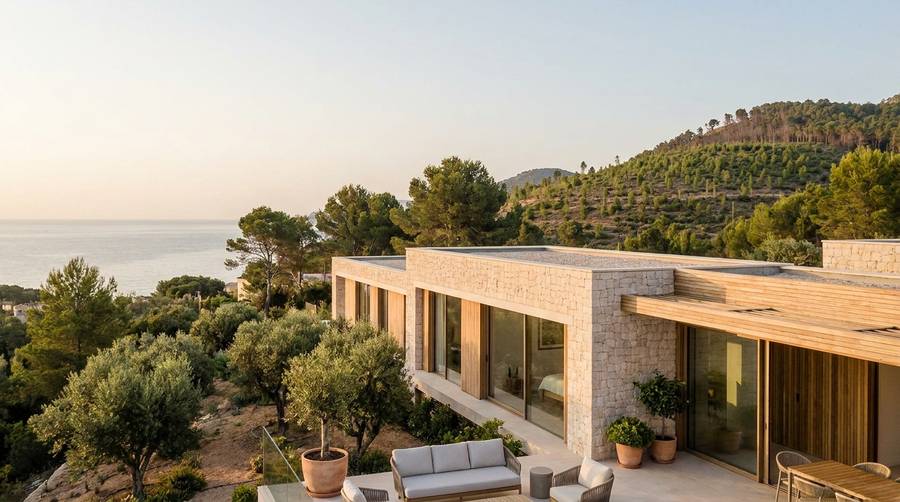
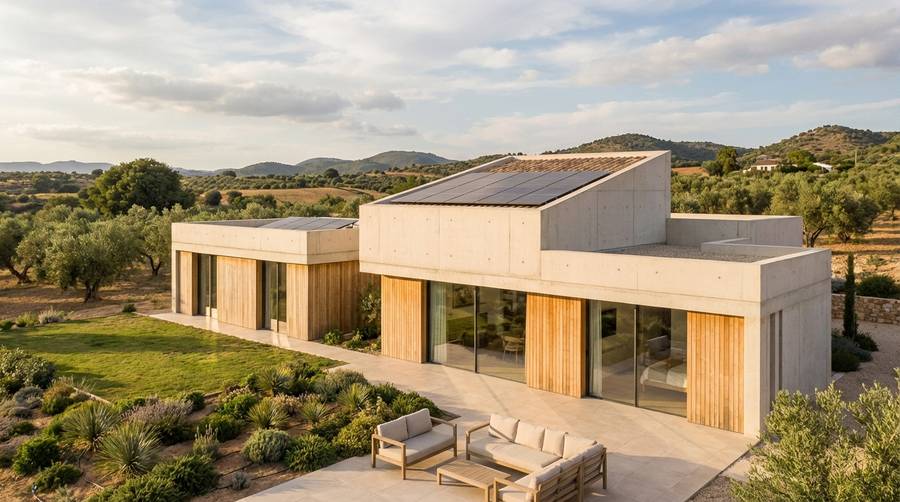
Prefabricated House Case Study: Community Recovery
A coastal Spanish village rebuilt in six months using industrialized housing. This case study shows exact timelines, costs, energy gains and the turnkey process that transformed lives with predictable budgets and measurable sustainability.
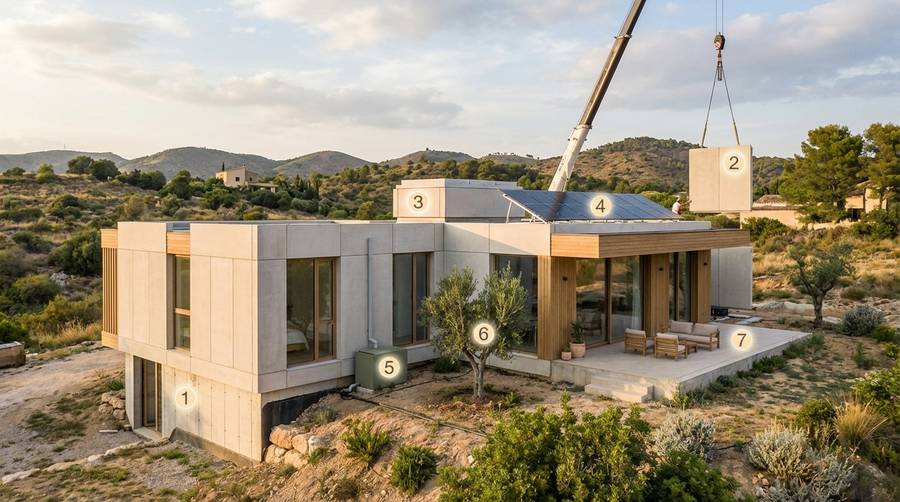
Prefabricated Housing After Disaster: 7-Step Recovery Guide
Concrete guidance for rebuilding fast and resiliently: learn the top benefits of prefabricated housing post-disaster, recommended materials, turnkey steps, financing options and measurable case data to plan your project in Spain.