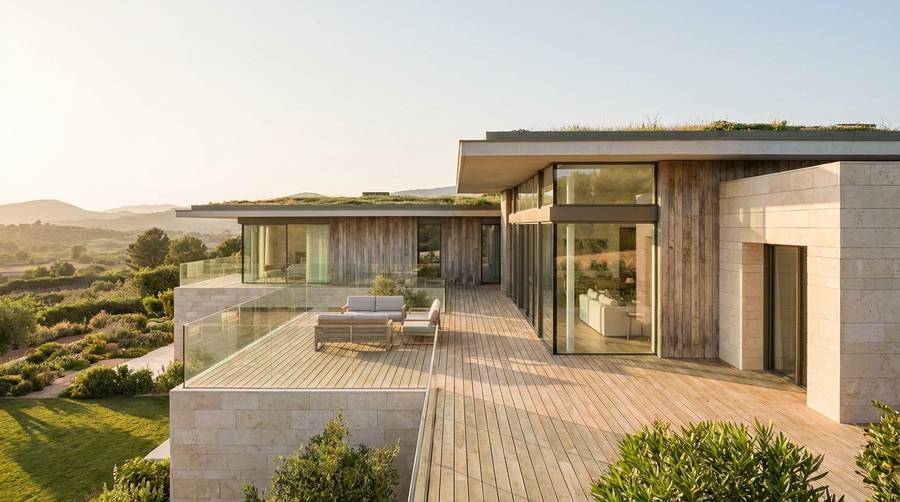
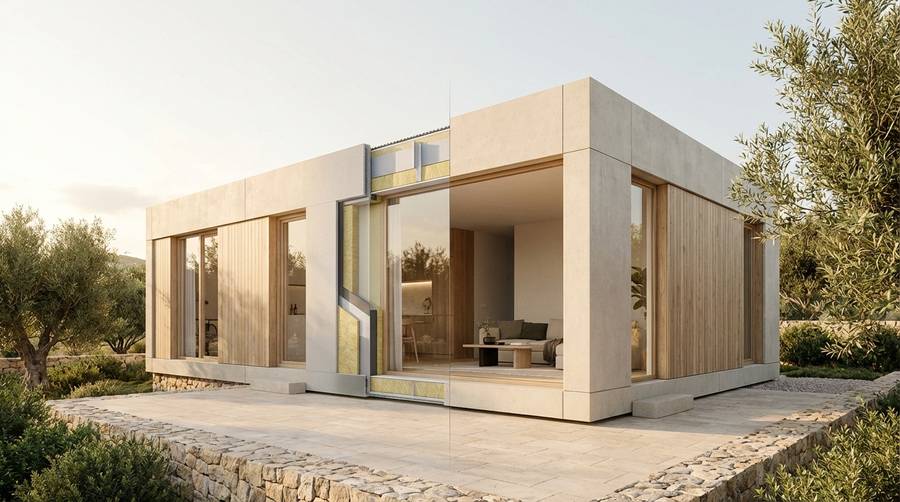
Industrialized Housing Guide: Build a Modular Home
Why choose industrialized housing in Spain: key benefits
Hook: If you want predictable timelines, fixed budgets and high energy performance, an industrialized home can deliver all three—without compromising Mediterranean design.
Industrialized housing (also called modular or prefabricated homes) is a modern construction method that moves most work into controlled factory conditions. The result: shorter on-site time, consistent quality and clearer costs. Below we break down the tangible benefits for self-builders in Spain.
Efficiency and cost control: fixed price and guaranteed schedules
What you get:
- Firm price proposals that reduce the risk of budget overruns.
- Compressed site schedules—typical on-site assembly is measured in weeks, not months.
- Supply chain predictability from factory procurement.
For autopromotores, that translates into easier financing and fewer surprises during construction.
Construction quality and warranties: modern materials and industrial processes
Factory-controlled production enables repeatable quality checks and tighter tolerances. Modern systems we use in Spain include industrialized concrete panels, steel frame (steel frame) and light timber framing. Each offers different benefits in durability, acoustic and thermal performance.
Sustainability and energy performance: Passivhaus and lower carbon footprint
Industrialization makes it easier to meet strict energy targets: controlled assembly reduces air leaks and ensures the envelope and insulation are installed precisely. Pairing this with low-carbon materials and efficient HVAC systems can bring your project close to Passivhaus standards and drastically reduce operational emissions.
Industrialized methods can cut on-site time by 50–80% and reduce waste by over 30% compared to traditional builds.
Project planning: from plot to program
Early planning determines success. Below is a practical roadmap you can apply immediately.
How to evaluate and choose the right plot
Assess these five factors first:
- Orientation: maximize south-facing façades for solar gain and daylight.
- Zoning and regulations: check local land use, buildability and height limits.
- Topography and access: consider crane access for modules and vehicle routes for deliveries.
- Utilities and connectivity: proximity to water, electricity and sewage saves cost and time.
- Local microclimate: wind and shade patterns affect design strategies for thermal comfort.
Define uses, area and priorities: the housing program
Turn needs into a clear brief:
- List mandatory spaces (bedrooms, kitchen, etc.) and desirable extras (office, guest suite).
- Set target gross and net m² and prioritize flexible spaces that can adapt over time.
- Decide energy targets (e.g., Passivhaus level or local energy code compliance).
Preliminary schedule and budget: realistic timelines
Typical milestones for an industrialized project in Spain:
- Site analysis and permits: 2–4 months (variable by municipality).
- Design and factory preparations: 2–3 months.
- Factory manufacturing: 4–8 weeks depending on complexity.
- Transport and assembly on site: 1–4 weeks.
- Finishes, commissioning and handover: 3–8 weeks.
Tip: Build contingency into both time and budget—5–10% for finance and 4–6 weeks for schedule.
Design and material choices: modern constructive solutions
Choosing the right structural system influences cost, performance and schedule. Below is a practical technical comparison and how to get to Passivhaus-level envelopes while keeping Mediterranean aesthetics.
Technical comparison: industrialized concrete, steel frame, and light timber framing
- Industrialized concrete panels: High thermal mass, excellent durability, good acoustic insulation. Best where inertia and robustness are priorities. Slightly heavier lead to higher transport/assembly cost.
- Steel frame (steel frame): Extremely precise, allows long spans and large glazed openings. Fast assembly and compatible with high-quality insulation packs. Requires careful detailing to avoid thermal bridging.
- Light timber framing: Low embodied carbon, fast to prefabricate, excellent for warm, breathable envelopes. Best combined with airtight membranes and mechanical ventilation.
Decision rule: match the system to your priorities: durability & mass (concrete), openness & speed (steel frame), sustainability & warmth (timber).
Finishes and thermal envelope: reaching Passivhaus standards
Key measures to achieve high energy performance:
- Airtightness: factory-controlled junctions minimize leaks.
- Continuous insulation: avoid thermal bridges using external insulation or sandwich panel strategies.
- High-performance windows: triple glazing for colder climates; thermally broken frames for coastal areas.
- Mechanical ventilation with heat recovery (MVHR) sized for actual occupancy.
Practical tip: Insist on measured airtightness and a commissioning plan as part of the contract.
Mediterranean contemporary design: light, ventilation and natural materials
Design cues that are easy to achieve with industrialized systems:
- Large south-facing windows with overhangs for summer shading.
- Material palette: light stucco, local stone, warm wood and exposed concrete accents.
- Indoor-outdoor continuity: terraces and shaded porches to extend living space.
The turnkey process explained: methodology and deliverables
Turnkey delivery is the most stress-free option for autopromoters. Here is a transparent breakdown of phases and what to expect at each.
Detailed phases: design, factory, transport, assembly and finishes
- Design and approvals: final schematic to permit-ready drawings.
- Factory production: components prefabricated with QA checkpoints.
- Transport and logistics: route planning and protection for modules.
- On-site assembly: foundation, crane operations, module placement and waterproofing.
- Finishes and commissioning: systems testing, airtightness tests and client handover.
Quality control and on-site coordination: permits and responsibilities
Who does what: a turnkey provider should manage permits, factory QA, transport and on-site coordination. Clarify in the contract: scope, timelines, penalties and responsibilities for permit delays.
Handover and aftercare: warranties, energy certificates and maintenance
Ensure the contract includes:
- Clear warranty periods for structure, waterproofing and finishes.
- Energy performance certification and measured results.
- Maintenance manual and recommended service intervals for MVHR and HVAC.
Financing and economic management for self-builders
Financing a modular home uses many of the same instruments as traditional builds, but there are specifics that help autopromotores secure mortgages.
Mortgages for self-builders and loans for modular housing
Common options:
- Self-build mortgage: staged drawdowns linked to progress milestones—factory production and assembly stages are common tranches.
- Modular-specific loans: some lenders recognize factory production as lower risk and may offer competitive terms.
How to present your project to the bank: required documentation
Prepare these documents:
- Detailed technical project and timeline.
- Firm turnkey quotation with breakdown of costs per phase.
- Permits or evidence of fee payments; proof of land ownership.
- Energy target documentation if you're aiming for Passivhaus—this strengthens credit cases.
Cost optimization strategies without sacrificing quality
Practical levers:
- Standardize module sizes to reduce factory complexity.
- Select materials that balance performance and durable maintenance.
- Concentrate high-cost glazing where it delivers greatest daylight and comfort benefits.
Case studies and real comparisons: metrics and outcomes
Real metrics help make decisions. Below are anonymized, representative case outcomes based on recent projects in Spain.
Case 1: Passivhaus single-family home — timelines, cost/m² and client satisfaction
Outcome summary:
- System: light timber framing with MVHR.
- Timeline: 10 months from contract to handover (including permits).
- Cost: ~1,700–2,100 €/m² finished (regional variation).
- Results: airtightness 0.6 ach@50Pa, heating demand under 15 kWh/m²·year. Clients rated satisfaction 9/10 for comfort and delivery certainty.
Case 2: Steel frame project — reduced site time and thermal performance
Outcome summary:
- System: steel frame with external insulation and triple glazing.
- Timeline: 8 months including design; site assembly 2 weeks.
- Cost: ~1,600–2,000 €/m².
- Results: rapid on-site delivery, strong daylighting and low heating loads thanks to high-performance envelope.
Comparison with traditional construction: total cost, schedule and risk
Summary comparison:
- Costs: similar lifecycle cost; industrialized tends to have higher upfront factory cost but lower labor risk.
- Schedules: significantly shorter on-site exposure and lower schedule uncertainty.
- Risk: reduced weather risk and improved quality control in factory conditions.
For more on industrialized benefits and practical guidance, see our in-depth resource Vivienda industrializada: guía para autopromotores.
How to start today: practical checklist for self-builders
Immediate steps: requirements document, plot search and technical consultations
- Create a concise brief listing room counts, target m², energy goals and budget range.
- Shortlist plots and request cadastral and urban planning notes from the town hall.
- Request preliminary feasibility and cost estimates from two modular providers.
Key questions to ask a manufacturer/builder
- Can you provide measured airtightness and real project references?
- What is included in the turnkey price and what are extra costs?
- How are transport and on-site logistics handled?
- Which warranties and post-handover services are provided?
Resources and next steps: permits, grants and contacts
Check local incentives for energy-efficient housing and prepare documentation for mortgage applications. Useful reads include Casa prefabricada: ventajas para tu vivienda modular and the case study Vivienda industrializada: caso real en 12 meses.
Conclusion
Industrialized housing is a practical, high-value path for self-builders in Spain. It offers predictability, improved energy performance and the design flexibility to deliver attractive Mediterranean homes. Start with a clear brief, prioritize envelope performance, and choose a turnkey provider that documents airtightness and commissioning.
If you’re ready to explore specific systems, budgets or a feasibility review for a plot, contact a specialist or request quotes from vetted manufacturers. Small early investments in design and planning pay off in certainty and performance.
Call to action: Evaluate your plot and brief today—book a feasibility call to see realistic timelines and costs for your modular home project.
Artículos relacionados
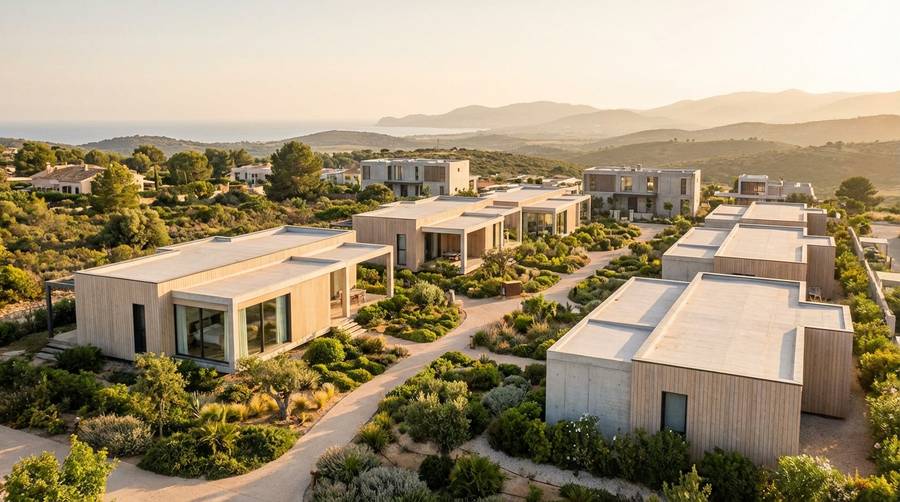
Industrialized Housing: Spain's Residential Future
A forward-looking, data-driven guide to industrialized housing in Spain. Covers market projections, construction systems, Passivhaus strategies, turnkey workflows, financing and two real-case metrics to help autopromoters make informed decisions in 2026.